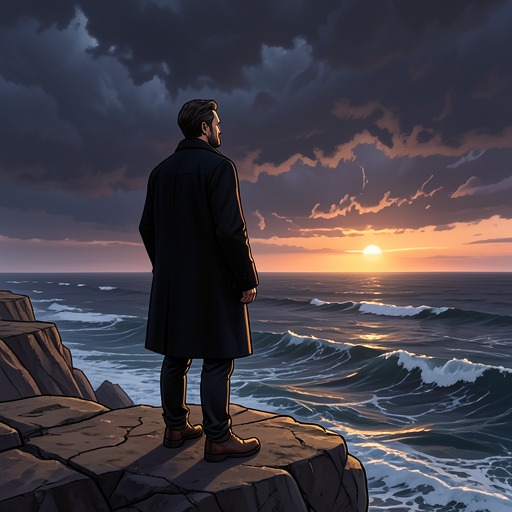
Time has no single measure
ShōgunTime has no single measure is a saying Mariko uses to describe time through unlike images rather than a fixed unit. Its return in a conversation about age makes it more than an observation about duration: the same metaphorical vocabulary can be reshaped to express different experiences of passing time.
Meaning and Imagery
Mariko explains that time can be “like frost or lightning or a tear or siege or storm or sunset, or even like a rock.” The images range from sudden and fleeting to prolonged or seemingly enduring. Together, they suggest that time is not experienced in one uniform way: its character changes with what a person is living through.
Recurrence and Variation
Later, when asked how old she was when she married, Mariko answers that she was very old and offers a related saying: “Age is like frost or siege or sunset, even sometimes like a rock.” This version narrows the earlier list and shifts its subject from time in general to age. The repeated images preserve the original idea while adapting it to a personal question.
Conversational Significance
The saying appears within an intimate exchange with John Blackthorne. After Mariko’s remark about age, she laughs; Blackthorne tells her that old age sits prettily on her, and she replies that old age is never pretty for a woman. The contrast between the saying’s open-ended images and her direct correction gives the exchange both playfulness and reserve: a reflection on time becomes a way to speak about age without making it seem simple or uniformly welcome.