
The Slum’s Clinic and the Cholera Crisis
ShantaramThis thread traces how Lin’s improvised clinic becomes a community resource, is tested by a deadly cholera outbreak, and reveals the limits and strength of neighborhood care.
increasing Bearing strength in each event
 decreasing
Bearing strength in each eventdecreasingA Clinic Takes Root
A Clinic Takes Root
An improvised practice
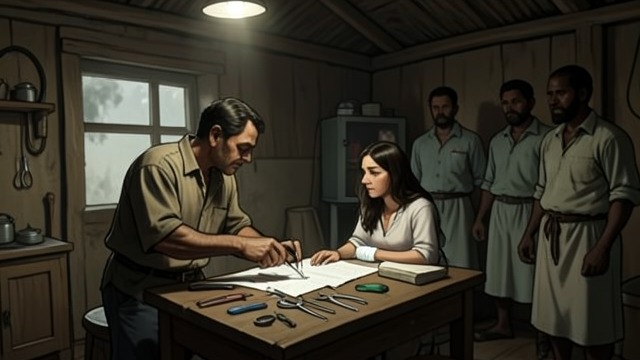
Lin begins treating neighbors in his hut with the first-aid training and kit he brought from Australia. What starts as emergency help for cuts, burns, and rat bites gradually becomes a dependable part of slum life.
Trust through daily work
The people do not treat the clinic as a distant charity. They bring patients, share supplies, and help make the small hut usable. Their participation makes Lin’s work possible, even as his uncertain skills leave him aware of how much he cannot treat.
Beyond one foreign doctor
As attendance grows, the clinic’s importance comes from trust as much as medicine. Lin’s neighbors make care a shared task, while the scale of illness in the settlement continually exceeds what one person can manage.
A Path to Hospital Care

A Path to Hospital Care
Referrals fail the poor
Lin finds that patients he sends to the public hospital often return without treatment. The hospital is overwhelmed, while the people in his neighborhood cannot afford the licensed medical consultations that might help them reach care more quickly.
A practical arrangement
Abdel Khader Khan connects Lin with Doctor Hamid, who agrees to assess referrals and arrange hospital treatment when needed. The arrangement gives the clinic a route beyond its improvised limits without requiring patients to pay for the doctor’s help.
An uneasy resource
The solution depends on personal relationships and informal arrangements rather than a reliable public system. For Lin, the referral network improves care, but it also makes clear how fragile access remains for the slum’s residents.
The First Cholera Cases
The First Cholera Cases
Illness spreads quickly
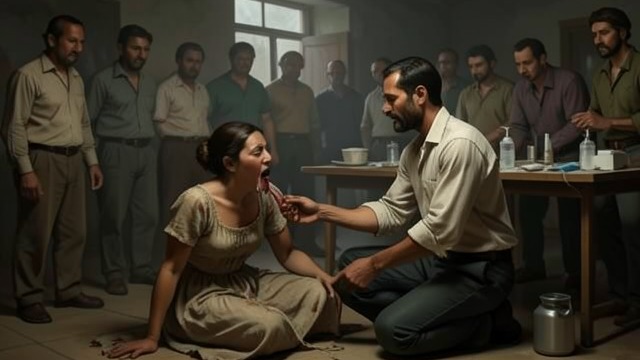
Radha and Parvati develop severe vomiting, fever, and diarrhea. Lin reaches them after each has already been sick for a long time, and he is forced to confront how easily an ordinary-looking illness can become fatal in crowded, unsanitary conditions.
A crisis in the lanes
As more residents show symptoms, Lin recognizes the scale of the outbreak and asks for official help. The public health official confirms that cholera is spreading in several districts, but overcrowded hospitals cannot receive everyone.
A narrow margin
Radha dies before the community’s response is fully organized. Her death makes the epidemic immediate and personal, and Lin’s guilt over not knowing she was ill deepens his sense of responsibility for the work ahead.
The Slum Organizes
The Slum Organizes
A local command center
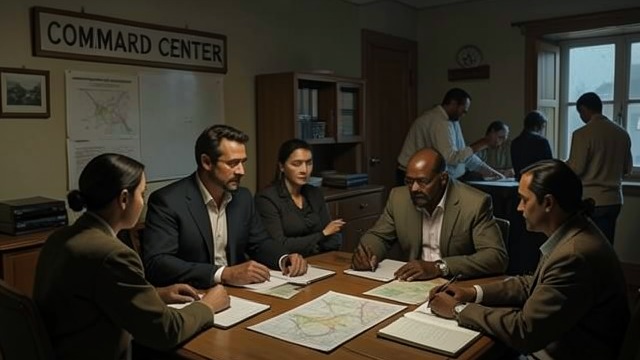
Qasim Ali Hussein turns his home into a coordination point and gathers residents to decide how to contain the outbreak. They plan to purify water, disinfect lanes, dispose of waste safely, and establish kitchens for boiled food.
Work shared across the community
Lin is assigned to manage oral rehydration treatment, while other residents take responsibility for water, sanitation, food, and transport. Doctor Hamid supplies expertise, and the neighborhood turns its own labor and scarce resources into an emergency response.
Limits and persistence
The plan cannot prevent every death, and the official promise of volunteers and supplies does not remove the burden from the residents. Still, collective organization gives people practical tasks and a way to act rather than wait helplessly.
Care After the Epidemic
Care After the Epidemic
Loss remains after the danger
The outbreak kills nine people, including six children, even though many patients survive. The clinic’s work does not erase the deaths, and the procession for the children makes the community’s grief visible to the wider city.
A fragile recovery
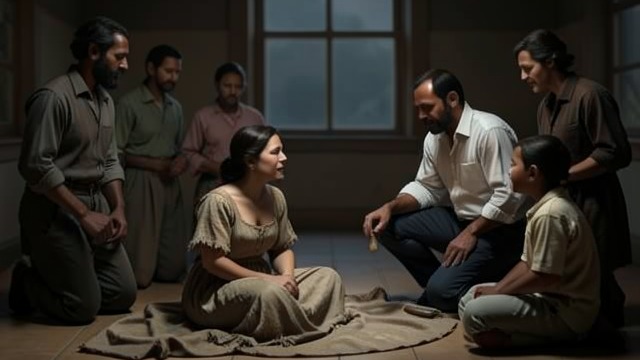
Parvati survives, and her family and neighbors rally around her during her recovery. Jeetendra also survives the loss of Radha, though grief leaves him diminished; Lin returns to paid work only after the immediate emergency has passed.
A changed understanding of care
The epidemic shows that a clinic is not a substitute for public health capacity, but it can help connect knowledge, supplies, and local trust. Lin remains attached to the community’s work even as shame and trauma later make it difficult for him to live in the slum.
After Lin settles in the Cuffe Parade slum
After Lin meets Abdel Khader Khan and Doctor Hamid
At the start of the monsoon outbreak, after Radha and Parvati fall ill
The first day of the cholera emergency, after the health official’s visit
The days after the infection rate falls to zero
