
Fate and the Freedom to Choose
ShantaramThis thread follows Lin’s changing understanding of fate, showing how names, accidents, obligations, and deliberate choices shape a life without fully erasing free will.
increasing Bearing strength in each event
 decreasing
Bearing strength in each eventdecreasingA Name Takes Root
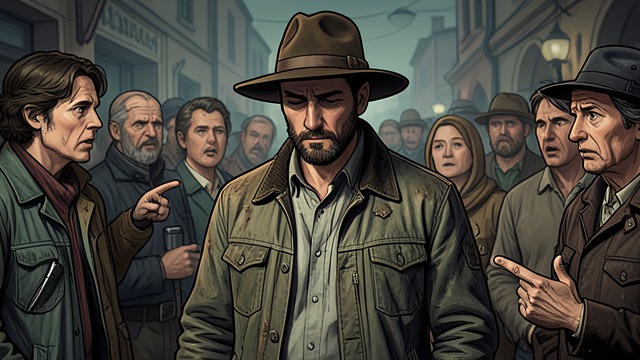
The Name Linbaba
An apparently casual choice
Prabaker decides that Lindsay is awkward and proposes the shorter name Lin. Lin accepts it, although he has already lived under several assumed identities as a fugitive.
Identity through other people
The name becomes widely known and eventually feels more real to Lin than earlier versions of himself. The episode presents identity not as a fixed possession but as something shaped by circumstance, other people’s choices, and the roles a person grows into.
The Village Names Him

The Name Shantaram
A community’s judgment
After living and working in Sunder village, Lin is given the name Shantaram, meaning a man of peace. The name expresses how the villagers experience him, not how he has always seen himself.
A possible self, made real
Lin wonders whether the villagers discovered a peaceful quality already inside him or planted an ideal he might grow toward. The naming suggests that fate can arrive through a community’s expectations, while the person who receives the name must still choose whether to embody it.
The Flood Stakes

Knowing the River
A village’s measured confidence
When Lin fears that the rising river will destroy Sunder, the villagers point to stakes set in a yearly flood-guessing game. Their confidence rests on generations of memory about where the water usually stops.
Prediction is not control
Lin reflects that people also carry an inner river: their desires and essential nature. The village’s markers suggest that experience can help people understand risk, but neither inherited knowledge nor a personal resolution makes the future completely predictable.
The Return to Bombay
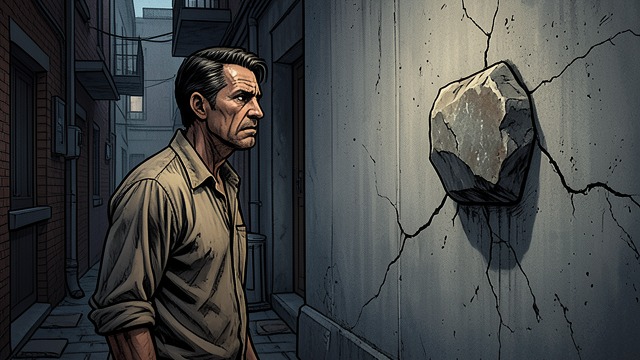
Choosing the Next Life
Freedom under constraint
After his money is stolen and his visa has expired, Lin cannot simply choose a safe, lawful route forward. He must weigh the risks of approaching authorities against the danger of remaining a fugitive.
A choice with consequences
Lin accepts a place in the slum despite his fear and discomfort. His decision is neither wholly free nor wholly forced: it is a response to the limited options his past has left him, and it begins a new identity built through work and relationships.
A Life at the Crossroads

Two Reasons to Continue
Love and anger
After learning how Khader used him and others, Lin points a gun toward the man he had treated as a father. His rage is real, but it does not erase the years of affection or the dependence that shaped his choices.
The choice not to kill
Lin does not fire. He later understands that he still loves Khader even while rejecting his actions, and that he cannot force himself to hate either Khader or Karla. Fate has brought him to the moment, but his refusal to kill is his own decision.
On Lin’s first day in Bombay, after he meets Prabaker
During Lin’s first months in Sunder village
On the day the monsoon floods Sunder village
After six months in Sunder village, when Lin returns to Bombay
In Afghanistan, after Khader and Lin argue in the snow
