Ashley Judd
She SaidAshley Judd is an actress whose decision to go on the record about Harvey Weinstein became a decisive turn in The New York Times’ investigation. The reporters had documented allegations involving Weinstein’s employees, but Judd’s account helped bring the other strand of the story—actresses who said they had been harassed by a powerful producer—into public view. In the book’s account, her choice was both a contribution to the reporting and a break in a pattern that had kept actresses from being the first to name him.
The decision to speak
Jodi Kantor had spent more than three months preparing for a conversation that might not end in agreement. Two weeks before the final request, she had met Judd on a terrace above Manhattan’s East Side while Judd was in town for the United Nations General Assembly. Kantor asked her to imagine what speaking on the record would mean and emphasized that she was seeking accounts from other actresses too. Judd listened carefully but was unsure. The distinction mattered to her: she wanted the company of other actresses, not the exposure of standing alone.
When the publication timetable accelerated, the reporters still had not secured the accounts they hoped for from actresses. Judd’s television series, Berlin Station, was about to premiere, a moment she had wanted to avoid having coincide with a public disclosure. The reporters’ editors, Dean Baquet and Matt Purdy, urged them not to make the actresses essential to publishing the story. Kantor and Megan Twohey disagreed. They had strong documentation of Weinstein’s conduct toward employees, but without actresses’ accounts the investigation’s picture of the alleged pattern would be incomplete.
Kantor contacted Judd at midday on a Monday. Judd replied that she was in a dentist’s waiting room and could talk. Rather than plead, Kantor laid out what the article could show: twenty-five years of allegations, a pattern supported by names and examples, human-resources records, legal and financial information, and accounts from male and female employees. Judd said she would take the request seriously and call back. The reporters were still waiting when, an hour later, she called and said, “I’m prepared to be a named source in your investigation.”
Judd described having thought deeply about the decision, going for a run in the woods, consulting her lawyers, and considering her obligations as a woman and a Christian. Kantor, who had been bracing for rejection, wept. Her reply was, “This means the world to me as a journalist.” The account makes the decision feel less like a routine confirmation than the release of months of accumulated uncertainty: the article might now include a prominent actress speaking publicly about Weinstein.
Her account in the investigation
Judd’s agreement changed the story’s structure. The reporters rewrote the draft around her long-ago account of an encounter in a suite at The Peninsula Beverly Hills. Her testimony became the article’s lead, and the first section closed with her appeal: “Women have been talking about Harvey amongst ourselves for a long time, and it’s simply beyond time to have the conversation publicly.” With Judd named, the reporters had a public account that did more than describe an alleged encounter; it made visible the secrecy and private discussion surrounding Weinstein’s conduct.
The book sets her decision against the difficulty of assembling corroborating voices. Other actresses had spoken with the reporters but had not agreed to be named; some accounts remained confidential, and others were not ready for publication. Judd had wanted fellow actresses beside her, yet agreed to go forward even as that hoped-for group had not materialized. Her choice therefore carried a particular risk: she would be publicly identifiable in a story whose broader pattern was still being assembled from people with differing degrees of readiness to speak.
Weinstein and his representatives later tried to discredit the women. During a meeting at The New York Times, Lisa Bloom produced photographs of Judd and Weinstein smiling together, presenting ordinary red-carpet images as if they disproved her account. Weinstein also described Judd as mentally unstable, drawing on descriptions from her memoir of treatment she had sought for issues stemming from childhood. Megan Twohey kept her reaction controlled. The meeting, which the reporters understood as an ambush, did not undermine their investigation: they had already checked the background of Ambra Battilana Gutierrez and had asked researcher Grace Ashford to examine Judd’s memoir for material that could be used against her or the newspaper. Instead, the encounter showed the tactics Weinstein’s allies were prepared to deploy.
Public consequences and continuing work
After the Weinstein story appeared, Judd was praised as a heroine and received awards. She also accepted a teaching post at Harvard Kennedy School, her alma mater, where she was to begin in fall 2019 with the title Leader. She joined the board of Time’s Up, an organization formed in Hollywood to promote safe and fair workplaces and then extending beyond the entertainment industry. She also filed suit against Weinstein, alleging harassment and defamation and seeking redress for lost career opportunities. These developments placed her public disclosure within a longer effort: speaking on the record was not the end of her involvement, but one part of her activism and legal action.
The attention could be intense. Strangers approached Judd to thank her; on one occasion, people lined up as she got off an airplane. She had also withdrawn to the woods after the first Weinstein article appeared. At a later gathering of women who had spoken about abuse, she described a deliberate boundary around public commentary: she posted photographs and links on social media, but had avoided reading material about herself for nearly twenty years. She advised Christine Blasey Ford to stop reading online comments and compared that discipline to an alcoholic staying away from a drink one day at a time. Judd called exposing herself to such material a form of self-harm. Her public prominence had made her a target of scrutiny, but she presented managing that scrutiny as a practice necessary to keep going.
Relationships and narrative significance
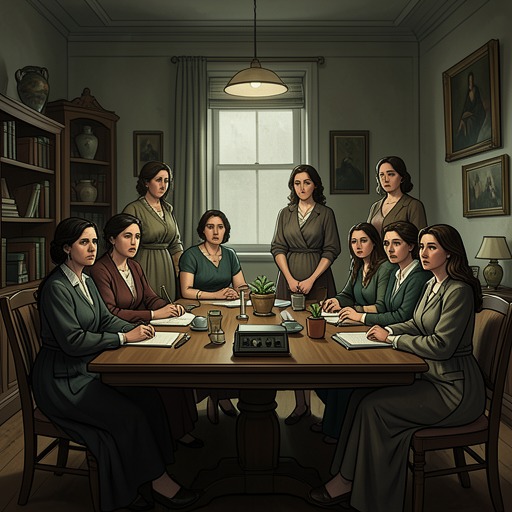
At the gathering, Judd’s relationship with Gwyneth Paltrow offered a measure of what her decision had changed. Paltrow raised a glass to her, recognizing that Judd had been the first actress to speak on the record in the Weinstein story and had made it easier for others to follow. “You really were the one who paved the way for all of us to come forward in your wake,” Paltrow said. Judd answered, “I always worried about you,” recalling her concern for Paltrow’s safety in the 1990s. The exchange linked professional solidarity in the present to an earlier period when Weinstein’s power had made such concern private.
The gathering also brought Judd together with Laura Madden, a former Weinstein assistant who had described being harassed in Dublin decades earlier. The book identifies Judd and Madden as the first two women to go on the record about the producer. Their circumstances and public positions differed, but the meeting made their shared place in the reporting tangible. Madden remained soft-spoken and unaccustomed to telling strangers about her experience; Judd, by contrast, had become widely recognized for the disclosure and the activism that followed it.
Judd’s influence extended beyond actresses. In a room that included women from the entertainment industry, workplace activism, and the Kavanaugh confirmation hearings, she and Paltrow helped others reckon with public criticism. Judd’s own account of why she spoke was direct: “The equality of the sexes is that hill for me.” That declaration clarifies the continuity the book draws between her earlier choice and her later work. Her significance lies not only in being the first actress named in the investigation, but in treating that disclosure as part of a larger commitment to equality, public testimony, and support for others who faced the costs of speaking.