Christine Blasey Ford
She SaidChristine Blasey Ford is presented as a scientific researcher whose account of an alleged high-school assault by Brett Kavanaugh moved from private conversations and therapy into a national confirmation dispute. Her story turns on the difficult shift from wanting to provide information quietly to being publicly identified, questioned, and scrutinized. The narrative holds that political transformation beside the more intimate consequences she described: anxiety, a need for escape routes, and the wish to return to teaching and family life.
Identity and Background
At the beginning of the summer of 2018, Ford was an established researcher, a professor of psychology, a biostatistician, and the mother of two sons. She worked with a consortium of professors from Palo Alto and Stanford and had expected the coming months to be occupied by controversy surrounding research on ketamine’s antidepressant effects. Her professional world was built around scientific work, including studies of trauma, depression, and resilience; national political debate was not her usual terrain. She had paid little attention to much of the #MeToo debate, used Twitter little, and described herself as a casual Democrat who had made some campaign contributions, including one to Bernie Sanders.
Ford had grown up in privileged suburban circles similar to Kavanaugh’s, but left that world in her twenties for California and brain science. She and her husband had met through a shared interest in surfing, and the narrative repeatedly contrasts her life in California with the political and social world she had left behind. Her connection to Kavanaugh was not an ongoing one: she later said she had not knowingly seen him since the incident she described. Their families nevertheless remained linked through their hometown and their fathers’ membership in the same small private golf club, a connection that made the prospect of public disclosure feel personal as well as political.
Memory, Safety, and Private Disclosure
Ford’s account of the high-school incident was not new to her husband by 2018. In 2012, during counseling they had sought to address communication problems and lingering disagreements about remodeling their Palo Alto house, Ford explained why she had insisted on building a second front door: she feared feeling trapped without another exit. At the therapist’s urging, she then told her husband that, in high school, a boy had confined and physically restrained her while another boy watched. In his later sworn affidavit, Russell Ford recalled that she had identified the attacker as Kavanaugh and said she escaped before she was raped.
The account helped explain a recurring effect Ford associated with the incident. Through counseling, she became more aware that confined spaces could provoke severe anxiety and that conflict could bring an urge to flee. She also discussed the experience with other therapists, including a specialist in post-traumatic stress disorder, and with several friends. The person she described was therefore not simply recalling an old event for the first time when Kavanaugh’s nomination became imminent; she had been trying to understand its effects in private for years.
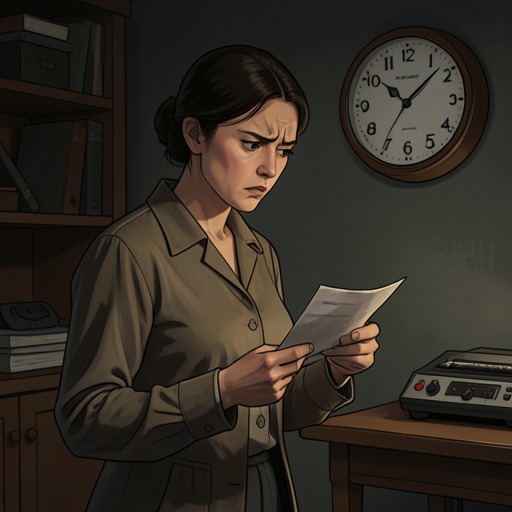
The narrative also records limits in what could initially be corroborated. Ford had not told anyone at the time, and by 2018 she and her advisers were still sorting out which friends she had told in more recent years. She had spoken with therapists, but some particulars had faded, including the precise date. Debra Katz, the lawyer who began representing her, said Ford had taken a lie-detector test she arranged and seemed to be preparing to tell the account more widely. Katz described her as careful and precise, but worried that Ford had little experience with the exposure and hostility that might follow public disclosure.
The Nomination and the Search for a Discreet Route
Ford’s private account acquired new political urgency when Kavanaugh’s name appeared on Donald Trump’s shortlist for the Supreme Court in June 2018. Ford emailed her friend Keith Koegler to say that the leading candidate was someone she said had assaulted her in high school, and that a lifetime appointment could keep him on the Court for the rest of her life. Years earlier, in 2012, she had first recognized how far Kavanaugh had risen after reading that George W. Bush had attended his wedding. That realization had prompted her to wonder whether Kavanaugh might someday be nominated to the Supreme Court.
As the nomination approached, Ford believed she had relevant information to provide, but wanted to protect her privacy and avoid humiliating her family back East. She did not want to shame Kavanaugh publicly. Her preferred outcome was to pass along her account before he became the nominee, allowing those making the decision to consider it and perhaps choose someone else. She was also unsure whether the behavior she remembered was an isolated incident or part of a broader pattern; she recognized that she lacked enough information to answer that question herself.
Ford considered possible routes for intervening without immediately going public. During time with friends on the California coast, she weighed whether to contact Kavanaugh directly and ask him to withdraw, or to reach Mark Judge, the friend she said had been present, and ask him to pass on the message. She did not call a lawyer at that stage. Her dilemma was not simply whether to speak, but how to provide information discreetly, before the nomination hardened into a public confrontation, while limiting the consequences for both families.
From Confidential Letter to Public Testimony
Ford eventually wrote to Senator Dianne Feinstein, asking that the information remain confidential while they had an opportunity to speak. In the letter, she identified Kavanaugh and Mark Judge, described an incident at a gathering in a suburban Maryland home, and recounted how she escaped. The letter gave a fuller account than the early, privately shared versions, while Ford continued to seek a way to be heard without having her identity exposed.
That effort became harder when The Intercept reported that Democrats on the Senate Judiciary Committee were seeking a letter concerning Kavanaugh and a woman from high school. Feinstein then announced that she had sent the letter to law enforcement for review; the FBI forwarded it to the White House for Kavanaugh’s background file, and Kavanaugh denied an accusation that had not yet been publicly detailed. Ford, who had been reconciling herself to silence, feared that she might soon be identified without control over how the story was told.
She decided that if her identity became public, she wanted to reveal it herself. She met Washington Post reporter Emma Brown at a restaurant in Half Moon Bay after earlier anonymous contact with the paper. Their interviews extended from Wednesday evening into the following days. Ford worried about graphic treatment of the account and answered questions about whether Kavanaugh had raped her; she said he had not. She also provided excerpts from therapy records, and her husband confirmed to Brown that Ford had named Kavanaugh as her attacker in 2012. Although the process was more extensive than she had imagined, Ford felt some relief that she could be identified through reporting she believed would present her allegation accurately. She even considered using her husband’s surname, hoping that her professional name would make her easier to find online.
At the hearing, Ford began reading her statement after a sleepless night, asking for caffeine at the microphone. The room felt strange to her, with senators elevated above her and bright lights around the proceedings. Her voice carried emotion, but she did not break down. She described the incident and its effects, and addressed the public scrutiny that had followed. She said that her purpose in coming forward was to provide information about the harm she attributed to Kavanaugh’s actions so that senators could take it into account. Her testimony placed the private account at the center of a highly visible institutional decision, even though the experience she described had taken place decades earlier.
Aftermath and Narrative Significance
After returning to California on September 28, Ford reunited emotionally with her husband and sons. She felt almost serene for the first time in months. She had been embarrassed by sitting before cameras and found parts of the questioning awkward, but she had not seen her family or academic career destroyed. She had expected Kavanaugh to be confirmed; for her, the achievement was having told her story publicly with dignity and perhaps making it easier for younger people to come forward. She hoped that those vetting future Supreme Court candidates would be more careful.
Ford wanted to decline further interviews and return to teaching. Instead, she came under attack as Republicans sought to advance Kavanaugh’s confirmation. That reversal matters to the shape of her story: public testimony did not immediately restore the privacy or ordinary life she hoped to reclaim. It made her account visible, but also exposed her to the very public scrutiny she had feared.
The book places Ford’s experience alongside women whose circumstances and resources differed sharply. At a gathering in Gwyneth Paltrow’s home, the long table and the contrasts among participants made differences in wealth and work visible: Kim Lawson had recently been homeless and was then earning ten dollars an hour at McDonald’s, while Paltrow’s house contained conspicuous comforts. Ford’s story belonged to this broader account of speaking out, but it followed a distinct route through scientific work, family counseling, a confidential letter, and a Senate hearing. The juxtaposition resists treating disclosure as a single, uniform act: the costs, means, and degree of control available to each woman depended on her circumstances.
Ford’s role in the narrative is consequently larger than that of a witness to a confirmation fight. Her account shows how an experience kept private can shape practical choices long before it becomes public: a second door, anxiety in confined spaces, conversations with a spouse and therapists, and a search for a discreet way to intervene. The eventual testimony turned those private consequences into information submitted for public consideration, while leaving unresolved the tension at the center of her effort: she wanted to be heard without surrendering control of her life.