Hollywood
She SaidHollywood is presented not simply as a place where films are made but as an industry whose promises of fame and access could coexist with unequal power and barriers to accountability. The reporting follows that tension from the difficulty of reaching actresses and the normalization of the casting-couch convention to the different risks women faced when they spoke, and the new authority some gained by challenging the system.
An industry and its inherited conventions
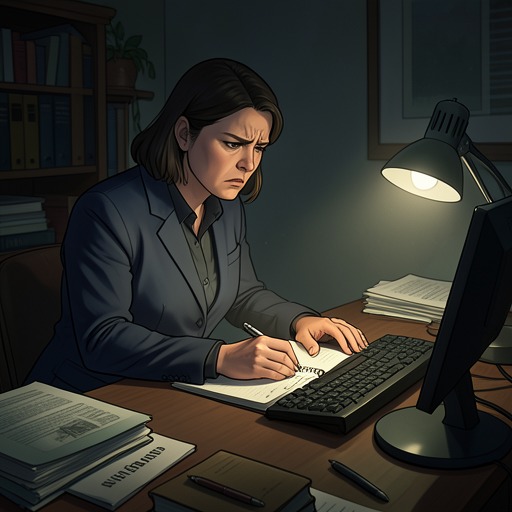
As the Weinstein investigation continued in June 2017, Jodi Kantor found that reaching prominent actresses was itself a problem. Publicists, agents, and managers usually served as intermediaries, but they were also employed to protect clients’ public images and could be loyal to powerful industry figures. The questions concerned private experiences, and Kantor had few personal connections in that world. Hollywood’s visible surface—the red-carpet images of composed, glamorous women—therefore contrasted with the difficulty of asking what they had experienced or witnessed. Former employees sometimes treated the casting-couch convention as an unavoidable feature of the business. They described actresses’ submission to producers or directors in exchange for roles as an old practice that was unpleasant but permanent, and regarded Weinstein’s treatment of women as already widely known. The account gives that convention a physical marker: a casting-couch sculpture near the old Chinese theaters in Los Angeles, where movie premieres were held. The sculpture makes a private imbalance into a public joke or emblem, while the former employees’ resignation shows how familiarity could be used to excuse rather than examine conduct.
Power, work, and limited access
The investigation’s account of Hollywood as a system came in part from Rose McGowan, who had publicly challenged sexism and was known for risking professional standing to do so. She had criticized discriminatory expectations in a casting notice for an Adam Sandler film and used social media to argue for confronting the larger system. Her activism did not make her immediately willing to assist the reporting: she initially said the newspaper should examine its own sexism and that she was not inclined to help. That response exposed a second barrier to access. A reporter seeking accounts of abuse had to contend not only with industry gatekeepers but also with women’s distrust of the institutions asking them to speak. McGowan told the reporters that, after an incident involving an unnamed producer rumored to be Harvey Weinstein, she complained to her managers and hired a lawyer. She said Weinstein later left a message proposing that she join a group of favored female stars. A $100,000 settlement followed, without an admission of wrongdoing; McGowan said she donated the money to a rape crisis center and that she never received a copy of the settlement. Her account connected an individual complaint to the professional and legal arrangements that could contain it, while the missing copy underscored how little control a person might retain over the record of her own resolution. She described Hollywood’s problem as broader than one powerful man: a business could promise women fame, profit from their work, scrutinize their appearance, and then discard them. That diagnosis shifts the focus from isolated misconduct to the incentives and protections around it. In her formulation, the pattern depended on a wider structure with little oversight and little fear of consequences; the book places that analysis alongside former employees’ claims that Weinstein’s behavior had long been known.
Different positions, different costs
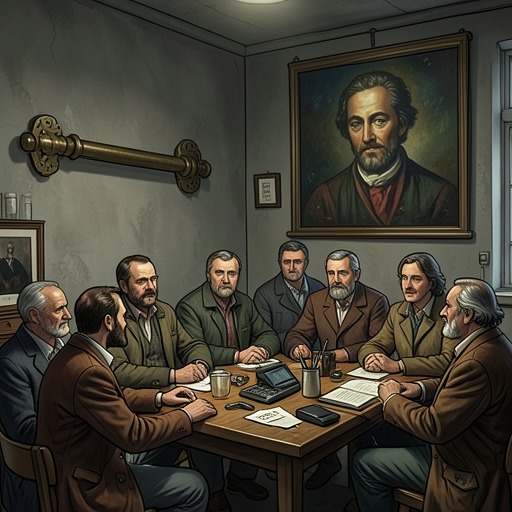
The later gathering of women who had spoken about harassment or assault made the inequalities within this common subject visible. It was intended to give each participant equal weight, but their circumstances differed sharply. Kim Lawson was earning $10 an hour at McDonald’s and had been homeless six months earlier. Gwyneth Paltrow’s one-story home, with its connected kitchen and small luxuries, made the economic distance between them tangible. Their shared presence did not erase disparities in money or public standing; it allowed the conversation to hold both those differences and their common experience of deciding whether to speak. Rowena Chiu described another particular cost. She had not yet gone public with her account, and, apart from her husband, her family did not know it. She said that few Asian women seemed to come forward with such stories, linking that silence to a model-minority expectation of working hard, avoiding complaint, and not disrupting the social order. Speaking publicly, she anticipated, could shock friends and change her life. The gathering therefore offered not a simple resolution but a place to hear how others had made the decision and to consider what it might mean for her.
Speaking out and gaining authority
The women’s accounts also showed how action against workplace mistreatment could produce authority that had not been available before. Zelda Perkins recalled giving testimony about confidentiality agreements to members of Parliament and experiencing the institution as a place to which she, as an individual, had a claim. Lawson described filing a complaint against McDonald’s with the Equal Employment Opportunity Commission and taking part in a September strike. She had spoken publicly, given interviews, and pushed her daughter in a stroller along the march route. Men who supported the protest deliberately marched behind the women, and the demonstration brought Lawson new contacts and a sense of solidarity. That public role continued after the march. Lawson became a source of advice for female McDonald’s employees around the country, using a text chain to support their organizing. Customers recognized her from television coverage of sexual harassment. Perkins likewise described finding her way into the person she had been becoming when she left Miramax at twenty-four. These changes did not undo the earlier harms or make the women’s circumstances equal. They did demonstrate a reversal in who could speak with authority: people whose accounts had once been private or professionally risky became organizers, witnesses, and guides to others. Hollywood’s significance in the book lies in this double image. It is a business whose conventions and networks could shelter power and make disclosure difficult, but it is also the setting in which women challenged the idea that such arrangements were inevitable. The contrast between the casting-couch emblem and the women’s later testimony is not a story of an industry already transformed. It marks the distance between treating unequal treatment as routine and insisting that it be heard, documented, and answered.