Kim Lawson
She SaidKim Lawson is a McDonald’s worker whose campaign against workplace sexual harassment carried her from a precarious job into public advocacy. At a gathering of women who had spoken about harassment or assault, she brought a perspective distinct from those of the well-known actors and other participants: the daily conditions of low-wage work, the risks of speaking up while economically vulnerable, and the uncertain distance between a public promise of reform and change on the shop floor.
Work and Economic Circumstances
Lawson had first spoken with Jodi Kantor nearly a year before the gathering. By the time she traveled from Kansas City to join it, she had become a leader in a campaign pressing McDonald’s, described in the account as the nation’s second-largest employer, to address sexual harassment on the job. She came with Allynn Umel, an organizer in the labor campaign, but appeared at ease among the other participants and needed little support to take part. The account describes her as lively and quick to connect with people in the room.
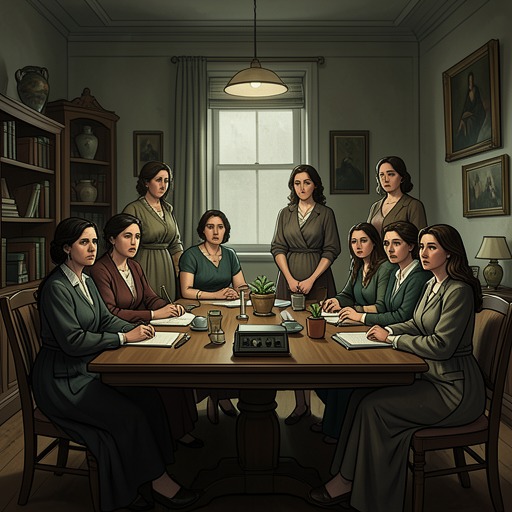
Her circumstances made the gathering’s differences in wealth more than a matter of appearance. Lawson was earning ten dollars an hour at McDonald’s; six months earlier, she had been homeless. The interview was arranged to give each woman’s account equal importance, but it took place in Gwyneth Paltrow’s comfortable home, among rooms marked by small luxuries. Lawson’s recent homelessness and modest wages stood in sharp contrast to that setting and to the public prominence of some of the other women. The contrast did not make her account less central. It made visible how differently women could encounter the same broad problem, and how much fewer material cushions Lawson had as she took on public advocacy.
From Complaint to Public Advocacy
Lawson described filing a complaint against McDonald’s with the Equal Employment Opportunity Commission, the federal agency responsible for enforcing workers’ rights against discrimination. She also recounted taking part in a September strike. The action offered a collective counterpoint to the isolation that can accompany a workplace complaint: workers chanted and showed solidarity, new people met one another, and men joined the march while deliberately following behind the women.
Lawson had a visible role in that action. She delivered a speech, gave interviews, and pushed her daughter along the march route in a stroller. She remembered the experience as a moment when people were listening, including those who might not otherwise have heard her. The strike therefore involved more than making a demand of the company. It gave workers a public setting in which to appear together, and it gave Lawson a platform from which to speak as a worker and a mother.
Her activism continued beyond the march. Lawson became a kind of team coach to other female McDonald’s employees involved in the union effort, counseling them through a text chain. Customers began to recognize her from television coverage and ask whether she had appeared in a report about sexual harassment. The change was a reversal in public standing: the experience that had brought her into a campaign also made her a source of guidance and a recognizable voice for other workers. The account does not present that recognition as proof that the underlying workplace problem had been resolved; it shows how her role and authority had grown while the campaign was still underway.
At the Gathering
At the Los Angeles gathering, Lawson sat among women whose experiences came from markedly different settings. Zelda Perkins, a former film producer and activist, was roughly twenty years older and had traveled from far away; Lawson was twenty-six and came from the fast-food workplace. Their differences in age, occupation, and resources did not erase the shared work of challenging harassment. As the two spoke in succession, the account notes echoes between their experiences of becoming activists.
Lawson described the complaint and strike not as abstract milestones but through the change in what she felt able to do. She had taken part in a march, spoken publicly, and supported fellow workers; the collective action had given her a sense of power and solidarity. The gathering placed that account alongside the stories of women from entertainment and the high-profile Senate confirmation hearings. Rather than making one setting a stand-in for all the others, the conversation allowed participants to recognize both common ground and differences in the costs and means of speaking out.
Lawson also encouraged Rowena Chiu, who had not yet spoken publicly about her own story. When Chiu expressed uncertainty about coming forward, Lawson told her that deciding to do so would be a significant step, regardless of how long it had taken. Her response extended her organizing role beyond the McDonald’s campaign: she offered support to another woman considering a difficult choice without treating the outcome as automatic or requiring Chiu to follow the same path.
Change and Its Limits
The results Lawson described remained incomplete. McDonald’s had begun strengthening its policies, including new training for managers and a hotline, and planned to post instructions on how employees could report harassment. But Lawson had not yet seen those changes take effect in her own store. The gap between company plans and workers’ day-to-day experience left open how much the practices of the company’s thousands of workplaces would actually change.
That unresolved gap qualifies the account of Lawson’s rise as an activist. Her complaint, participation in the strike, interviews, speech, and work with other employees had brought her new confidence and standing, but those gains did not themselves guarantee safer or more responsive conditions at her store. The narrative presents her as both a measure of the campaign’s reach and a reminder of its unfinished work: collective action could make workers visible and help them find one another, while institutional promises still needed to become tangible workplace protections.