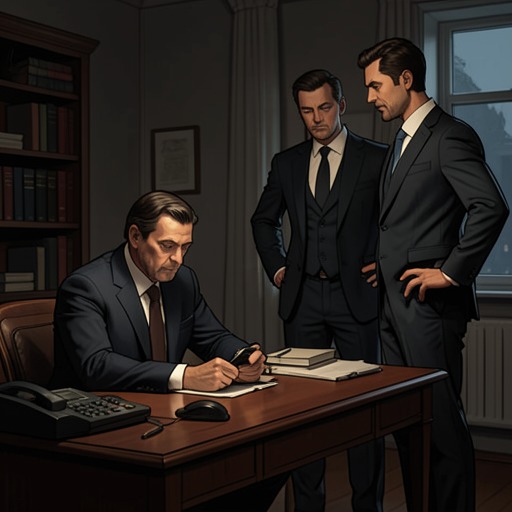
The Weinstein Company board
She SaidThe Weinstein Company board was meant to provide oversight of the company, but the account of its response to allegations against Harvey Weinstein shows how limited that oversight became. Its seats were filled largely by wealthy men from finance and entertainment, and its members generally took a hands-off approach. When complaints reached the company, scrutiny repeatedly stopped short of a board-level intervention; even evidence that alarmed directors did not prevent Weinstein from securing a new contract in 2015. The board’s emergency response after The New York Times published its investigation made the conflict plain: some members called for action, while others focused on protecting the company or its powerful producer.
Composition and the limits of oversight
The Weinstein brothers had packed the board with allies. Almost all its members were men. The only woman ever to serve was Dr. Mathilde Krim, an AIDS pioneer who was not an entertainment or business specialist. Most seats were held by wealthy executives from the finance and entertainment industries, and the board as a whole was described as hands-off. The arrangement mattered because the board was one of the few institutional bodies positioned to scrutinize the brothers’ conduct and consider its consequences for the company.
Lance Maerov occupied one of the three independent seats, appointed in 2013. His role was different from that of the board’s allies: WPP, Goldman Sachs, and other major investors wanted him to guard against the brothers taking advantage of shareholders. Maerov understood his mandate as keeping them honest. At first, however, he did not interpret rumors about Weinstein’s relationships with young women as evidence of harassment. He had heard that Weinstein put friends in his films and noticed young women accompanying him at screenings and events, but believed he was hearing about infidelity. Maerov’s attention was instead on possible financial misconduct and the company’s wider dysfunction, including the verbal clashes between the brothers at board meetings.
Personnel-file dispute and a failed intervention
A groping accusation changed Maerov’s assessment. He began to worry that Weinstein’s conduct might form a pattern and expose the company to liability. As a board member involved in renewing the brothers’ contracts, Maerov could examine Weinstein’s personnel file. Weinstein refused access, with David Boies backing him. Boies offered to review the file himself and report potential legal problems to the board, a proposal Maerov distrusted because Boies appeared at different times to represent the company or Weinstein.
On July 1, 2015, Irwin Reiter helped Maerov see some of the material despite that refusal. Reiter and two other executives met Maerov for breakfast at the Four Seasons Hotel in Beverly Hills and described complaints of verbal abuse. Reiter then showed him the memo concerning Emily Nestor. The executives were taking a risk by sharing it and would not let Maerov leave with the pages; he read them at the table. The episode gave an independent director a glimpse of the kind of evidence he had been trying to inspect, but did not produce an effective response from the board.
A few months later, a more extensive complaint reached company leaders. In November 2015, Reiter and colleagues examined Lauren O’Connor’s detailed account, which described not just an incident but Weinstein’s treatment of women and the effects on the company. Reiter and others informed Bob Weinstein. Bob agreed the board should know, but rather than circulate the document, he dictated a memo inviting board members to come to the office and read it in person. He waited half an hour before telling his brother. The following day, Maerov examined the complaint and photographed its first and last pages, including details about witnesses.
That access was not followed by a lasting change. O’Connor’s complaint soon disappeared from the internal process, and she was on her way out of the company with little explanation. Reiter could not explain why the complaint had evaporated; he suspected Bob had lost his nerve and believed Boies might again have intervened. In October 2015, despite the concerns raised by Maerov, Reiter, and Bob, Weinstein signed a new contract that secured his power for years. The board’s contract-renewal process had offered an opening for scrutiny, but the outcome was a renewed agreement rather than an effective constraint.
Crisis after publication
The New York Times investigation brought the board into an emergency conference call within hours of publication. The immediate crisis was both corporate and personal: Bob Weinstein and several other directors pressed Harvey to take a leave of absence, receive more mental-health treatment, and allow the company to investigate his conduct. Harvey resisted, characterized the response as a rush to judgment, threatened to use his connections with the Murdochs to prompt a negative story about Maerov in The Wall Street Journal, and said he would sell the company before being forced out. Bob, who had previously been part of a compromised family and business relationship, told him that he was finished.
The directors’ discussion also revealed how differently they understood their responsibility. Richard Koenigsberg proposed separating disapproval of Weinstein’s behavior from responsibility for conduct that had occurred years earlier. Tim Sarnoff argued that Weinstein could not be disconnected from Technicolor and that the directors therefore needed to protect him. Investor Paul Tudor Jones believed the controversy might be forgotten. Their comments showed a board weighing exposure and the company’s survival alongside, and often ahead of, the welfare of the women whose experiences had prompted the crisis.
The board’s handling of the allegations was not simply a matter of lacking information. Maerov had sought the personnel file; Reiter brought him a memo; Bob arranged for directors to read O’Connor’s complaint; and the board later confronted the findings of published reporting. Yet access to pieces of evidence repeatedly failed to become sustained accountability. After the emergency meeting, most directors resigned without public comment. The board’s trajectory—from limited scrutiny, through private review of complaints, to a public crisis—underscored how a body organized around protecting shareholders and the company could remain ineffective at protecting employees from the conduct it had been given reason to investigate.