
Air Travel as a Public Trial
Shrill: Notes from a Loud WomanThis flow traces how inaccessible airplane seating turns routine travel into anxiety, conflict, and a debate over who deserves accommodation.
increasing Bearing strength in each event
 decreasing
Bearing strength in each eventdecreasingThe First-Class Comparison
Adequacy as Luxury
A Wider Seat
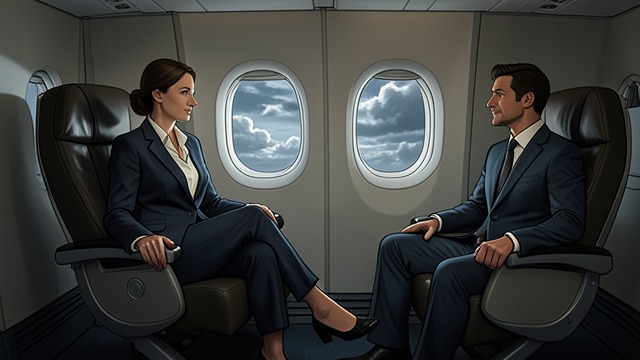
Lindy pays for a first-class upgrade because the larger seat offers a practical chance to travel without compressing herself. The service is not extravagant; its chief value is that it feels like an ordinary chair.
A Revealing Contrast
She realizes that what wealthier passengers buy is often basic physical comfort. The comparison exposes how standard travel can make ordinary bodily needs feel like unreasonable demands.
The Seat Stops Fitting
A Sudden Discovery
The Return Flight
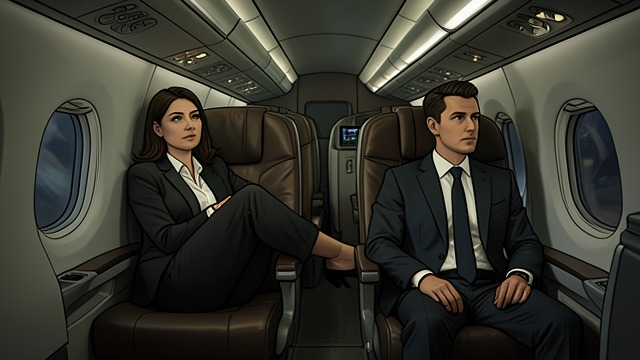
After years of mostly fitting into airplane seats, Lindy finds that she cannot comfortably fit on a flight home from Texas. The change turns a familiar routine into a new source of dread.
Pain and Uncertainty
She describes being squeezed into a seat narrower than her body and worrying about the plane, belt, and passenger beside her. Physical pain is joined by the fear of public judgment.
The Seatmate’s Rebuke

A Small Confrontation
A Hostile Exchange
A seatmate mutters that Lindy should say “excuse me” while she puts her bag overhead. She asks what he said, and he answers with contempt about her body and the space she occupies.
No Neutral Boarding
Lindy explains that the seatmate’s hostility feels familiar even though direct confrontation is unusual. A routine interaction makes visible the judgment she has anticipated on nearly every flight.
Readers Rewrite the Story

The Narrator Put on Trial
Competing Accounts
When Lindy writes about the exchange, commenters imagine her as drunk, aggressive, late, or physically violent. Many doubt her account while sharing their own complaints about fat passengers.
The Burden of Proof
The reaction shows how quickly a fat woman’s account can be displaced by stories that make her the offender. Lindy recognizes that readers are not granting her even the benefit of ordinary credibility.
A Claim for Access
Naming the Design Problem
A Social Choice
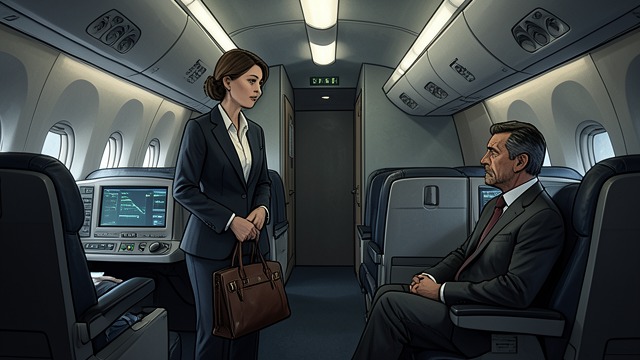
Lindy argues that airlines and customers have helped create increasingly cramped travel, while fat passengers are treated as though their bodies alone caused the problem. The available response should not be to shame or exclude them.
Ordinary Human Needs
She insists that fat people travel for work, family, and grief, just as others do. Accessibility becomes a question of shared responsibility rather than a punishment imposed on individual bodies.
before fall 2013
fall 2013
one or two months later
after the Jezebel essay
near the book’s later chapters
