Daniel Tosh rape-joke incident at the Laugh Factory
Shrill: Notes from a Loud WomanThe Daniel Tosh rape-joke incident at the Laugh Factory became a public confrontation over what comedy does when it invokes sexual violence: in the summer of 2012, Tosh directed a remark about rape at a woman in the audience who had challenged his defense of rape jokes. Her account described the exchange as frightening even though she did not believe the threatened scenario was likely to occur. The response to the incident exposed a divide between defending a comedian’s freedom to provoke and asking whose safety and dignity the provocation put at stake. It also prompted Lindy West, then writing for Jezebel, to make the case that jokes about terrible things can challenge their harms rather than intensify them.
Background and Comedy Culture
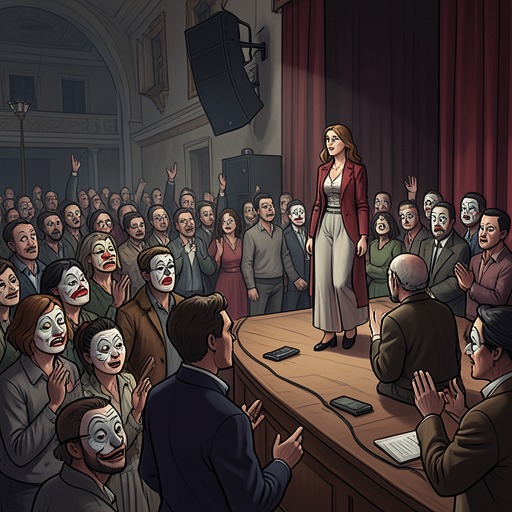
Tosh was known for a style built around ironic bigotry and deliberate offensiveness, a persona the narrative associates with a comedy culture that could treat provocation as proof of comic daring. The incident began with an audience member’s objection to Tosh’s broad claim that rape jokes were always funny. Her heckle challenged not only an individual joke but the premise that the subject could never make a joke fail. The encounter therefore shifted from a general argument about comedy to a dispute in the room, with a woman in the audience becoming the target of Tosh’s response.
The Exchange and Its Immediate Effect
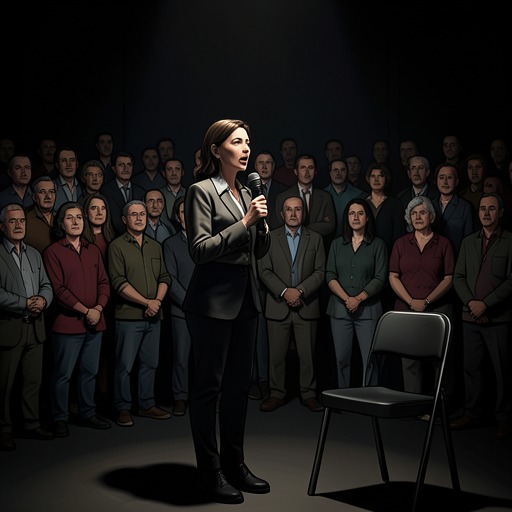
According to an audience member who later posted her account anonymously, Tosh paused after her objection and addressed the packed room with a hypothetical in which several men attacked her then and there. The exchange turned her criticism into the subject of the joke: rather than answering her claim about comedy in general, he made her the focus of an imagined threat.
The woman gathered her belongings and left. In her later account, she emphasized that the scenario seemed unlikely, but that hearing it proposed in the confined club still felt threatening and was meant to silence her. Her departure marked the immediate consequence of the exchange: the argument over whether rape could be comic had become an encounter in which the person objecting felt compelled to remove herself.
Public Response and West’s Intervention
The incident went viral, and Tosh responded with what West characterizes as a limited apology. Several comedians—including Patton Oswalt, Jim Norton, Anthony Jeselnik, and Doug Stanhope—publicly supported him. Their interventions framed the controversy as a defense of artistic freedom, while leaving the audience member’s account of the exchange and its effect at the margins. The divide was not simply over whether comedy could address rape, but over whether defending provocation also required attention to whom it made vulnerable.
At the time, West had been writing for Jezebel for only a few months when she was assigned to respond. She saw herself as able to address both comedy audiences and feminist readers: she had written humor throughout her career and believed she understood the mechanics and history of comedy. Her essay, “How to Make a Rape Joke,” made a distinction between joking about terrible things and making them worse. In her account, comedy can confront the harms of the world; its potential lies in challenging those harms, not turning them into further grounds for dismissal.
Who Gets to Define Comedy
West’s response also belonged to a broader argument about whose tastes and interests had shaped comedy’s inherited canon. She surveyed a pantheon of celebrated male comedians and a roster of prominent alternative-comedy figures, then asked why a tradition drafted largely by men should be assumed to represent everyone. Joan Rivers stood out as an exception, not an answer to the imbalance; the industry still treated the claim that women were not funny as conventional wisdom. The incident’s dispute over a woman’s objection thus unfolded in a culture where women’s authority to judge comedy was already contested.
West sharpened that point by contrasting how readily comedy audiences could name white male comedians with how difficult it might be for an ordinary listener to name twenty women, Black comedians, or gay comedians. Her question was not a demand that comedy avoid difficult subjects. It was a challenge to the idea that a joke’s artistic freedom could be assessed without asking who gets to speak, who is made its target, and whose experience is dismissed. The incident gave that debate a concrete setting: an audience member objected, and the comedian’s answer made her the focus of the joke.