Fantasy as refuge
Shrill: Notes from a Loud WomanFantasy as refuge is the imaginative shelter Lindy West finds in stories, games, and comedy when ordinary social life makes her feel exposed or constrained. It offers a place where she can feel safe, try on other selves, and belong; later, its language of monsters, heroes, and battles also helps her understand a working life spent confronting real-world harassment.
Early Retreat and the Uses of Imagination
As a child, West learned to make herself small socially, even when she could not make herself small physically. Until she was eight, she spoke in public only to her mother, and then only in whispers, with her face pressed against her mother’s leg. Fantasy novels, movies, computer games, and eventually comedy offered another mode of being: in those worlds she could feel safe, assume any personality, and fit into any space. Imagination did not erase the constraints she experienced outside them; it gave her a temporary setting in which those constraints did not dictate who she could be.
That retreat had a distinctive creative modesty. West preferred tracing to drawing because drawing felt too bold, too presumptuous an act of creation. The contrast suggests that imagination was not simply a confident claim to invent a world from nothing. It could also be a way to enter and inhabit forms already made by others, finding room within them when taking up room in public felt difficult.
The wish for safety was sharpened by early awareness of humiliation. At a third-grade birthday party, children divided themselves into groups according to whether they weighed more or less than one hundred pounds. Only two girls were placed in the heavier group. The children did not yet know how to turn that distinction into a fully formed judgment, but they understood that it meant something. Against such moments, imagined worlds offered an alternative to being defined by the body others noticed.
Stories as Shelter from Adult Realities
West later connected her anxiety about menstruation to a broader habit of hiding, dissociating, and fantasizing. Stories felt easier to retreat into than the approaching realities of adulthood: money, loneliness, self-doubt, and death. The pattern was not an occasional preference for entertainment; it was a recurrent way of turning away from experiences that felt difficult to face directly. Even after a period ended, she describes returning to denial, only to be surprised again when it came back the following month.
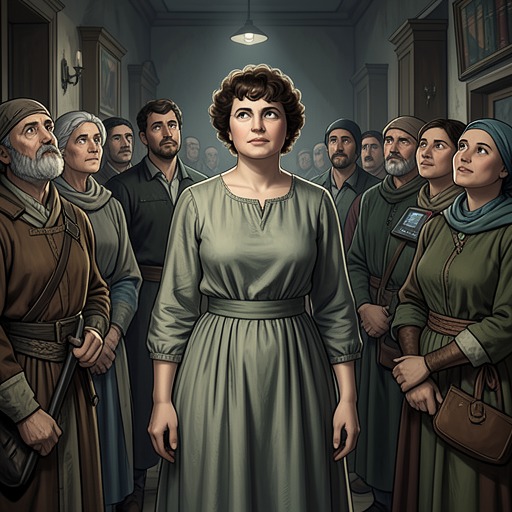
The refuge also supplied a vivid vocabulary for the life she wished she could lead. As a child, West imagined herself as an armed woman protecting an exiled queen, or as a disguised street performer using a rat army to infiltrate a duke’s festival and thwart a scheming nephew. These elaborate fantasies place her not merely inside an adventure but in the role of an active, resourceful defender. Their comic excess matters: the imagined self is no longer the whispering child pressed against her mother’s leg, but a person with a mission, allies, and room to move.
Her adult ambitions remained comparatively ordinary. West wanted to write jokes, puns, and recaps of Game of Thrones, not to make a career of describing online abuse. When harassment became part of her work, the contrast between wished-for escape and lived obligation became stark: she was at her computer dealing with people who harassed women, rather than pursuing the playful writing she had wanted. Fantasy did not prevent that intrusion, but it gives the narrative a measure against which its cost can be seen: time and attention that might have gone to comedy or imagined adventures were consumed by a fight she had not sought.
A Father’s Stories and a Mother’s Realism
West’s earliest fantasy world was also a shared family ritual. Her father read aloud to her every night, choosing Tolkien, Lewis, and Baum. She remembers his voice and pace dwindling as he nodded off in his chair, until the names of dwarves stretched into a sleepy jumble. The memory makes fantasy inseparable from care: it was not only a private escape into books, but something her father carried into the room each night. Even as an adult, a reference to riding a barrel down the Celduin toward Lake-town could leave her overwhelmed by nostalgia.
The childhood reading also shaped how West interpreted reality. She did not understand the air raids in The Lion, the Witch and the Wardrobe, but remembered that children escaping them went to a country house where they could use an inter-dimensional wardrobe. She even wondered whether Seattle might get air raids. The detail shows imagination converting an unfamiliar danger into the terms of a story: a threat could become the beginning of a passage elsewhere, toward a magical refuge.
West describes her father as drawn to magic and escapism as she was, and connects that affinity to a life that was beautiful yet marked by loss. Her mother, by contrast, disliked fantasy and preferred accounts of strong people facing the elements. The family phrase, repeated because West kept asking why her mother was not obsessed with dragons, became a shorthand for their difference. Between her father’s escapist idealism and her mother’s practical realism, West understood herself as growing between two poles rather than choosing one outright.
From Imagined Monsters to Real Ones
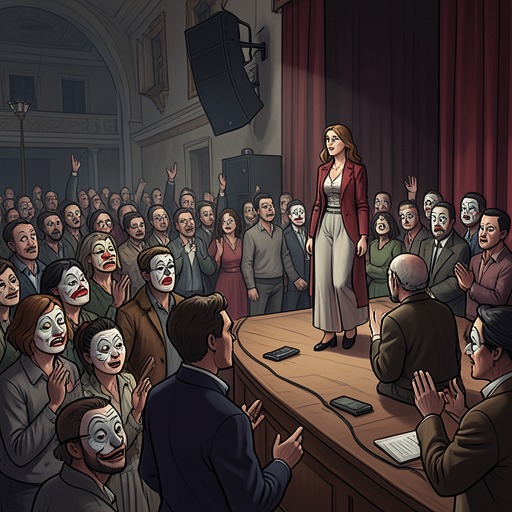
The division between fantasy and reality eventually becomes less absolute. West wonders whether she had stumbled into a job, one that did not exist when she was born in 1982, for which she was unusually suited. She had wanted to fight monsters, though she imagined necromancers in skull-towers rather than misogynistic creeps in basements. The comparison recasts her work without pretending that online harassment is a game: the monsters are real people, and the work brings real consequences. Yet the old heroic frame lets her recognize a continuity between the child’s imagined battles and the adult’s actual confrontation with abuse.
The parental contrast remains active in this interpretation. West asks whether her mother’s influence supplied the grit to continue and whether her father’s influence supplied the idealism that made continuing seem worth doing. Fantasy, in this account, is neither simply a denial of reality nor a cure for it. It provides images of action and possibility, while realism names the endurance required when the danger cannot be dispatched like a storybook villain.
The Refuge and Its Limits
West’s fantasy is a refuge because it allows her to inhabit spaces and personalities that social exposure, shame, and fear make difficult to claim. Its recurrence—from books and games to comedy, elaborate heroic scenarios, and nostalgic memories of her father reading—shows how deeply that shelter is woven into her sense of self. At the same time, the narrative marks its limits: stories could defer the realities of adulthood, but they could not keep those realities away, and online harassment could redirect her labor from the creative work she wanted.
The central movement is therefore not from fantasy to a final rejection of fantasy. Instead, imaginative refuge changes function. What once offered safety from the world becomes a means of recognizing a difficult place within it: the imagined fighter gives West a language for work she never wanted, while her mother’s realism helps frame the persistence it demands. The tension remains unresolved, but both inheritances matter. Escapism gives the struggle its heroic shape; realism keeps its costs in view.