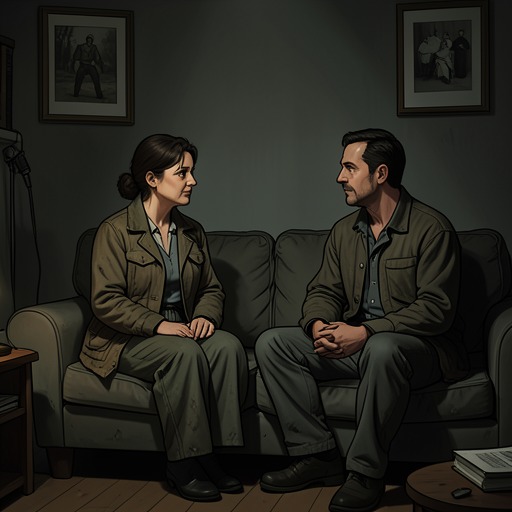
Lindy West and Mike’s Romantic Relationship
Shrill: Notes from a Loud WomanLindy West and Mike’s Romantic Relationship was defined by a mismatch between West’s longing for intimacy and Mike’s limited ways of offering it. West stayed for years in a bond that felt like the best relationship she had known, even as its loneliness and uneven expectations became impossible to ignore. Her pregnancy and abortion exposed that imbalance, briefly drawing the pair closer before the relationship ended within six months.
Background and Uneven Intimacy
West describes Mike as emotionally withholding and as someone whose main way of showing affection was to spend time beside her without much physical closeness. They nevertheless spent an extraordinary amount of time together. Their interests scarcely overlapped: Mike was devoted to cross-country running and New England, while West preferred candy, naps, affection, and fantasy. West attributes some of their persistence to loneliness and intelligence, and to the significance she placed on being wanted by someone who did not hide her away.
Their closeness came in intermittent gestures rather than a steady, mutually satisfying intimacy. Mike had had official relationships with thin women, while his friends teased him about his repeated hookups with fat women. Every few months, when drunk, he might hold West’s hand or tell her she was beautiful. When she first tried to leave, he followed her home and, crying on her doorstep, told her he loved her. West answered the next day that she loved him too, and believed the feeling was real for both of them, but understood it as a shallow attachment formed through repetition and resignation rather than shared enthusiasm.
West’s Effort to Make the Relationship Work
At twenty-seven, West regarded this as the best relationship she had experienced, despite recognizing how little it offered. Mike had been clear about his emotional limits from the beginning; West nevertheless tried to reshape herself around them, attempting to become interested in the running times that mattered to him. He still described her as a friend when speaking to his mother. West later saw that she was pushing against the relationship’s stated boundaries until both of them were exhausted, and that she had mistaken perseverance for love.
The effort was not only futile for West; she also recognized that it was unfair to Mike. Her account holds both facts together: she was lonely within the relationship, and Mike was not pretending to offer more than he could. The problem was not a single betrayal but a durable mismatch between what she needed and what he could give. West’s image of being alone beside another person captures why the relationship’s continued presence did not relieve her isolation.
Pregnancy and the Decision to Leave
West discovered she was pregnant while the relationship was still ongoing. She could not remember how the pregnancy had happened, noting only that they had mostly been careful. She imagined that a child might have bound them together, but also believed they would have separated before the birth. Although she could envision a possible life in which Mike loved the baby and they shared custody, she doubted that the relationship itself could sustain parenthood. Mike wanted to return to New England, a future he spoke about often; West wanted that for him even though his longing made her feel less important than the life he hoped to reclaim.
West initially did not tell Mike about the pregnancy. She recalled a faint fear that he would be angry, and felt embarrassed, as though the pregnancy exposed her own desire to make their connection into a more secure relationship than it was. Because she already felt alone with him, she proceeded alone: she arranged to see the doctor she had known since childhood and obtained confirmation of the pregnancy. The secrecy reflected the relationship’s existing emotional distance, rather than a stated conflict over what to do.
After the abortion, Mike did not stay at West’s home because he had to get up early for his high-school reunion. West tried to part from him casually, but he sensed that something was wrong. In his car behind his house, he asked what was happening; she began to cry and said she could not tell him. After a silence, he asked whether she had had an abortion. She told him it had happened that day. Mike cried because West had felt she needed to keep it from him, not because he expressed regret or a moral objection. He felt guilty, West felt pathetic, and the disclosure brought them closer for a time.
Separation and Retrospective Meaning
The renewed closeness did not last. Mike went to the reunion the next day and did not contact West as much as she hoped. She stayed in bed, aching, and described the days that followed as a gradual return toward normal. Within six months, they had broken up for good; within seven, West was no longer angry with him; within a year, he had moved back east. She continued to regard him as a good person, distinguishing his character from the painful limitations of their partnership.
West places the relationship and abortion within a larger five-year period of change, without claiming the procedure caused that transformation. In the months and years afterward, she began to stop hating her body, received an email from a fat reader who said her writing had saved her life, fell in love with her future husband, met her stepdaughters, moved to Los Angeles, worked at Jezebel, appeared on television, and married. She describes the abortion as her first major adult decision: an assertion that the life unfolding through this relationship was not the life she wanted. Its significance, in her account, lies not in a universal promise of empowerment or in Mike’s conduct alone, but in her choosing to take direction over her own future.