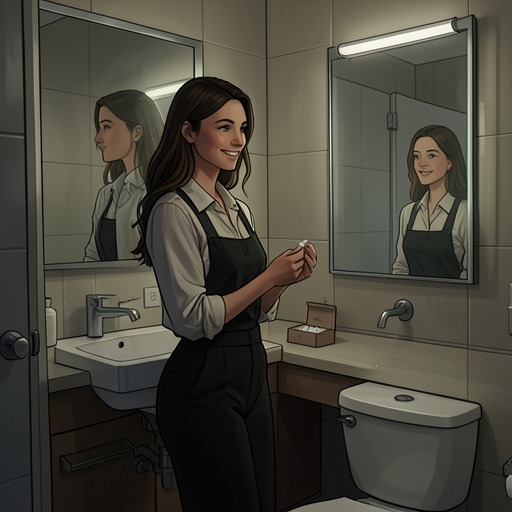
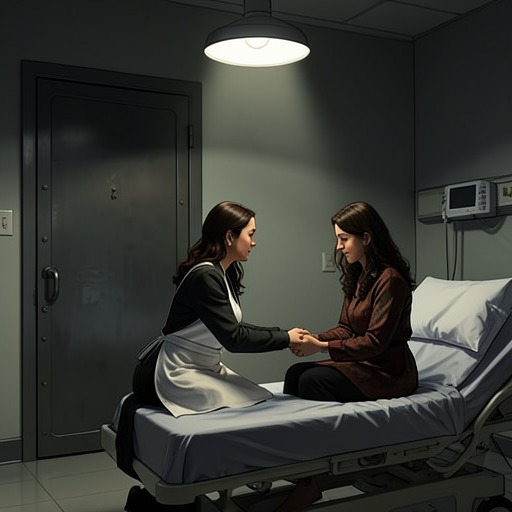
Lindy West’s abortion experience
Shrill: Notes from a Loud WomanLindy West’s abortion experience is significant not because she casts the procedure as a singular turning point, but because she recalls it as an ordinary medical choice entangled with loneliness, financial pressure, and shame. The decision gave her an early, unmistakable chance to direct her own life; the years of change that followed were not, in her account, caused by abortion itself.
Background and relationship
West learned she was pregnant while involved with Mike, a boyfriend whose affection was difficult for her to read and whose emotional reserve left her feeling alone even when they spent time together. They shared little in their interests, and he continued to describe her as a friend to his mother. At twenty-seven, West nevertheless regarded the relationship as the best she had experienced, and tried to fit herself to its limited terms. She understood love as something secured through perseverance, even as both of them became exhausted by that effort.
The pregnancy was not planned. West says she and Mike had mostly been careful, but she could not remember how it happened. She imagined that a child might have bound them to one another, while also believing they would have separated before the birth. Mike wanted to return to New England, a future she wished for him even though it hurt her. In retrospect, the possibility of a child made the relationship’s limits harder to ignore: West felt that being lonely alongside someone was worse than being alone.
She did not tell Mike when she first learned she was pregnant. West recalls a faint fear that he would blame her, together with embarrassment and a sense that the pregnancy somehow reflected her need to be loved. Because she already felt alone in the relationship, dealing with the news alone seemed consistent with its usual pattern. Her silence was not evidence that the decision was easy; it revealed how little partnership she felt she could rely on at that moment.
Seeking care
West initially assumed that obtaining an abortion would be as routine as arranging another legal medical procedure. She had grown up middle-class and white in Seattle, had always had insurance, and had an established doctor whom she had seen since age twelve. At the appointment, her doctor confirmed the pregnancy and asked whether West wanted to continue it. West said no. She remembers trying to meet the situation with a breezy, joking composure, although that manner did not capture the distress that followed.
After going home, she called a clinic. The clinic could offer an appointment the following week, but the cost after insurance would be $400. West had about $100 left after paying rent, and payday was two weeks away. When she asked whether the clinic could bill her, she was told that full payment was normally due on the day of the procedure. The clinic offered to postpone the appointment so she could gather the money, but West did not want to wait another two weeks or spend each day anticipating changes in her body.
The clinic’s director took over the call and spoke with West until she could breathe more steadily. The director then made an exception to the usual payment arrangement: if West promised to pay, she could come in the next week and be billed afterward. West kept that promise as soon as her next paycheck arrived; the clinic was sufficiently surprised by the prompt payment to send her a thank-you card. She later reflected that she was not the person most in need of help: she could have waited, or spoken with her supportive, well-to-do mother. The assistance mattered, but it also exposed how privilege can make it easier for some people to receive a favor than for others to obtain care at all.
At the clinic, West spoke with a counselor, who asked why she had not told her partner. The question brought her to tears because she did not feel that Mike had been a partner in the fuller sense. A doctor told her the embryo was about three weeks old and gave her two pills, with instructions to return in two weeks. West remembers the crowded waiting room and the other patients sitting with companions, although no one made eye contact. The practical steps of care were clear; the experience surrounding them was marked by privacy, uncertainty, and the cultural silence she would later argue should end.
Procedure and immediate aftermath
West took the first pill on the day she was due to present a filmmaking prize to her friend and colleague Charles Mudede at the Genius Awards, The Stranger’s annual arts grant. Mike went with her. She remembers the evening as surreal: she smiled broadly and made a speech while running on little energy, and later confided to a friend that she had had an abortion that day. The juxtaposition—an ordinary public obligation continuing alongside a private medical event—became part of the story’s account of how little room public culture made for candid discussion of abortion.
Mike learned what had happened that day. He cried because West had felt unable to tell him, not because he was expressing regret about the abortion or a moral crisis. The disclosure brought them closer for a time, but it did not repair the relationship. The next day he went to a reunion, and West felt hurt that he did not text more. She spent much of the day in bed and ached; over the next few days, she felt increasingly better. The pregnancy had ended, and their old pattern of Mike running ahead while West followed did not resume unchanged. They broke up for good within six months, West stopped being angry with him within seven months, and within a year he had moved back east. She still describes him as a good person, without mistaking that judgment for a claim that they were suited to one another.
Meaning and later perspective
West resists the idea that the abortion transformed her by some automatic or mystical process. Looking back across the five years after it, she lists changes in her body, work, voice, confidence, and public life, but explains their convergence as developments set in motion over many years. The abortion’s particular importance was more modest and more concrete: it was her first major adult decision in which she clearly recognized that the life ahead was not the life she wanted and acted accordingly. She describes that choice as taking hold of the direction of her own body and future, not as the sole cause of who she became.
That distinction matters alongside the timing of other changes. Three months after the abortion, West began to make peace with her body; around that period, Leonard Nimoy’s The Full Body Project showed her photographs of fat women presented with dignity and without ridicule. She returned to the images after initially turning away, and began to consider that her body need not remain a secret or depend on strangers’ approval for its value. The experience of reproductive choice and the later challenge to fat shame are not presented as the same event, but both belong to a growing insistence that other people should not define the worth or future of her body.
West’s later account also places her private experience against a public climate that judged fat people while claiming to speak only about health. She describes the mid-to-late 2000s as a period of widespread hostility toward fatness, and recalls her boss, Dan Savage, defending the view that an obese person could not be healthy. This context sharpens the book’s broader concern with who is allowed to speak authoritatively about bodies and whose choices are treated as suspect. West argues that abortion stories should be told precisely because silence lets opponents impose a single account on experiences that differ from person to person.
Her conclusion is deliberately two-sided: the abortion was a big deal, and it was not. It was a medical procedure made harder by an unsatisfying relationship, internalized fatphobia, fear of adulthood, and shame around sex. Yet West says the procedure itself was the easiest part; being unable to obtain it would have been the real trauma. By refusing both a story of inevitable devastation and a story of effortless empowerment, she treats the experience as particular, consequential, and ordinary enough to deserve open discussion.