Paul West’s death
Shrill: Notes from a Loud WomanPaul West’s death was the culmination of a drawn-out and unpredictable decline, not a final scene whose timing or meaning the family could control. In Lindy West’s recollection, the hospital vigil holds both the helplessness of watching his body fail and the small, intimate acts that remained possible: reading aloud, holding his hand, and waiting together as his breaths slowed.
Illness and the uncertainty of dying
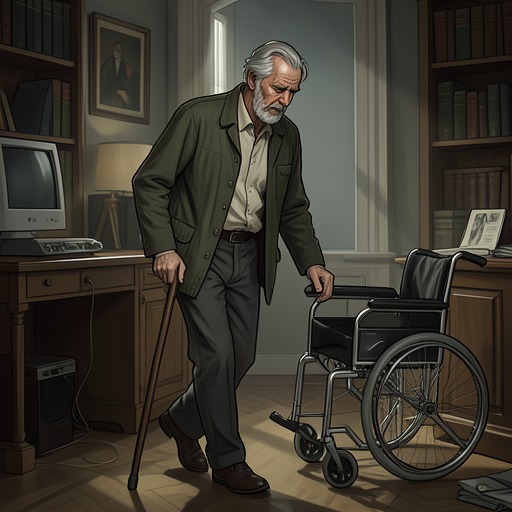
Paul West Jr. had prostate cancer, but the illness did not advance according to a legible schedule. His daughter describes cancer as a breakdown of several bodily systems that could move slowly and then change with startling speed: a family might have months, then only hours. Treatments brought pain and humiliation, while their likely benefit remained uncertain. There was no clear threshold at which the family could know that the disease had become suddenly and decisively fatal.
Although Lindy’s mother was a nurse and hospitals had been part of her childhood world, Lindy had understood them principally as places where people went to recover. Her father’s repeated hospitalizations changed that understanding. In his case, the doctors eventually could no longer make treatment meaningfully arrest internal bleeding and dehydration. The remaining care was directed toward easing his suffering with morphine. The decision belonged to fallible people making judgments under terrible constraints, while the family had to accept that there was no intervention left that could save him.
Paul was seventy-six that year and did not want to die. Until his prostate cancer disrupted his life, he had retained the tireless exuberance his daughter associated with him. He disliked hearing his prognoses, so Lindy’s mother met with the doctors herself and carried the knowledge of what might come. The contrast between her realism and his hopefulness persisted even as his body began to fail.
The last hospital vigil
The family’s recognition of his decline gathered around ordinary, painful moments. At Thanksgiving, Paul vomited into an empty margarine tub at the dinner table. Lindy understood that he had begun grieving for himself and the life he was not ready to leave, but she was frightened by that grief. Looking back, she reproaches herself for sleeping, for being chirpy rather than vulnerable, and for moving to Los Angeles three months before his death. Yet her father had wanted her to go: before he admitted that he was dying, her staying would have confirmed that something was seriously wrong, and he had loved seeing his children venture out and flourish. He sent her off with, “Knock ’em dead, kid,” and did not live to see what followed.
At the last hospital admission, Paul drifted in and out of consciousness. Lindy and her sister read aloud from A Jazz Odyssey: The Life of Oscar Peterson, the book he had been partway through. They reached an account of Oscar Peterson touring parks and monuments with his wife Kelly in a new Winnebago, complete with gleaming chrome and an over-cab bed. Paul occasionally roused himself to chuckle as the story approached Peterson’s attempt to empty the vehicle’s sewage tank. The comic, mundane detail made its way into the room where the family was confronting his death; Lindy read on, even as the story threatened to become an absurd account of sewage spraying everywhere.
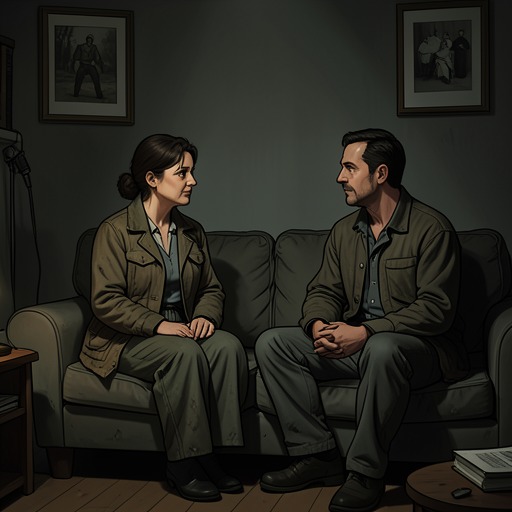
The room could comfortably hold only two visitors. Lindy, her mother, and her sister took turns sitting beside the bed and holding Paul’s hand, resting on the bench beneath the window, or retreating to the cafeteria or family lounge. That windowless lounge offered an old television, a couch upholstered like leftover airport carpet, and battered VHS tapes, including Speed 2: Cruise Control. Against those indifferent surroundings, the family’s care was measured in shifts and proximity: who could be beside him, who needed to sleep, and who had to wait elsewhere.
Waiting and death
Paul lost consciousness on Saturday night. His mother told Lindy to go home and sleep, promising to call if it seemed he was about to die. Lindy slept on her parents’ couch, believing she might miss the end; she had said goodbye and told him she loved him. But Paul was still holding on the next morning, so she returned, and the family resumed its rotation between chair, bench, and lounge.
They waited through Sunday and into Monday as each breath became slower and rougher. Lindy connects the sound of that vigil to an enduring change in her daily life: she now uses a French press because she cannot bear the percolator. Doctors came in with clinical concern and asked how the family was doing or whether anything could be done. Their questions collided with the reality in the room: the family had been listening for thirty-six hours to a loved one struggle to breathe, and the doctors had already reached the limits of what they could offer.
Monday afternoon, Paul stopped breathing. Lindy describes his appearance as fading toward black and white and seeming to flatten, as if the force that had held him in three dimensions had left. The image marks the severing between the body that had been the center of his personhood and the memories that now had to carry it. The family’s waiting ended, but its opposite wish remained inseparable from that relief: Lindy had wanted the purgatory to stop and also wanted it never to stop, because its end meant that her father was gone.
The hospital’s practical routine resumed almost immediately. A nurse brought granola bars and juice boxes; a worker arrived with a mop to prepare the room for another patient; someone came with a clipboard. Lindy’s mother demanded a moment before answering questions, insisting that her husband had died only thirty seconds earlier. The family sat with his body, though Lindy admits she did not understand what that sitting was for. The scene refuses a consoling pause between death and administration: grief occupies the same room as the next patient’s preparations.
What remains in memory
The death also changed how Lindy understood an earlier loss. When her parents sold the house where she grew up, she was twenty-five and sat on the stairs sobbing over the departure. In that house, her father had penciled the names of the notes onto piano keys for her; gray graphite still marked the grain, a trace of his teaching and of her failure to practice enough, which he had pretended not to mind. At the time, she thought the house’s sale felt like a death and meant her family was broken. She dates the end of that understanding to December 12, 2011: a place could resemble a person, but it was not one; only a person was a person, and only a death was fully a death.
That distinction gives the hospital vigil its lasting force. The room’s chairs, the book, the percolator, and the pencil marks on the piano can preserve traces of a shared life, but they cannot replace the person who made those traces. After Paul’s death, memory must take up the work his living body once performed. The memoir’s account stays with the contradiction at the heart of the final vigil: his family could neither prevent the ending nor want it to arrive, and afterward the ordinary objects of their life together became evidence of what could no longer be recovered.