Calling out the harm of herpes jokes at Bridgetown
Shrill: Notes from a Loud WomanAt the 2010 Bridgetown Comedy Festival in Portland, Lindy West watched a comedian turn herpes into a punch line and then quietly challenged Ahamefule J. Oluo to consider what the joke asked its audience to laugh at. Her intervention joined a friend’s recent experience of stigma to an argument about comedy’s power to make shame seem deserved. It also became a hinge in West and Ahamefule’s relationship: a private conversation at the back of a club that altered his understanding of her and preceded their becoming a couple within a year.
Setting and Background
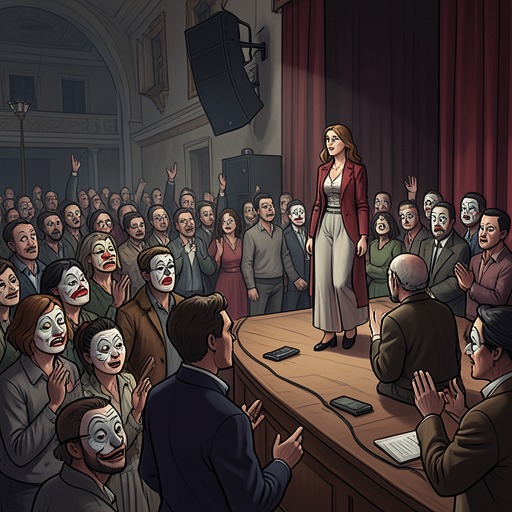
The encounter took place during Bridgetown’s third year, in 2010. West was standing with Ahamefule at the back of a club, watching an old friend perform. She could not later recall whether the routine was about sex or online dating, but its punch line, herpes, and the audience’s laughter remained clear. The act was not directed at the comedian’s own experience; its target was people who had herpes, presented as objects of disgust and ridicule.
West’s response was shaped by something that had happened shortly beforehand. A friend had been deceived by a partner about his STI status and had also experienced a violation of her consent. She subsequently became ill and was devastated not only by what had happened but by the stigma attached to the illness. She feared that she would never date again and wondered whether she deserved to be alone. West had tried to counter that shame by describing the condition as a skin issue rather than a moral failing. She had comforted her friend while she cried in West’s car. That conversation was still present in West’s mind at Bridgetown.
The Joke and Its Stakes
The comedian was, in West’s view, a funny and good person. The problem was not that he was irredeemably cruel, but that the joke used a familiar stigma as easy comic material. West imagined audience members with herpes covering their shame with smiles while people without it took the laughter as confirmation that they were cleaner or better. The joke’s apparent ease depended on the people it demeaned keeping quiet: objecting would require them to disclose a private condition and risk being dismissed as oversensitive or accused of spoiling the fun.
That pattern made the laugh consequential beyond the room. If silence allowed the joke to succeed, its success could encourage another joke of the same kind; meanwhile, the stigma could make dating and ordinary social life feel narrower for those targeted. West questioned whether a cheap laugh was worth reinforcing that burden, and whether comedy that relied on it was especially funny in the first place. She also set the scene against a broader failure of sexual-health education: in a culture that withholds comprehensive information, she argued, blaming people for illness serves moralism rather than understanding. Comedy, often associated with countercultural truth-telling, seemed capable of repeating the very judgments it might challenge.
The Conversation with Ahamefule
West turned to Ahamefule and told him she could have herpes. The remark made the issue personal without claiming that she had the condition; it asked him to picture the possibility among people in the club, rather than treating them as an invisible group outside the room. She then pointed out that many audience members might have herpes and might feel obliged to laugh along. Ahamefule answered that he could have it too. The exchange shifted the subject from an abstract punch line to shared vulnerability, without requiring either of them to disclose a diagnosis.
West was also acutely aware of Ahamefule as someone she found attractive. He was six foot five, a comedian she admired for being insightful and fearless, and a jazz musician like her father. A mutual friend had recently said that he was a good cook; he had also been divorced more than once and had two children and a vasectomy, details that reminded West of her father’s life when he met her mother. She pushed those thoughts aside to make the point about stigma. The scene thus holds two kinds of attention together: her attraction to the man beside her and her insistence that people in the audience should not be made to carry shame for the sake of a joke.
Aftermath and Significance
West and Ahamefule had spent five years encountering one another at house parties and open mics without becoming close. Years later, Ahamefule said he had already admired her writing, but that the Bridgetown exchange changed how he understood her. He had known her as funny; hearing her speak up in that moment led him to recognize a deeper goodness in her. The conversation did not simply display a view about comedy. In his recollection, it made that view visible through a specific act of empathy.
They became inseparable for the rest of the festival weekend. They went to an arcade, played Plinko for hours, drank beer, and helped Hari Kondabolu devise insults for a text argument with Marc Maron. Within a year, West and Ahamefule were a couple, and he was playing gigs with her father. West later described the scene as a moment when the life she had imagined at twenty-two—spending time with comics, falling in love, and riffing—seemed to be arriving. Yet she also felt her relationship with comedy changing. The event therefore carries two linked consequences: it draws West and Ahamefule closer, and it marks a shift from comedy as a dreamed-of life toward a practice whose effects on real people she can no longer treat as incidental.