Lindy West and Ahamefule J. Oluo’s relationship
Shrill: Notes from a Loud WomanLindy West and Ahamefule J. Oluo’s relationship moves from friendship among Seattle comics to romance, a painful separation, and a marriage formed after they chose each other again. Its defining pattern is a change in what intimacy means: Lindy first approaches love as something she must secure, but the relationship’s later stages make room for mutual choice, family ties, and a commitment visible rather than concealed.
Friendship and the First Turn Toward Intimacy
For about five years, Lindy and Ahamefule, known as Aham, chatted at house parties and open mics without becoming close. Their relationship shifted during a conversation about a comedian’s herpes jokes. Lindy leaned close and told him that she might have herpes, then explained that people in the audience who had the condition might have to laugh along while the joke confirmed their fears of being unwanted. Aham was startled, but answered that he might have herpes too. The exchange made the argument personal without making it a confession designed to secure his approval: Lindy was willing to risk his reaction because she thought the joke harmed people.
Aham later told her that he had already admired her writing, but that this conversation changed how he understood her. He had seen her as funny; now he also saw someone radically good. Lindy’s account places that recognition beside her own awareness of his attractiveness and his life beyond comedy. He was a six-foot-five comedian with broad shoulders and mole-brown eyes, a jazz musician like her father, and a father of two. She had recently heard that he was a good cook. The attraction was present, but she initially pushed those thoughts aside to make the point about stigma.
They spent the rest of that weekend together: playing Plinko at an arcade, drinking beer, and helping Hari Kondabolu with a text argument. Within a year, they were a couple, and Aham was playing music with Lindy’s father. Lindy had imagined a life at twenty-two that included comics, love, and constant joking; this beginning seemed to bring that imagined life within reach. At the same time, she felt her relationship with comedy changing. Their romance therefore begins not in a private declaration but in a public ethical disagreement about who bears the cost of a joke.
Unequal Intimacy and the Break
Lindy’s earlier experience with Mike provides a contrast to the openness she later finds with Aham. When she became pregnant during that relationship, she did not tell Mike; she remembered feeling alone with him and dealt with the pregnancy and abortion by herself. She approached care through her regular doctor, assuming that abortion was an ordinary medical procedure available to her. When the clinic could not initially accommodate her bill, its director offered to let her return and pay after the procedure if she promised to pay. Lindy did so when her next paycheck arrived. Looking back, she recognized that her middle-class, white background made it easier to obtain care and to be trusted with that arrangement. This earlier solitude does not explain the later relationship, but it marks a sharp difference between being left to manage a crisis alone and the care Aham eventually offered her.
The relationship with Aham did not escape Lindy’s fear of being unworthy or abandoned. After they moved together to a new state with ambitious plans, the relationship deteriorated quickly. Lindy describes herself as feeling both too much and too little: she pressed closer as Aham became depressed, distant, and mean; he seemed mentally elsewhere, and she cried every day. His elimination from a comedy competition added to his anger. On Halloween, he went to a party and told her she could not come because there were no plus-ones. He returned at five in the morning. The accumulation of distance and exclusion made the impending rupture feel less like a single misunderstanding than a relationship loop in which her increasingly frantic pursuit met his withdrawal.
Aham eventually told Lindy that he did not think they would be okay. She describes the answer as changing everything. She had been sad before, but this felt like being liquefied; years later, writing about it still brought her to tears. Her devastation was bound up with the belief that she had waited a long time for someone to choose her, only for him to change his mind. In retrospect, she also recognized that she had treated a relationship as something that happened to her and tried to force it into the shape of the love stories she had imagined. The breakup exposed the difference between wanting to be chosen and learning that a relationship must be chosen by both people.
Separation, Grief, and a New Relationship
The separation coincided with an upheaval that made the relationship’s fragility impossible to isolate from the rest of Lindy’s life. A tree fell on the house while she was sleeping alone in the bed that had been theirs. It happened four weeks after Aham told her he was leaving, eight weeks after they had moved in together, and two weeks before her father died. Lindy’s recollection of the move is threaded with regret: she remembers leaving her father, who was wrapped in a plaid blanket and leaning on her mother, and retraces the long drive south in detail. The tree becomes part of that sequence of losses, not a cause of the breakup but an image of how quickly the home and plans they had shared came apart.
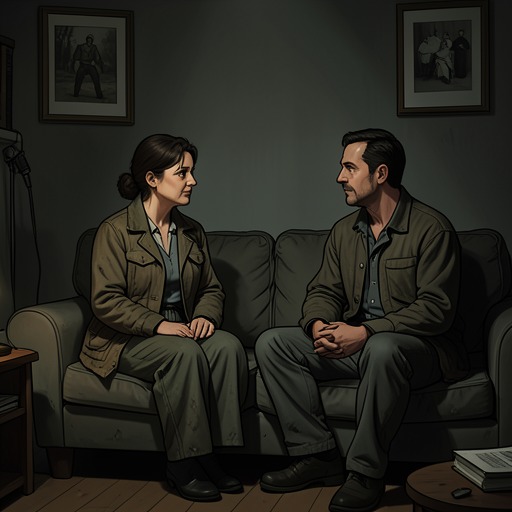
After her father’s death, Lindy called Aham in Los Angeles and asked him to come. He agreed. They were not back together, but he slept beside her and held her as much as she needed. He ran errands for her mother, made her laugh, cooked eggs Benedict, arranged a piano player for the funeral, and worked out how to obtain a banquet license while Lindy cried in a liquor store. Relatives, friends, and Aham’s daughters gathered at the family home; amid beer and football, Lindy found a vein of joy in what she calls the saddest month of her life. She and Aham insisted they were not resuming the relationship, yet his place in the family had become undeniable. Their connection had changed from romance under strain into practical, shared care.
Back in Los Angeles, they lived in limbo for several months. Aham toured, Lindy began working at Jezebel, and they were not officially together, but they were happy in a way neither had known before. Lindy reflects that her grief and career had made Aham less central to her entire world, creating space between them. When he returned from tour, they undertook a two-day conversation about their feelings, with scheduled breaks and a written agreement about how much crying was allowed. The process ended with them a couple again, but Lindy does not understand it as restoring the old relationship. They had become different people, and what they began was a new relationship rather than a replay of the previous one.
A Public Proposal and Marriage
Aham proposed on Lindy’s thirty-second birthday. He took her to dinner, then suggested a quick drink at their neighborhood bar, where friends, relatives, and children were waiting. A paper banner bearing Lindy’s name hung at the back, and friends played cello and bass. The details gradually tipped the birthday gathering into a proposal: the school-night timing, the children’s presence, Aham’s serious expression, then the ring, speech, question, and tears. Lindy had expected to wait five years; Aham proposed after two. The public setting mattered because it answered a request she had made while drunk: she had told him that fat women deserved public proposals too, not secret gestures that treated them as lesser or as someone a man was trying to keep from leaving.
They married a year and a half later, in July, at Lindy’s parents’ cabin a few hours outside Seattle. The day joined their present to her father’s memory: Lindy walked down the aisle to a recording of him playing “Someone to Watch Over Me.” Aham wore a blue plaid suit, and a bald eagle flew over the ceremony. The celebration was loving and disorderly rather than polished into a performance of perfection. Red wine spilled on a bed; Lindy got her period; rain arrived after a month of sunshine and stopped just as the couple emerged from the tent to dance. Meagan Hatcher-Mays gave a toast about a relative who had believed she and Lindy were lovers, and Aham’s hundred-year-old great-grandmother recovered from a stroke and still came to the wedding.
Lindy and Aham wrote their vows only five minutes before the ceremony. Aham’s vow recalled the years when he had tried to spend time with Lindy and she repeatedly canceled, presenting his persistence as something he had been right to trust. He told her that she was better than he had thought people could be. Lindy, in turn, describes herself as happier than she had believed possible. The hastily written vows, the family gathered at the cabin, and the recording of her father’s piano make the wedding less a flawless culmination than a chosen life assembled from memory, humor, grief, and repair.
What the Relationship Changes
Lindy’s account treats the marriage as a challenge to the idea that a fat woman must accept less visibility or less love. Wedding culture surrounds her with weight-loss programs and the expectation that she should become thinner for photographs; she refuses to hide in daily life and will not hide at her wedding. She also rejects the assumption that fat people should be paired only with other fat people, insisting through the relationship that attraction and love are not reducible to body size. The proposal’s publicness and the wedding’s openness make that refusal concrete.
The relationship’s emotional arc is likewise not a simple rescue story. Aham’s presence during Lindy’s bereavement did not mean they were immediately reunited; the text distinguishes caregiving from being a couple, and their eventual return followed a difficult conversation and a changed understanding of what partnership required. Their marriage rests on a second beginning rather than on the fantasy that the first rupture never happened. Across the movement from a candid conversation at an open mic to a wedding attended by family and friends, Lindy and Aham’s relationship turns private vulnerability into sustained, visible commitment.