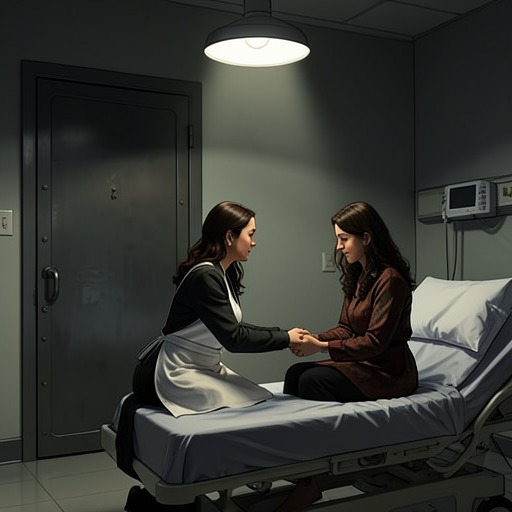
Lindy West and Ingrid West’s mother-daughter relationship
Shrill: Notes from a Loud WomanLindy West and Ingrid West’s mother-daughter relationship is shaped by a contrast between care that is available and care West initially finds difficult to ask for. The memoir first shows West facing an unplanned pregnancy without telling her mother; later, as her father’s illness becomes terminal, it places the two women side by side in hospital rooms, taking turns keeping vigil. Their bond emerges not as effortless intimacy, but as practical care, shared responsibility, and the strain of confronting what cannot be fixed.
Background and the Limits of Asking
West describes growing up middle-class and white in Seattle, with insurance and a long-standing family doctor. Those circumstances made abortion care more accessible to her than it is to many people. Yet when she learned she was pregnant, she did not tell her partner, Mike, and she also did not turn to her mother. West recalls that she could have faced an awkward conversation with a supportive, liberal, well-to-do parent, but instead proceeded without bringing her into the decision. The distinction matters: the silence is not presented as proof that Ingrid would have refused support. West identifies the possibility of asking as one she did not take, while recognizing that privilege gave her alternatives, including the ability to wait for care or speak with her mother.
That episode establishes a recurring tension in West’s account of closeness. Help can be present without being requested, and having access to support does not automatically make it easy to reach for. West’s later reflection on the clinic’s willingness to let her pay after the procedure connects her individual experience to class and race: she wonders why she seemed trustworthy and concludes that women with the least need may receive the most assistance. Her mother’s support belongs to this same material context, but the memoir does not claim that Ingrid arranged the abortion or even knew about it at the time.
A Nurse in the Family, a Daughter Learning What Hospitals Mean
Ingrid’s nursing background had made hospital culture familiar in the West household. West remembers medical subjects appearing in ordinary family life, yet says that this exposure did not teach her what hospitals could mean when a patient was dying. She had understood them primarily as places where people went to get better. Her father’s prostate cancer forced a different understanding, as treatment and hospitalization became part of a complicated decline rather than a straightforward route to recovery.
During this period, Ingrid took on the burden of communicating with doctors. Because Paul West Jr. did not want to hear his prognoses, Ingrid met with the doctors herself and carried knowledge of the likely future without him. West characterizes her mother as the realist and her father as the fantasist, a division that places Ingrid in the difficult role of facing medical reality on the family’s behalf. Her professional familiarity with hospitals did not spare her from this emotional responsibility; it gave her a role in navigating a situation that remained painful and uncertain.
West remembers feeling frightened by her father’s grief as he began to recognize that his body was failing. Looking back, she regrets not spending more time beside him, sleeping too much, and keeping her interactions with him chirpy rather than allowing herself to be vulnerable. Those regrets also frame her relationship with Ingrid: the memoir does not suggest that mother and daughter shared every feeling in the same way, but it shows them confronting the same impending loss from different positions within the family.
Shared Vigil and the Work of Care
In the hospital, the small room could comfortably hold only two visitors. Ingrid, West, and West’s sister took turns sleeping in the chair beside Paul West Jr.’s bed and holding his hand; another family member could rest on the bench or go to the cafeteria or family lounge. Their care was repetitive and practical: taking shifts, staying nearby, and returning to the bedside as his breathing slowed. West recalls that after her father lost consciousness on Saturday night, Ingrid told her to go home and sleep and promised to call if his death seemed imminent. West woke the next morning to find that he was still alive and went back to resume the family’s routine of waiting.
The arrangement shows Ingrid caring for her daughter while also remaining at her husband’s side. She gave West permission to rest, while the family continued sharing the vigil through Sunday and into Monday. The narrative emphasizes the long duration of this waiting rather than a single decisive conversation: the women and their family returned to the chair, the bench, and the bedside as the hours passed. Their closeness is conveyed through this coordinated presence, not through any claim that the experience made grief easy or identical for them.
When Paul West Jr. died on Monday afternoon, the transition from vigil to aftermath was abrupt. A nurse brought snacks and juice, and someone arrived to prepare the room for another patient. Ingrid objected when a staff member began asking questions almost immediately, telling him that her husband had died only moments earlier and asking for a minute. Her response marks a specific act of boundary-setting at a moment when ordinary procedures pressed in on the family’s loss. West and her family then remained with her father’s body, though West admits she did not understand the purpose of staying.
After the Death
In the month after her father’s death, care extended beyond the hospital and into the family home. When West asked Ahamefule J. Oluo to come, he was not formally back in a relationship with her, but he helped Ingrid: he ran errands, cooked eggs Benedict, and made her laugh. West describes relatives, Oluo’s daughters, friends, and family gathering at the small white house, where people drank beer, watched football, and stayed close. The memoir presents this as a shared household response to bereavement, with Ingrid at its center and practical help coming from a widening circle.
West later acknowledges Ingrid directly for taking care of her and following through. That expression of gratitude gives the relationship a lasting frame: the earlier account of West not asking her mother for help during the pregnancy remains part of their history, but it does not define the bond. In the account of her father’s illness and death, Ingrid’s care appears in medical conversations, bedside shifts, protection of the family’s space, and the continued work of getting through the days that followed. The relationship’s significance lies in that combination of limits and reliability: support is not always sought at the moment it is available, yet in the family’s deepest crisis, mother and daughter endure the vigil together.