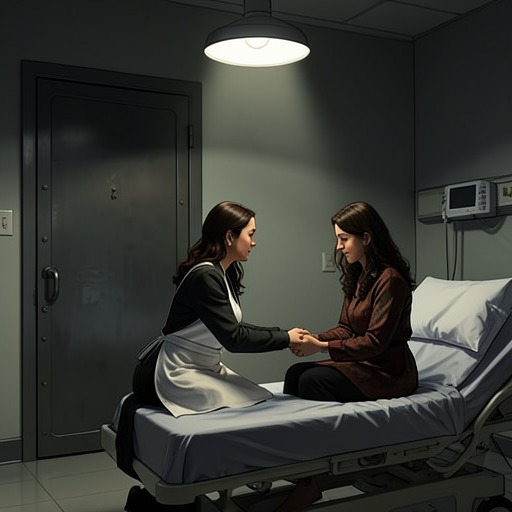
Lindy West and Ingrid’s Mother-Daughter Relationship
Shrill: Notes from a Loud WomanLindy West and Ingrid’s Mother-Daughter Relationship is defined by a productive tension: Ingrid offers structure, competence, and unsentimental realism, while Lindy West grows up reaching toward fantasy and possibility. Their differences sometimes leave West embarrassed or frustrated, but they also become complementary forms of care. In adulthood, she sees her mother’s practical strength as one source of the grit that helps her persist, and understands her own outlook as formed between Ingrid’s groundedness and her father’s encouragement.
Family Background and Temperament
Ingrid’s realism has a family history. Her parents, Clara and Ole, came from Norway and raised seven children after moving to Seattle. Clara had been the eldest of ten; during the Great Depression, her parents sent her back to Norway to help raise two younger sisters. Ole, whose father died when he was nine, later joined a group of resistance fighters who skied into the hills during Norway Under German Occupation to retrieve supplies dropped by an Allied plane. West presents these histories as part of the family inheritance behind Ingrid’s emphasis on endurance, not as a simple explanation of her personality.
Clara and Ole’s Seattle household was crowded and resourceful. Clara kept house, preserved fruit, and sewed clothes; Ole worked as a carpenter. They took in people who needed a place to stay, and at times as many as thirteen people shared their three-bedroom, one-bath home. Ingrid, the sixth of seven children, remembers helping her mother in the kitchen as a way to get individual time with her. She speaks of the crowded household with pride, and West links her mother’s ability to manage with little to Ingrid’s sense of self.
As an adult, Ingrid is an experienced nurse who has worked for forty years and is quick to notice practical problems. Her expectations about doing things correctly can be rigid: she jokes that cleaning the bathroom every day means never having to clean it. This orderliness differs sharply from the imaginative escapes that appealed to West, but the contrast is also part of the relationship’s texture. Ingrid is not portrayed as lacking affection; her care often takes the form of practical attention and preparation rather than indulgence.
Growing Up: Care, Embarrassment, and the Body
One early clash came when West, at eight or nine, noticed the long hair on her shins after a friend questioned why she did not shave. She went home asking Ingrid for a razor. Ingrid responded by recalling that her own mother had never shaved her legs and that she wished she had followed that example, because the soft hair could not be restored. West brushed off the appeal; she did not want to be dealing with the question either. The exchange holds two different experiences of growing up: Ingrid looks back at a choice she regrets, while her daughter is already reacting to a social expectation she did not ask to face.
Ingrid also tried to prepare West for puberty by taking her to a four-hour mother-daughter class at the elementary school library. West recalls that the class did not make the transition less awkward. When her period began, she avoided discussing it, and for years did not reliably tell her mother when they had run out of supplies. Ingrid sometimes had to make late grocery runs; on one occasion, she could not get to the store before work, leaving West to manage with an old menstrual product from the family’s first-aid drawer. The account makes the silence consequential without suggesting that Ingrid intended to shame her: West’s embarrassment kept practical information from reaching her mother, while Ingrid’s efforts to prepare her could not make the subject feel easy.
That distance changed gradually. West says she cannot identify a single moment when she got over her discomfort. With time she became able to ask a friend for a tampon, tolerate one falling from her purse in public, and ask her husband to buy supplies. Looking back, she connects her shame less to menstruation itself than to a broader sense that her body was treated as wrong or not fully her own. Her adult declaration of bodily ownership marks a change in her relation to that inherited silence; it does not erase the years when speaking to her mother about ordinary needs felt difficult.
Two Parenting Styles
West describes her parents as occupying different poles. Her father, Paul West Jr., supplied enthusiastic encouragement, while Ingrid supplied limits, structure, and reminders that ability and desire did not guarantee that everything was possible. Ingrid later explained that she wanted her daughter to know this in order to protect her from disappointment. West presents the caution as a genuine difference in outlook, not as evidence that her mother did not want her to succeed.
Their contrasts extended to what they enjoyed. Ingrid disliked fantasy and preferred stories about people facing difficult circumstances; West, as a child, could not understand why her mother was not drawn to dragons. The difference echoed their family histories: Ingrid’s stories of migration, crowded living, and work gave practical hardship a close place in family life, while her daughter was attracted to imaginative escape. West says she grew between escapism and realism, wild hope and practicality. The relationship is therefore not a contest in which one parent’s outlook wins. Ingrid’s groundedness and her father’s optimism remain distinct influences that West carries together.
Humor is another inheritance from Ingrid. West distinguishes her father as the entertainer but credits her mother with teaching her how to make humor out of difficulty. Ingrid’s humor is dry and sarcastic, and West remembers a joke built around a neighbor’s novelty license plate, which Ingrid turned into a comic name. At a neighborhood gathering, she accidentally introduced the neighbor by that invented name, apparently forgetting it was not his real one. The story presents humor as something West learned through observation: her mother could make a joke from an everyday mistake, and the joke itself became a family memory.
Adult Recognition and Continuing Influence
West’s adult understanding of Ingrid develops through recognition rather than a simple reconciliation scene. When West considers the emotional demands of writing about harassment and continuing to work, she asks whether her mother gave her the grit to persist, and whether her father gave her the idealism to keep trying. The question links their different parenting styles to her adult life without claiming that either parent alone determined it.
Her account of seeking abortion care offers a narrower but revealing glimpse of their relationship. West explains that, because she grew up middle-class and white in Seattle, had insurance, and lived where abortion was legal, she assumed the process would be routine. She went to the doctor she had seen since childhood. In retrospect, she recognizes that she could have faced an awkward conversation with her supportive, liberal, well-to-do mother instead of managing the situation as privately as she did. She does not say that she told Ingrid or relied on her for the appointment; the point is that her access to options was shaped by privilege, including the family circumstances that made support available in principle.
Across these episodes, Ingrid’s care is neither sentimental nor reducible to rules. It appears in the puberty class, in the household habits learned from her own crowded upbringing, in professional competence, and in the practical steadiness West recognizes as a source of strength. Their differences remain visible: one is drawn to fantasy, the other to what can be faced and managed. West’s account gives that contrast lasting weight because she sees herself as having grown between them, carrying her mother’s grit alongside her father’s idealism.