Lindy West’s Grief After Her Father’s Death
Shrill: Notes from a Loud WomanLindy West’s grief after her father, Paul West Jr., dies is shaped by a painful reversal: before loss reaches her directly, she fears other people’s grief and the social uncertainty it creates; after his death, she must live inside the reality she once struggled to approach. Her account dwells on cancer’s unpredictability, the long vigil at his bedside, and the regret of having tried to keep their conversations bright when she could have been vulnerable. Grief becomes not a single farewell but a changed understanding of time, memory, and what makes a person irreplaceable.
Before the Loss
West describes herself as shy and uneasy around grieving people. She fears the demand to find the right words, the exposure of another person’s unguarded self, and the difficulty of knowing how much closeness is welcome. Boundaries, etiquette, privacy, and personal space have long offered her safety; death disrupts those conventions, leaving her feeling socially unprepared. Before her father’s illness becomes an immediate loss, she recognizes this avoidance as a failing, even while describing how deeply it is rooted in her habits.
Her usual gestures of care—bringing a casserole, sending flowers and a card, offering help—do not dissolve that discomfort. Before grief touches her own family, such encounters feel awkward and effortful. This earlier self-portrait gives the later bedside vigil its emotional force: West is not simply recounting sorrow, but describing how bereavement removes the familiar rules she relied on to manage closeness.
Cancer and the Time That Runs Out
West rejects the idea that cancer supplies a clear itinerary or a composed period for goodbyes. In her father’s case, multiple systems failed in a process that could be slow and then suddenly accelerate: there might be six months, then six hours. Treatment was painful and humiliating, and its costs and benefits were difficult to judge. The illness did not arrive as one clean turning point after which everyone knew what to do.
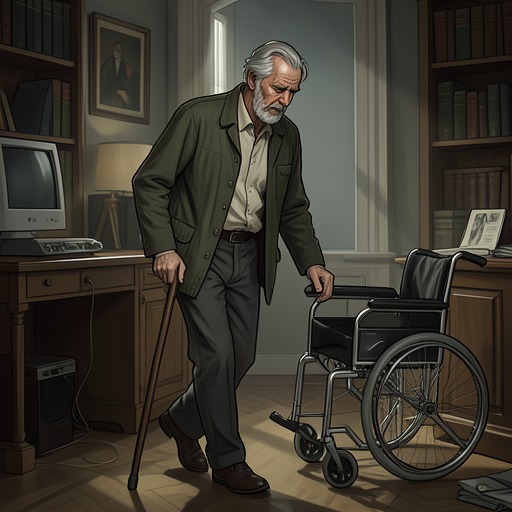
Paul West Jr. was seventy-six that year, but West remembers him as retaining his usual exuberance until prostate cancer altered his body. He did not want to die. Her mother, Ingrid, met with the doctors because he disliked hearing his prognoses; she carried that knowledge while he remained the fantasist and she the realist. In the final weeks, his failing body made the prospect harder to deny. At Thanksgiving, he vomited into an empty margarine tub at the dinner table. West remembers this as the first time she noticed him grieving for the life he was not ready to leave, and she was frightened by that grief.
The illness leaves West with a ledger of questions about missed chances. She wonders why she did not sit with him more, why she slept so much, and why she did not read aloud the books he had read to her when she was little. She also regrets being cheerfully determined to gloss over the truth instead of letting herself be vulnerable. Moving to Los Angeles three months before his death becomes part of that self-accusation. Yet her father had wanted her to go: before admitting he was dying, he encouraged her to enter the world and flourish, telling her, “Knock ’em dead, kid.” Her success therefore carries an ache: he had urged her forward, but did not live to see what followed.
The Vigil
The last hospitalization turns the family’s days into a repetitive routine of waiting. In the small hospital room, West, Ingrid, and her sister take turns sleeping beside the bed, sitting on a cushioned bench, or going down the hall to a windowless family lounge. Doctors can no longer save him; the family’s task becomes staying near him as his body fails. The account insists on the practical and uncomfortable details of this interval rather than converting it into a brief, orderly scene of farewell.
Paul West Jr. loses consciousness on Saturday night. Ingrid tells West to go home and sleep, promising to call if death seems close. West wakes on her parents’ couch to find that he is still holding on, returns to the hospital, and resumes the cycle of chair, bench, and family lounge. The vigil continues through Sunday and into Monday. His breaths grow slower and rougher; the sound becomes so bound to the experience that West later cannot bear to use a percolator and chooses a French press instead.
On Monday afternoon, he stops breathing. West describes the change as a fading and flattening: the body that had been the locus of his personhood is no longer animated by him, and memory must take up the work of holding who he was. The family’s immediate surroundings do not pause with the loss. A nurse brings granola bars and juice boxes, and a worker arrives to clean the room for the next patient. Ingrid asks for a moment after her husband has been dead for only thirty seconds. The ordinary procedures of the hospital press against the family’s need to remain with what has happened.
What Memory Can and Cannot Keep
West’s reflections distinguish the death of a person from the loss of a place. When her family sold the childhood home, she was twenty-five and cried on the stairs; at the time, the house’s departure seemed like another death and proof that her family was broken. Her father’s death on December 12, 2011, changed that understanding. A place can hold a person’s traces, but it cannot be a person, and losing it is not the same as losing him.
One such trace is the family piano. In a familiar photograph of her father sitting at it in the living room, the keys retain gray graphite smudges where he had penciled in the notes for her when she was small. West remembers that she never practiced enough and that he pretended not to be disappointed. The image makes memory tangible without undoing absence: the marks remain, but they cannot restore the person who made them or the time she wishes she had spent beside him.
The account’s final measure of that absence is not an explanation but a wish: “I would give anything for one more sentence. I would give anything for 140 more characters.” The reference to a sentence echoes the last words her father spoke to her brother as his lucidity faded, when he told him he had been a special little boy and that he loved him. West’s grief thus gathers around both the intimate memory of a father and the irreducible limit of what the living can recover. Her earlier fear of entering another person’s grief gives way to testimony from within her own: the loss cannot be made orderly, and memory can preserve traces, but not supply the person who is gone.