
John Blackthorne’s Rebirth in Japan
ShōgunThis thread traces how John Blackthorne survives shipwreck, imprisonment, and cultural dislocation to become a samurai commander whose future is bound to Japan.
increasing Bearing strength in each event
 decreasing
Bearing strength in each eventdecreasingThe Last Ship
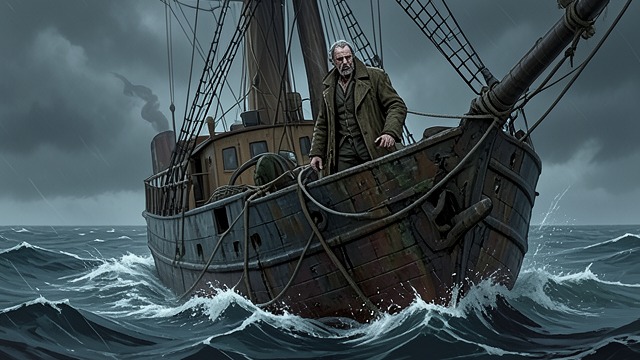
The Last Ship
A pilot among the dying
John Blackthorne begins the story as the surviving pilot of the Erasmus, a Dutch expedition reduced by storms, hunger, and scurvy. He has lost nearly the whole fleet and most of its people, but his discipline and practical judgment keep the last ship moving through unknown waters.
Skill as survival
Blackthorne understands the sea through experience, observation, and the rutters he has gathered. His confidence is not invulnerability: it is a method for acting while afraid, reading danger, and accepting that a pilot must make decisions when no one else can.
The first transformation
When the Erasmus reaches Japan, the world that made him competent ceases to be sufficient. His command of the ship has carried him to a new life, but his old assumptions about authority, religion, cleanliness, and custom will be tested before he can return to it.
The Prisoner Learns
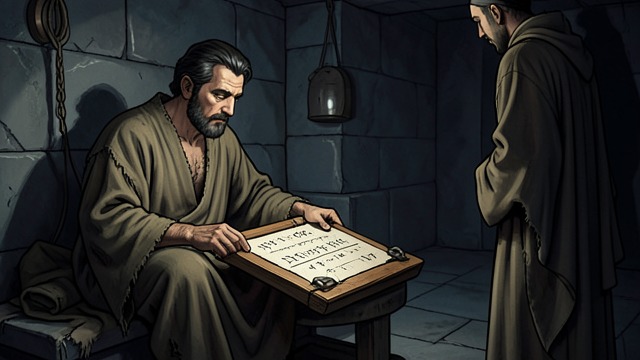
The Prisoner Learns
Status stripped away
In Anjiro, Blackthorne expects the authority of a ship’s pilot to matter. Instead, he is watched, disarmed, beaten, and treated as a captive whose survival depends on the decisions of Japanese leaders. His language and religious certainty cannot protect him from rules he does not understand.
Learning as leverage
In the Osaka prison, Friar Domingo gives him fragments of Japanese language and a wider account of regional politics and trade. Blackthorne listens, remembers, and begins to see that knowledge can become his route out of helplessness, even when he cannot yet speak for himself.
The body as a new boundary
The prison and his earlier ordeal in Anjiro force him to endure humiliation without surrendering every choice. When he emerges from confinement, he has not escaped Japanese power, but he has acquired enough language and experience to recognize opportunities and dangers more quickly.
Learning the Samurai Role
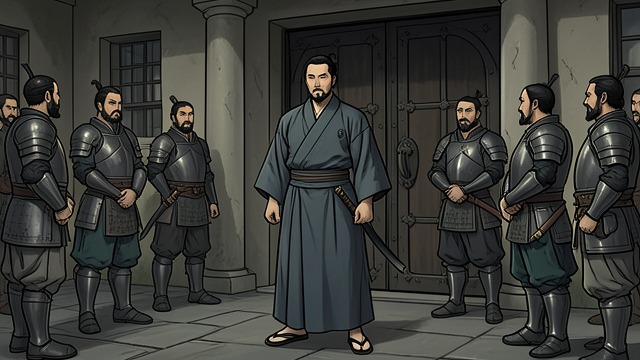
Learning the Samurai Role
A new kind of allegiance
Toranaga gives Blackthorne the status of hatamoto and makes him a valuable retainer, with a stipend, swords, and responsibilities. Blackthorne gains standing within a hierarchy he once viewed only as a foreign danger, yet his new privileges remain dependent on his liege lord’s power.
From sea knowledge to military value
Blackthorne’s seamanship helps save Toranaga during the escape from Osaka, and his explanations of Western weapons and tactics feed the creation of the Musket Regiment. The knowledge that once promised Blackthorne wealth for himself is now being shaped into a strategic resource for Japan.
A divided sense of home
He accepts Japanese dress, bathing, food, and language lessons, but assimilation never erases his English identity or desire to return home. His emerging status offers dignity and opportunity while also binding him more tightly to a political struggle he did not choose.
The Ship Becomes a Wreck
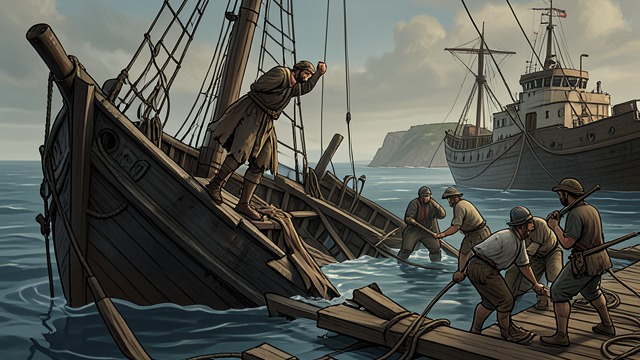
The Ship Becomes a Wreck
A homecoming without a ship
Blackthorne finally sees the Erasmus again, repaired and made ready, and imagines that his crew and a voyage home may soon be within reach. Then a storm destroys the vessel, leaving him with no working ship and no immediate way to escape Japan.
Grief turns toward construction
His first reaction is despair and anger, especially when the loss follows the deaths of people from his expedition. He nevertheless turns from mourning toward a new project: rebuilding a vessel with Japanese labor, salvaged materials, and the shipbuilding knowledge he can still offer.
A changed destination
Toranaga makes Blackthorne’s future depend on more than getting back to England. His new ship is intended to serve a Japanese naval future, even as Blackthorne imagines it as the means to pursue the Black Ship and eventually go home. The wreck closes one life and forces him to design another.
A Future Without Certainty
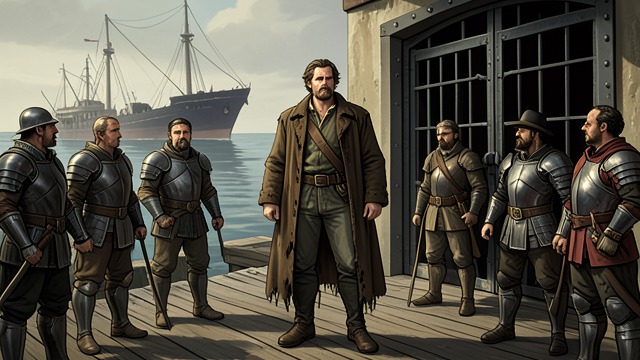
A Future Without Certainty
Freedom under new conditions
Toranaga releases Blackthorne to return to his ship and offers him retainers, money, and rank. The apparent freedom is real enough to act upon, but it is not independence: Blackthorne’s choices remain entangled with Toranaga’s war plans and with the future of Japan.
Loss reshapes ambition
When Erasmus is lost, Blackthorne begins to plan a replacement ship named The Lady. He accepts that his path to the sea may run through Japanese service, and that building anew will require collaboration rather than the self-sufficient command he once exercised aboard his own vessel.
The unresolved return
By the end of the novel, Blackthorne’s future has not resolved into a homecoming. His ship is a wreck, his new project is only beginning, and the conflict that might free him is also the conflict that can consume him. He has learned to live inside uncertainty without abandoning the hope of departure.
April 1600, during the final days before landfall at Anjiro
During Blackthorne’s first weeks in Japan, from his arrival at Anjiro through his release from Osaka prison
From Blackthorne’s first audience with Toranaga to the training at Anjiro
After Blackthorne reaches Yedo and learns of Erasmus’s destruction
After Blackthorne is freed in Osaka and begins work on a replacement ship
