
Toda Mariko’s Path Between Allegiances
ShōgunThis thread traces Mariko’s passage from inherited shame and marital oppression through political service and forbidden love to a deliberate public sacrifice that changes the crisis around Toranaga.
increasing Bearing strength in each event
 decreasing
Bearing strength in each eventdecreasingDaughter of a Traitor
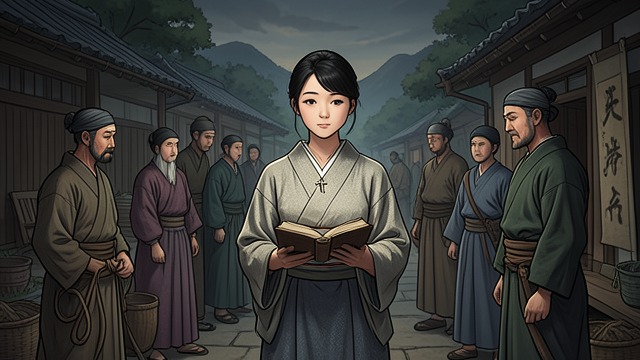
Daughter of a Traitor
An inherited disgrace
Mariko is the daughter of Akechi Jinsai, whose rebellion and assassination of his liege lord leave his family marked by dishonor. Her parents, siblings, and extended family die in the aftermath, while Mariko survives because marriage has placed her under another household’s authority.
A marriage shaped by duty
Mariko marries Buntaro while still very young and is later sent away for years, living in the north with servants and villagers. She learns Portuguese and Latin during her isolation, both as intellectual discipline and as a way to understand the foreign powers entangled in Japan’s political world.
Faith and identity
Her conversion to Christianity gives her a source of spiritual meaning, but she does not stop understanding herself as Japanese and samurai. Her life is shaped by the collision of faith, family obligation, and the shame attached to her father’s name.
The Interpreter’s Burden
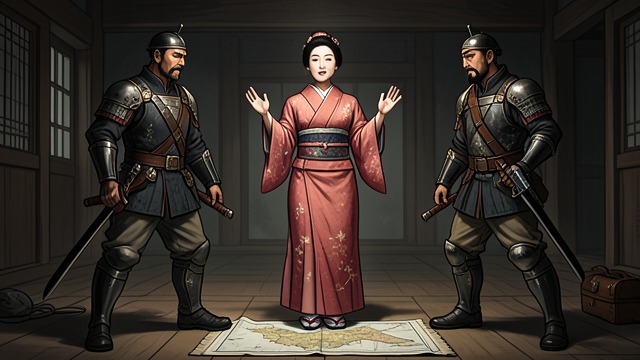
The Interpreter’s Burden
A rare skill becomes service
Mariko’s fluency in Portuguese and Latin brings her into Toranaga’s confidence as an interpreter for Blackthorne. She must carry meanings between people whose political aims, religious commitments, and expectations of speech are sharply different.
Loyalty under pressure
Toranaga orders her to keep political discussions secret, including from her confessor and husband. Mariko accepts the burden as a samurai vassal, even while her Christian conscience remains part of her private life rather than disappearing.
The dangerous public test
At Osaka, Mariko helps preserve Toranaga’s escape by standing between powerful factions and navigating a volatile passage through Ishido’s men. Her intelligence and composure make her indispensable, but they also place her increasingly close to danger and scrutiny.
A Love Kept Secret
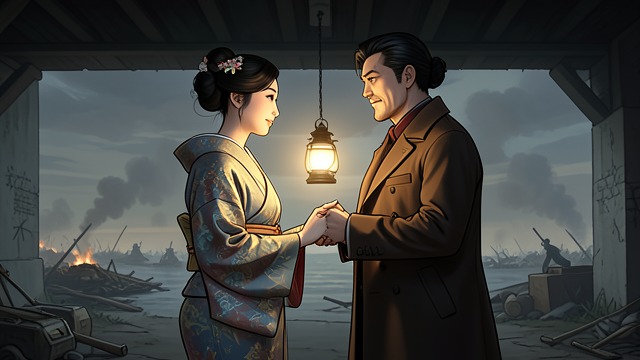
A Love Kept Secret
Affection beneath ceremony
Mariko and Blackthorne grow close while she interprets for him and explains the customs that shape Japanese life. Their exchanges move from instruction and mutual distrust toward admiration, attraction, and a private sense of understanding.
The secret becomes intimate
Their relationship deepens during their travels and later in Anjiro. Both know that discovery could endanger them, and Mariko remains bound by her marriage, her service to Toranaga, and the public expectations of her rank.
Love without possession
Mariko and Blackthorne do not resolve their feelings through open promises or a changed marriage. She insists that what passed between them remain hidden, treating their love as an intensely private reality within a world governed by duty, surveillance, and consequences.
The Refusal at First Bridge
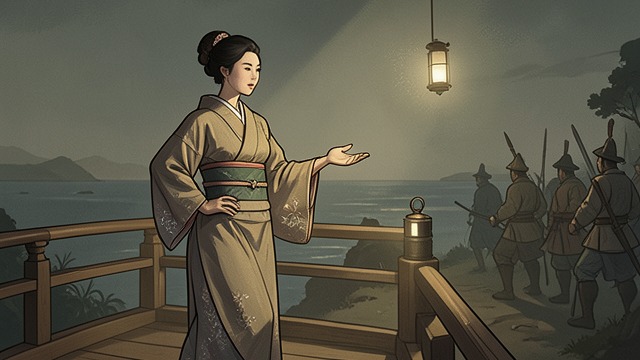
The Refusal at First Bridge
A conflict put in the open
Mariko’s marriage to Buntaro remains a source of suffering, intensified by his anger and belief that her family history has tainted his household. Her feelings for Blackthorne offer tenderness but cannot erase the legal and social force of her position as Buntaro’s wife.
Choosing allegiance carefully
When Blackthorne urges her to reject the customs that confine her, Mariko counters that she has obligations she cannot simply abandon. She distinguishes her personal desires from her duty to Toranaga, her family, and her own understanding of what it means to live honorably.
Preparing for a decisive act
Her composure is not passivity. Mariko understands that ritual, public behavior, and controlled speech can become instruments of survival, and she keeps her plans within the boundaries of what she believes her role requires, even when those plans place her life at risk.
A Public Sacrifice
A Public Sacrifice
Challenging confinement
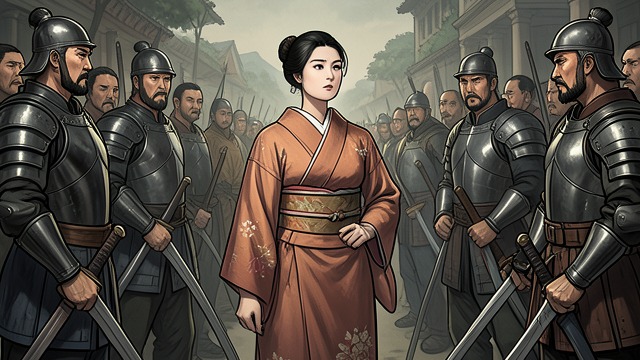
When Ishido attempts to keep her from leaving Osaka, Mariko insists that her duty to Toranaga gives her the right to obey his order. She frames the issue as a question of lawful allegiance, forcing the powerful men around her to confront the consequences of treating her as a hostage.
The final stand
After the ninja attack and the deaths around her, Mariko continues the protest rather than retreating into silence. She is willing to commit seppuku publicly, turning the threat of her own death into a demand that cannot be dismissed without political and moral cost.
Death that changes the crisis
Mariko dies during the attack on the castle, but her action helps expose Ishido’s conduct and intensifies the conflict among the regents. Her final sacrifice preserves her chosen sense of honor and leaves Blackthorne and Toranaga to reckon with the political and personal consequences of her death.
Sixteen years before Blackthorne’s arrival, after Goroda’s assassination
From Blackthorne’s arrival at Anjiro through Toranaga’s first escape from Osaka
From the journey out of Osaka through Blackthorne’s stay in Anjiro
After Toranaga’s escape from Osaka and during the journey toward the harbor
During the Osaka escort crisis and the attack on Osaka Castle
