
Mariko and Buntaro: Marriage Under Strain
ShōgunThis flow traces Toda Mariko and Toda Buntaro’s marriage from duty-bound union through exile, resentment, violence, and a fragile public reconciliation that cannot erase their private wounds.
increasing Bearing strength in each event
 decreasing
Bearing strength in each eventdecreasingA Marriage Shaped by Alliance
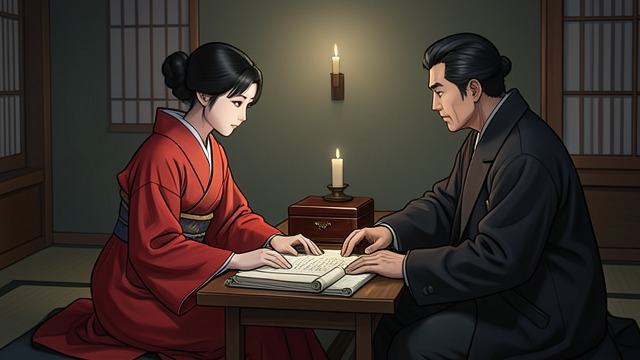
A Political Marriage
Duty Before Desire
Toda Mariko marries Toda Buntaro while still very young, as part of the alliances binding powerful samurai families. The marriage is therefore not presented as a choice grounded in romance. Its public purpose is to connect households and preserve their position within the political order.
A Difficult Household
Mariko’s later reflections show that Buntaro is a violent and domineering husband. His conduct leaves little room for tenderness or equality, while the rules governing her marriage make her security dependent on family rank and the decisions of men. She nonetheless continues to describe herself through the obligations of wife, mother, and samurai.
The marriage’s central contradiction is established early: Mariko performs loyalty even when the relationship brings pain, and Buntaro regards control over his household as a right. Their bond is sustained by duty and law, not by mutual understanding.
The Exile in the North
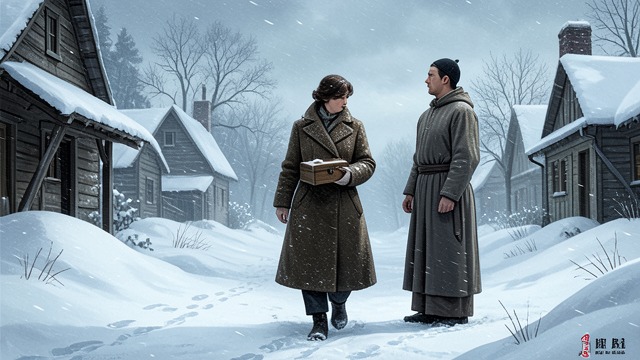
A Wife Sent Away
Family Shame
After Lord Akechi Jinsai’s rebellion against Lord Goroda, Mariko survives as the last living member of her line. The political catastrophe marks her as the daughter of a traitor. Her marriage to Buntaro preserves a place for her within his household, but does not erase the stigma or the danger attached to her family name.
Years of Separation
Buntaro sends Mariko away to a northern village, where she spends eight years apart from him and their home. She later describes his decision as an honor because he did not divorce her, a judgment that reveals how little freedom she believes she has to demand a different life. In exile, she studies Portuguese and Latin and encounters Christianity through a visiting priest.
The separation preserves the marriage’s formal bond while deepening its emotional distance. Mariko’s inner life develops during this enforced solitude, but her eventual return does not mean that the old injuries have healed.
Return Without Reconciliation
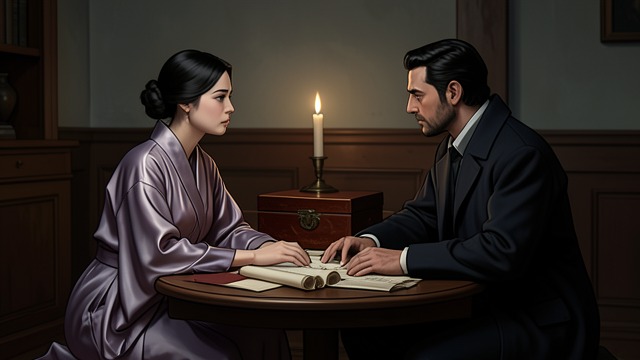
A Dutiful Return
Acceptance on His Terms
Mariko returns to Buntaro and their son after years away, treating her readmission as another act of honor granted by her husband. Her own account makes clear that she is grateful to return, yet does not suggest that the marriage has become affectionate. She regards her role as wife and mother as a duty she must resume.
Tension in the Household
Buntaro remains volatile, and his anger can turn ordinary disagreements into threats. Mariko’s loyalty does not protect her from his violence; instead, she repeatedly tries to manage it through restraint and apology. Her faith gives her a separate inner resource, but it does not free her from the power structure of her family.
The return therefore restores the household, not trust. Mariko and Buntaro are again together in public life while remaining divided by resentment, shame, and years of unspoken injury.
The Blow and the Limits of Duty
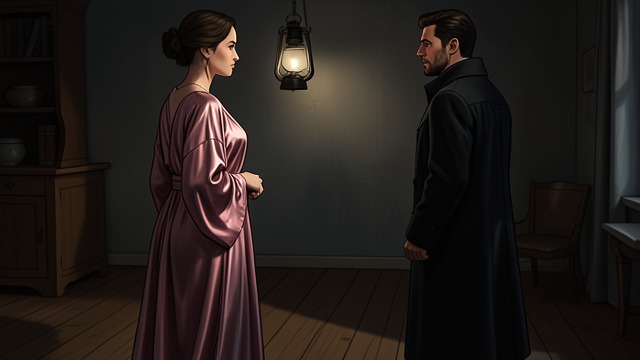
Violence Behind the Formal Apology
A Private Quarrel
During their time in Yedo, Buntaro beats Mariko after their longstanding conflict erupts again. She refuses to appease him in the way he expects, choosing instead to preserve her own dignity even when that refusal intensifies the violence. Blackthorne hears the assault and wants to intervene, but Mariko insists that their marital quarrel is not his to settle.
A Public Peace
Later, Buntaro apologizes to Blackthorne for the disturbance, and Blackthorne accepts the apology rather than turning the encounter into a duel. Mariko also apologizes, saying that she failed in her duty as wife and guest. The formal exchange restores outward harmony, but it leaves the underlying marriage unchanged.
Their reconciliation is thus partial and strategic. The apology gives them a way to continue sharing a household under the same social rules; it does not resolve Mariko’s bitterness or Buntaro’s fixation on her. Public decorum conceals, rather than heals, the violence between them.
The Promise at the Tea Ceremony
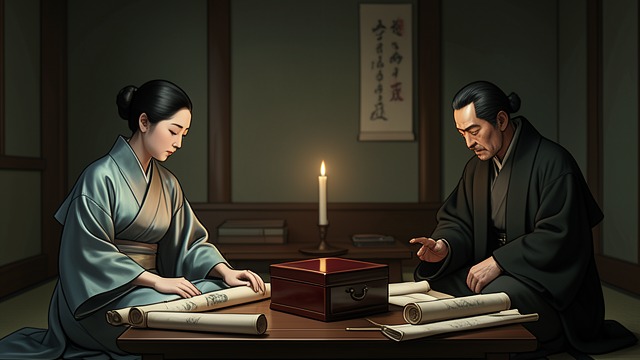
A Fragile Promise
Ritual and Restraint
On the journey, Buntaro and Mariko share a formal tea ceremony. Its measured gestures let them sit together without immediately reopening their conflict. Buntaro attempts to offer a carefully prepared moment of peace, and Mariko responds with the courtesy the ceremony requires.
A Reprieve, Not a Cure
The ceremony briefly makes reconciliation seem possible, but it does not erase years of pain or establish trust between them. Mariko remains constrained by her duty to her husband and by her service to Toranaga. Buntaro continues to interpret their marriage through honor, resentment, and the desire to regain control.
Their bond survives because each continues to recognize the other’s formal role, not because the underlying relationship has been repaired. The scene offers a quiet pause before the political crisis deepens again.
Before the main action, when Mariko is fifteen
After her father’s rebellion and death, when Mariko has been married for two months
After the death of the Taikō, when Mariko returns to Buntaro’s household
In Yedo, after the escape from Osaka and during the couple’s attempt at reconciliation
During the journey toward Osaka after Buntaro’s escape from the harbor
