
Blackthorne and Felicity: The Distant Home
ShōgunThis flow traces how John Blackthorne keeps his marriage to Felicity and his children alive in memory while danger and distance repeatedly pull his attention between Japan and home.
increasing Bearing strength in each event
 decreasing
Bearing strength in each eventdecreasingA Family Left Behind
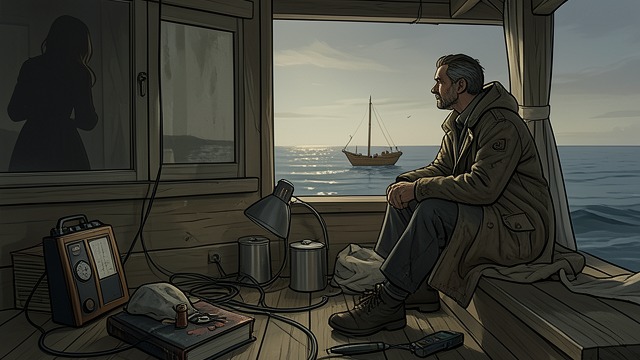
The Family Across the Sea
A Seafarer’s Separation
John Blackthorne’s thoughts return repeatedly to his wife, Felicity, and their children. He has been away for nearly two years, and the long voyage gives him little contact with home. To endure the separation, he imagines his family as continuing figures in a life he hopes to resume rather than as people he can reach.
Love as an Anchor
Blackthorne calculates the children’s ages and imagines Felicity cooking, cleaning, and caring for them. These reflections remind him why he wants to survive and return, even when the voyage becomes a struggle against storms, disease, and starvation. His family is emotionally present, but physically beyond his control.
The bond does not remove his ambition to make a name for himself or his attraction to the unknown sea. It supplies a destination for those desires: he wants wealth and recognition, but he also hopes that success will let him stop voyaging and be with his family again.
Memory in the Pit
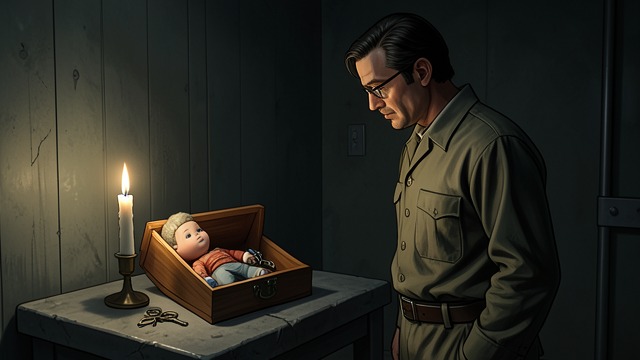
The Family in a Cell
A Mental Refuge
While trapped among prisoners in Osaka, Blackthorne thinks of Felicity and their children as a way to keep hold of a life beyond confinement. He works out their ages and pictures ordinary household routines. The contrast between the imagined home and the filthy, crowded prison sharpens his longing for safety.
The Limits of Imagination
His memories are not always comforting. He has trained himself to treat loved ones as characters in a continuing play because fully confronting the pain of separation would be too much. That discipline helps him endure, but it also reveals the cost of a seafaring life: intimacy is maintained through memory rather than shared daily life.
The family remains an emotional refuge, but not a practical rescue. Blackthorne must find a way to survive with his own judgment, while hoping that Felicity and the children remain safe in England.
Japan as a Detour Home
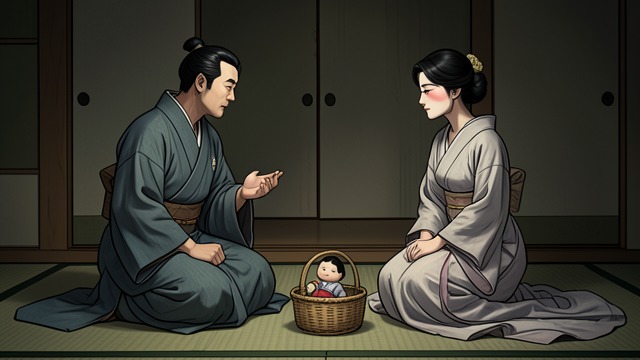
A New World, an Old Attachment
His Children in Conversation
When Blackthorne speaks with Toda Mariko about his family, he describes his wife and children and gives their ages. His answer brings the distant family into the present conversation and helps Toranaga’s household understand that Blackthorne’s life is not confined to his role as pilot or prisoner.
The Desire to Return
Blackthorne continues to treat Japan as a dangerous interruption on the way home. He imagines recovering Erasmus, trading for profit, and finally returning to Felicity and the children. Even when he begins to value the people and customs around him, he sees that attachment as compatible with his wish to leave.
His relationship to home therefore becomes more complex without disappearing. Japan is no longer merely an obstacle, but England remains the place where he expects his marriage and family life to resume.
A Future Imagined with Felicity
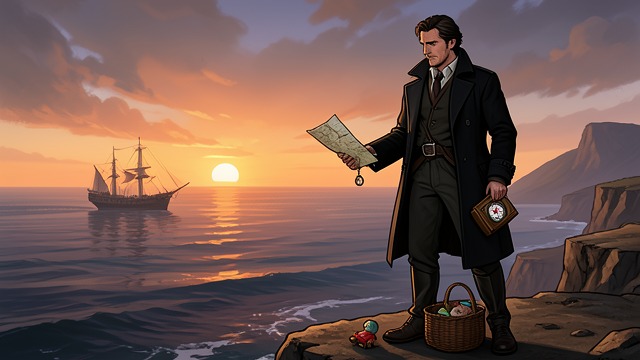
The Homecoming He Plans
Ambition as a Route Back
As he travels with Toranaga’s party, Blackthorne imagines how Japanese trade could make him wealthy and influential. He pictures an eventual return to England with riches and honors, then tells himself that he will leave the sea behind for good. In this vision, professional success serves a personal purpose: a future reunion with Felicity and their children.
Plans Against Absence
His hope is both loving and self-directed. He imagines building wealth, achieving recognition, and ending his long absence, but the plan depends on obtaining a ship and navigating a politically dangerous situation. Felicity is the person he wants to return to, yet she cannot take part in the choices that determine whether he reaches her.
The imagined reunion helps him endure uncertainty, but it also narrows his view of the relationships forming around him in Japan. At this point he still thinks of home as a destination waiting unchanged across the sea.
Home After the Shipwreck
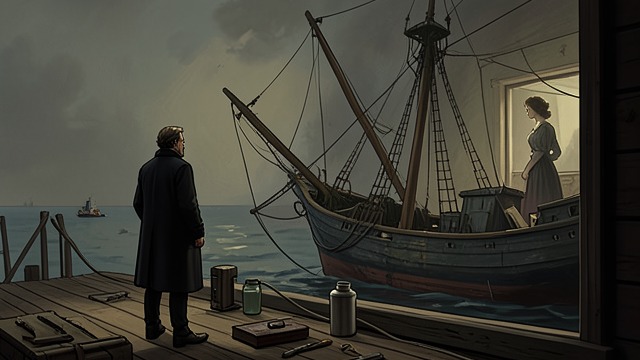
A Future Without Erasmus
The Loss of the Route
When Blackthorne learns that Erasmus has burned, his expected route back to England collapses. He has lost the ship that represented his means of return and the professional identity he relied on. The crew remains with him, but the vessel that carried the family goal has become a wreck.
A Different Kind of Promise
Blackthorne does not stop wanting to see Felicity and the children, but he now has to imagine a new route to them. He decides to build another ship, The Lady, and Toranaga’s support makes that possibility real. His plans for home survive, although they now depend on a slower and more uncertain future.
By the end, the relationship is still a source of longing rather than a completed reunion. Blackthorne remains emotionally attached to his family, but the final future he imagines is built around a new ship and the possibility of another voyage, not an immediate return to Felicity.
During Blackthorne’s voyage west, nearly two years before his arrival in Japan
During Blackthorne’s imprisonment in Osaka, before his release
After Blackthorne is released from Osaka prison and begins speaking with Mariko
During the journey toward Yedo after Toranaga’s escape from Osaka
After the destruction of Erasmus near Yokohama
