
Knowledge as Power and Threat
ShōgunThis thread follows how maps, translation, military expertise, and commercial intelligence alter the balance of power while creating risks for those who possess or share them.
increasing Bearing strength in each event
 decreasing
Bearing strength in each eventdecreasingThe Rutters and Hidden Routes
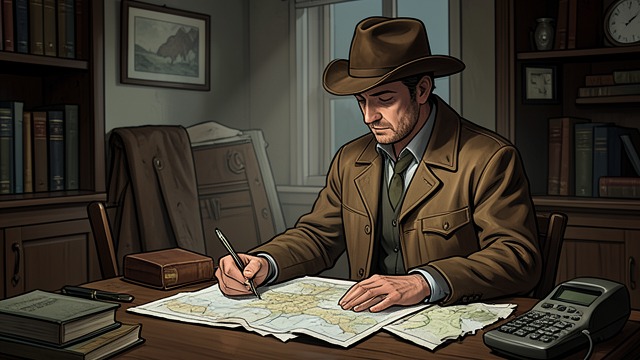
The Rutters and Hidden Routes
Knowledge written for use
A rutter records routes, winds, reefs, ports, and hazards; for a pilot it is accumulated experience made portable. Blackthorne’s journals and maps are therefore more than personal tools: they contain knowledge that can redirect trade and military movement.
Secrecy becomes an instrument
The Portuguese protect their sailing knowledge as national property, while Dutch and English rivals seek it to challenge Iberian control. When Blackthorne discovers that both his own papers and the stolen Portuguese rutter are missing, he understands that their disappearance may determine whether he can ever return home.
The episode introduces knowledge as a form of power that can be stolen, withheld, or traded. Possessing a route is not the same as controlling the sea, but it can make new forms of control imaginable.
The World Map and Papal Division
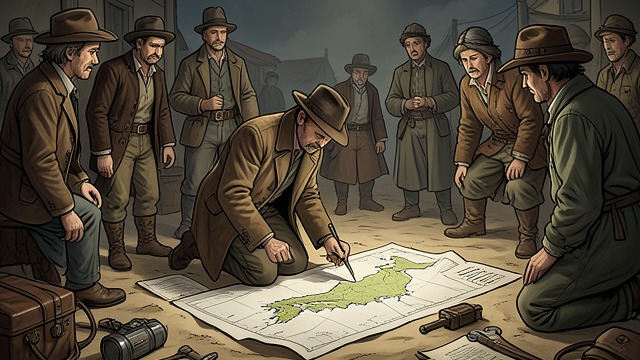
The World Map and Papal Division
A map changes the frame
Blackthorne draws the world in the sand, placing Japan within a far larger geography than the one known to most of Toranaga’s court. The map makes distant seas, European powers, and unfamiliar trade routes visible as part of one connected system.
Geography becomes political evidence
His account of papal boundary claims and Iberian expansion turns the map into an argument about sovereignty. Toranaga is no longer hearing only that foreign powers are far away; he is hearing that they have claimed territories, established bases, and used religious authority to justify conquest.
The map does not by itself prove every claim, but it gives Toranaga a framework for asking new questions. The episode shows how information changes a ruler’s imagination before it changes his policy.
The War Manual Takes Shape
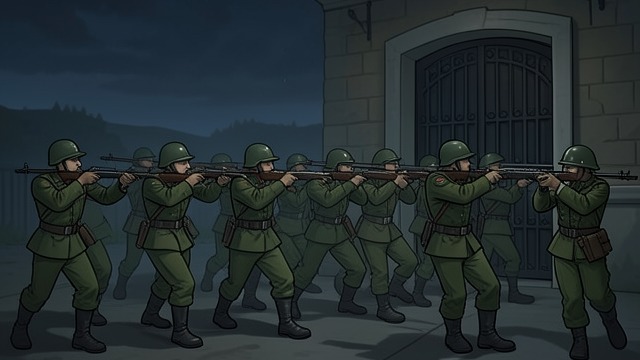
The War Manual Takes Shape
Practice becomes doctrine
Blackthorne’s instruction in volley fire, disciplined ranks, and coordinated movement is recorded and tested in repeated exercises. What he once learned as a sailor and soldier becomes a written system that Japanese commanders can examine, revise, and teach.
The system unsettles inherited norms
Naga argues that firearms threaten the personal valor and social meaning of samurai warfare. Yabu sees instead a way to win a decisive battle, while Omi recognizes that the knowledge may reshape the balance between warriors, rulers, and outsiders.
The manual’s importance lies not only in its tactical effectiveness. It makes a foreign method reproducible, meaning that power no longer depends on Blackthorne alone. Knowledge can outlive its teacher and become a resource claimed by those who control the training.
The Dictionary and the Gate of Language
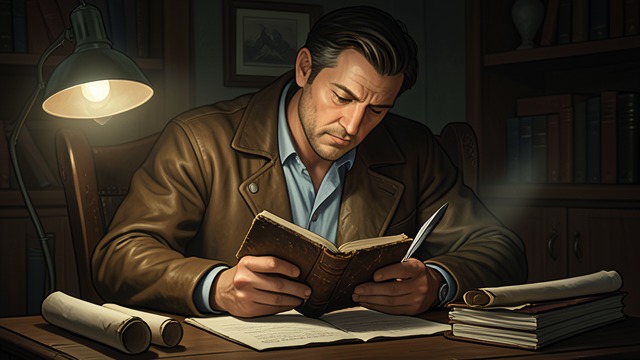
The Dictionary and the Gate of Language
A tool that shortens dependence
The dictionary and grammar give Blackthorne a practical path through Japanese that does not rely entirely on an interpreter. He studies words and sentence patterns while training, using every conversation to refine his ability to hear and respond.
Literacy does not equal trust
The book opens access but does not make Blackthorne culturally or politically secure. His growing ability to speak can reduce misunderstandings, yet it also makes him more capable of negotiating directly and therefore more consequential to the people who would rather control what he knows.
The dictionary is a transfer of power with several possible beneficiaries. The Jesuits offer it, Toranaga can use the results, and Blackthorne can use it to preserve his autonomy. A shared language does not erase conflict; it changes who can participate in it.
A New Ship and a New Political Bargain
A New Ship and a New Political Bargain
Salvage into possibility
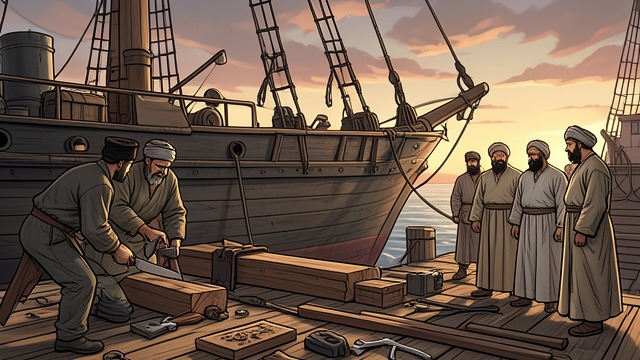
The loss of the Erasmus leaves Blackthorne bereaved of his ship and his route home. Salvaged cannon, recovered materials, and Toranaga’s promise of craftsmen make another vessel possible, though its construction will require time and continued cooperation.
Knowledge is exchanged for protection
Blackthorne offers to build a modern ship and train Japanese sailors, while Toranaga provides a fief, resources, and a place for the work to begin. Both men understand that the arrangement may also create a naval force capable of challenging the Portuguese presence.
Their bargain is neither a simple friendship nor a neutral technical project. It joins Blackthorne’s desire to return home with Toranaga’s desire for maritime power, making a ship into a negotiated instrument of future conflict.
During Blackthorne’s voyage and the first search of the Erasmus
During Blackthorne’s second conversation with Toranaga
During Blackthorne’s first weeks training the Musket Regiment
After Alvito delivers the Portuguese-Latin-Japanese dictionary in Yokohama
After the Erasmus is destroyed and Blackthorne asks to build again
