
The Jesuit Monopoly Under Threat
ShōgunThis thread follows the Jesuits’ attempt to preserve their privileged position in Asian trade as Blackthorne exposes the political and economic foundations of their influence.
increasing Bearing strength in each event
 decreasing
Bearing strength in each eventdecreasingA Protected Trade Network
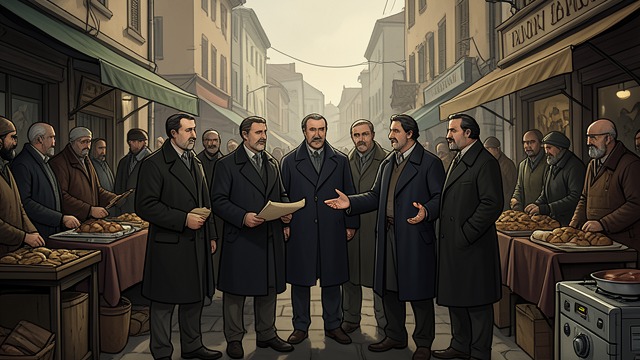
A Monopoly Built on Mediation
Trade and influence
The Portuguese presence in Japan rests on more than ships. Jesuit interpreters mediate between Japanese rulers and the Chinese trade, while access to Chinese silk depends on Japanese silver and Portuguese connections.
A fragile privilege
The Taikō’s restrictions have not ended the trade, but they have made the Church’s position conditional. Its influence depends on rulers who tolerate missionaries because they value commerce, not simply because they share the faith.
That arrangement makes the priests powerful and vulnerable at once: they can shape negotiations, yet a change in political allegiance could put their institutions and trade network at risk.
The Rival Missionaries
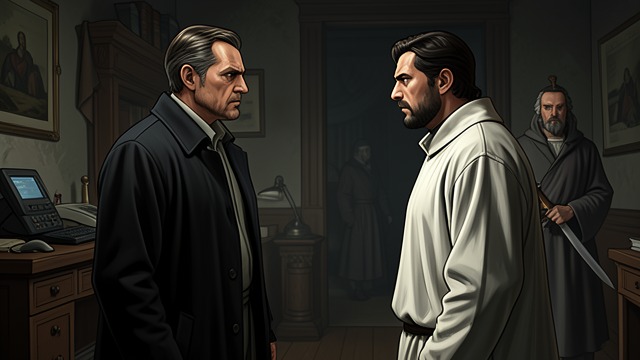
Rival Claims to the Faith
Sebastio’s hostility
When John Blackthorne arrives in Anjiro, Father Sebastio treats him as a heretic and pirate. Their confrontation shows how religious identity can determine whether a European is regarded as a Christian, an enemy, or an outlaw.
A political opening
Kasigi Yabu initially regards the foreigner as a possible source of military advantage, while the Jesuit fears what Blackthorne’s presence may reveal. The priest’s limited command of Japanese leaves him dependent on local authorities and unable to control the encounter.
The dispute foreshadows a wider contest: missionary influence is not separate from political power, and rival European Christians bring their quarrels into Japanese affairs.
Revelations in the Prison
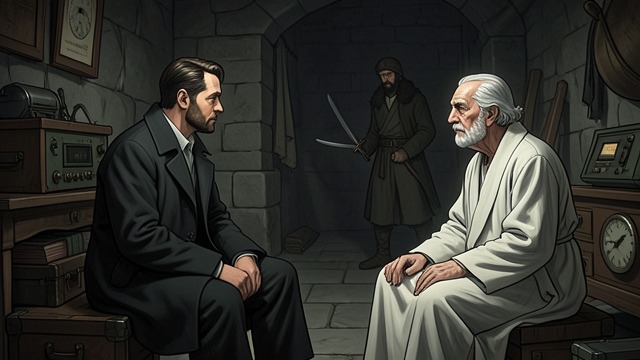
A Prisoner’s Informal Education
Domingo’s account
In the Osaka prison, Blackthorne meets Friar Domingo, a Spanish Franciscan who has been confined for years. The old man describes the struggle between Franciscans and Jesuits, the commercial importance of the Black Ship, and the Church’s entanglement in Japanese politics.
Knowledge with consequences
Domingo’s testimony helps Blackthorne understand that the Portuguese monopoly depends on intermediaries, privileged access, and political bargains. He also learns how missionaries and Japanese Christian lords may influence one another.
The information is valuable precisely because it comes from a bitter, unreliable witness: Blackthorne must learn from Domingo while recognizing that his accusations reflect factional hostility as well as firsthand knowledge.
The Jesuit Bargain
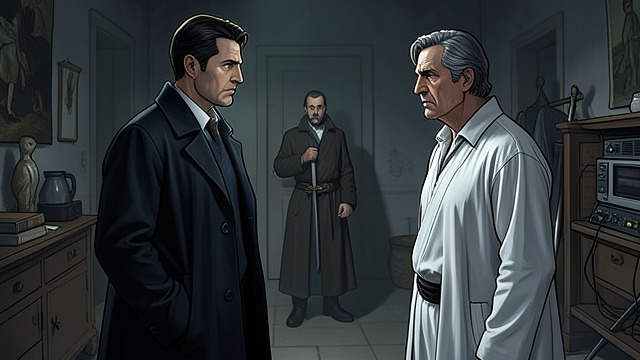
Negotiating for the Church
Toranaga’s demands
After Toranaga’s escape, Father Martin Alvito carries requests for information about Portuguese trade, overseas conquests, and the distribution of Japanese mercenaries. The questions threaten to expose the Church’s political and commercial dealings.
Concessions and limits
The Father-Visitor weighs the danger of losing Toranaga’s favor against the Church’s ties to Christian daimyos. He offers trade concessions and eventually agrees to pursue support for Toranaga, while protecting the Church’s access to Japanese markets.
The bargain is conditional rather than a conversion of the priests into Toranaga’s servants. Each side hopes to benefit without surrendering its independent interests, and neither can be certain the other will keep faith.
A Failing Missionary Strategy
The Mission Under Pressure
Rival authorities
The return of Friar Perez and the prospect of Spanish intervention expose tensions between the Jesuits and other Catholic orders. At the same time, Toranaga’s conflict with Ishido threatens the political balance on which missionary activity depends.
The cost of choosing
The Jesuits fail to secure the Christian daimyos for Toranaga, even as they fear Ishido’s hostility and recognize the dangers posed by the English pilot. Their leaders must weigh trade, institutional survival, and religious expansion against the immediate consequences of war.
By the time Toranaga reaches Yokohama, the Church’s influence remains significant but no longer guarantees control of events. The priests can bargain, advise, and maneuver; they cannot make Japanese rulers obey them.
Before Blackthorne reaches Japan
During Blackthorne’s first days in Anjiro
During Blackthorne’s imprisonment in Osaka
After Toranaga’s escape from Osaka
After Mariko’s death and before the final battle
