
Fatherly Love and the Son's Will
SiddharthaSiddhartha's tenderness toward his son is tested by the boy's rebellion and ends in a fatal letting-go.
increasing Bearing strength in each event
 decreasing
Bearing strength in each eventdecreasingPatience With the Grieving Boy
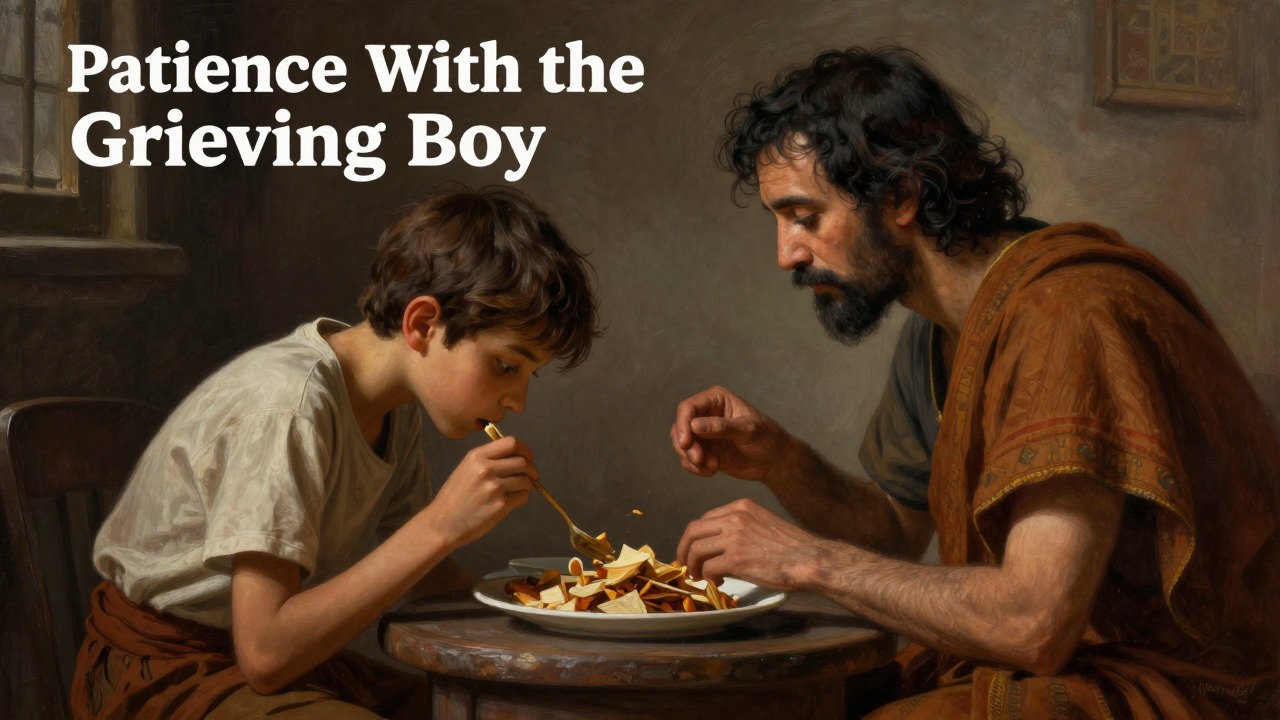
Patience With the Grieving Boy
Context
Siddhartha lets his son mourn, prepares food, and gives him the best pieces, hoping to win his heart.
Distance
The boy remains cold and stubborn, refusing to work or even look at his father.
Meaning
Siddhartha's unconditional patience becomes a subtle form of pressure.
Vasudeva's Advice
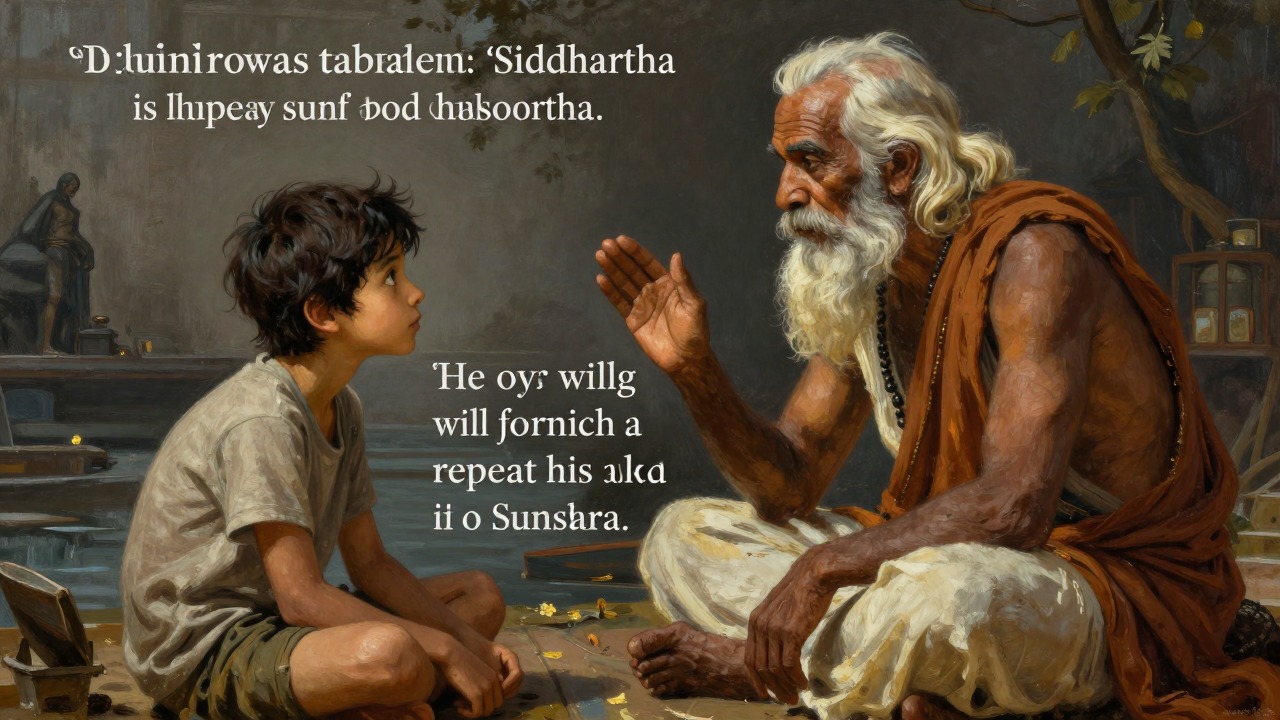
Vasudeva's Advice
Context
Vasudeva warns that the boy belongs in the city and that Siddhartha's loving patience is itself a bond and a punishment.
Debate
Siddhartha fears the boy will repeat his old mistakes in Sansara.
Meaning
The old ferryman's words set the conflict between protection and freedom.
The Boy's Outburst
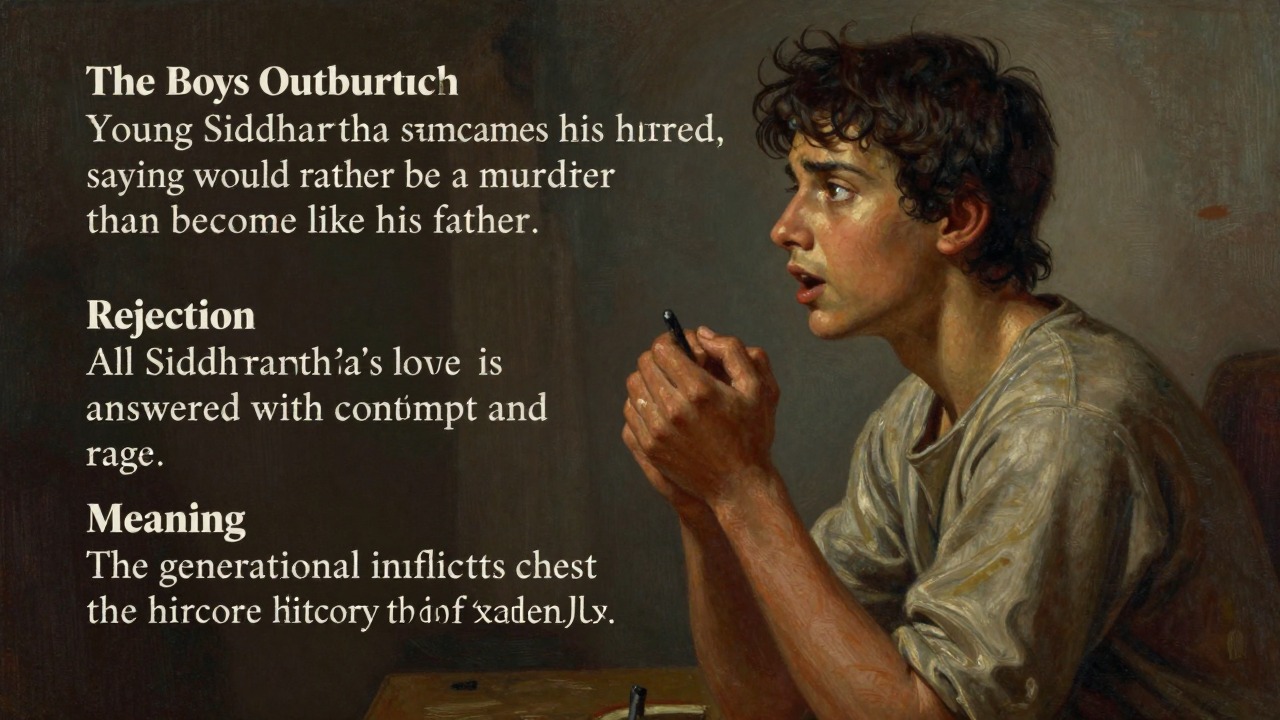
The Boy's Outburst
Context
Young Siddhartha screams his hatred, saying he would rather be a murderer than become like his father.
Rejection
All Siddhartha's love is answered with contempt and rage.
Meaning
The generational conflict explodes in words that repeat the history of fathers and sons.
Theft and Flight

Theft and Flight
Context
The boy steals the basket of coins and the ferry boat, leaving only the broken oar behind.
Pursuit
Siddhartha builds a raft and follows, but Vasudeva helps him see the boy's message: do not follow.
Meaning
The flight is the son's declaration of independence and the father's deepest wound.
The Wound of Love
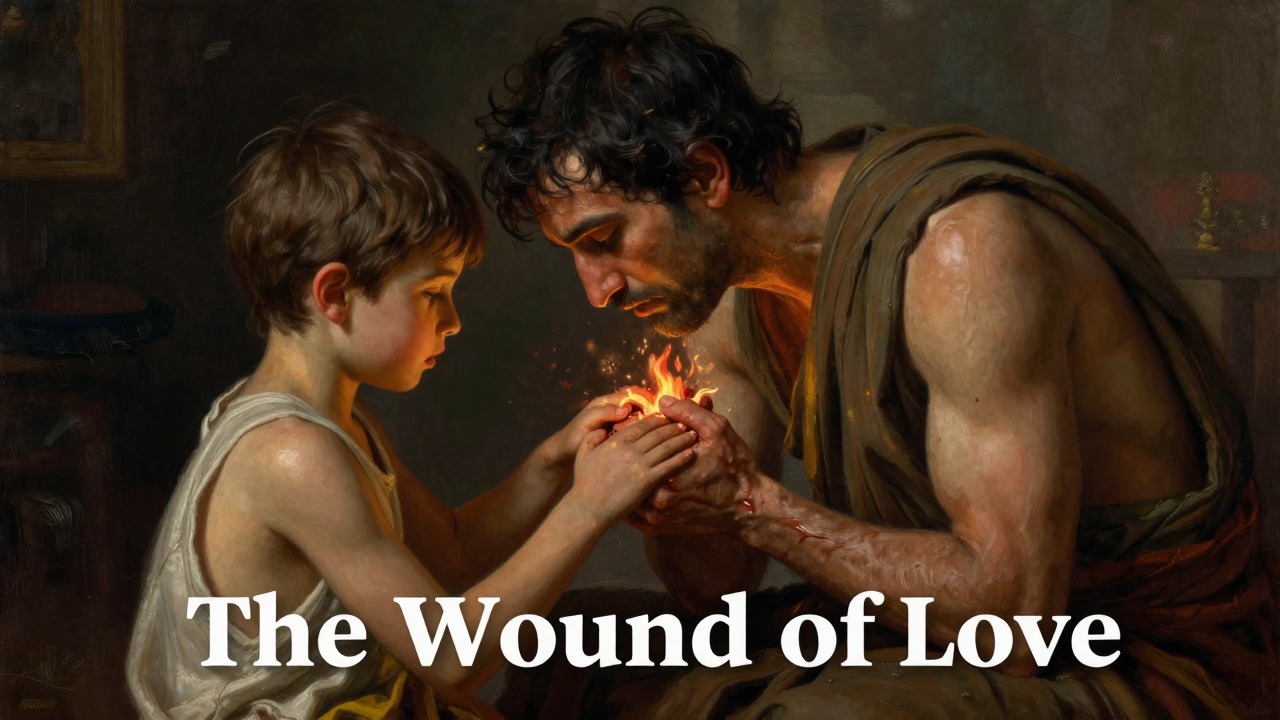
The Wound of Love
Context
Siddhartha realizes he cannot help his son and that he must not cling to him.
Faith
He feels the wound burning but trusts that it must become a blossom and shine.
Meaning
His fatherly love is transformed from grasping into a source of universal compassion.
in the weeks after Kamala's death
after the boy breaks both rice bowls
when Siddhartha asks him to gather brushwood
the next morning
after the search ends at the garden gate
