Kichijiro
Silence (Library Edition)Kichijiro is the most persistently recurring human figure in Sebastian Rodrigues' Japanese mission, a fisherman from Hizen who first appears in Macao as a drunken, ragged man of about twenty-eight or twenty-nine, and who will betray Rodrigues, confess, betray again, and follow him to the very end of his life. He is not a villain in any grand sense; he is a creature of pure weakness, and his presence forces the novel's deepest question: if Christianity is a religion for the strong who endure martyrdom, what place does it have for those who are born unable to endure?
Identity and First Encounters
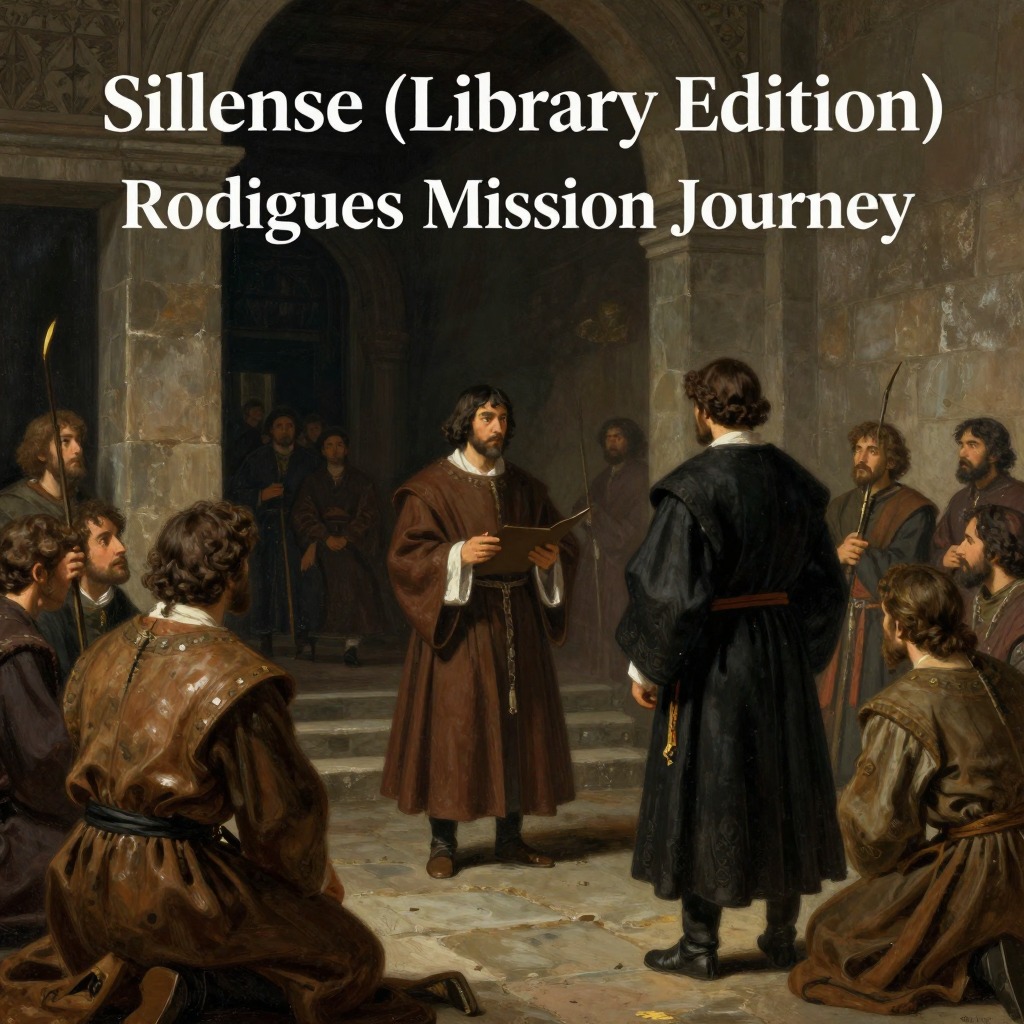
Rodrigues and Francisco Garrpe first meet Kichijiro in Macao, where he has been living among the Chinese after being picked up at sea by a Portuguese ship. He is introduced reeling from alcohol, dressed in rags, with a crafty look on his face and a habit of rolling his eyes. When Garrpe asks directly whether he is a Christian, Kichijiro shuts up like a clam and later denies it, shaking his head and saying, "I'm not." Yet during a storm at sea, when he lies wretchedly pale between the baggage, splashed with his own vomit, Rodrigues catches him muttering the words "gratia" and "Santa Maria." The contradiction is the key to his character: he is a Christian who has already apostatised, and the memory of that failure haunts him like a wound he tries to drown in sake. On the voyage, when Chinese sailors beat him for idling, he kneels on the sand and pleads for pardon in the most ugly way imaginable, his face covered with sand and dirty spittle. Rodrigues notes that his cunning comes from weakness of character, and that he greets them afterward with a servile grin.
The Secret of His Apostasy
After Rodrigues and Garrpe have established themselves in the village of Tomogi, two exhausted peasants from the Goto Islands arrive at their hiding hut, having travelled twenty leagues over two days. They reveal that Kichijiro told them the priests were there. More importantly, they explain Kichijiro's past. Eight years earlier, Kichijiro and his entire Christian family were betrayed by an informer and brought up for questioning. Ordered to tread on the picture of Christ, his brothers and sisters firmly refused. Only Kichijiro, after a few threats from the guards, yelled out that he would renounce his faith. His brothers and sisters were taken to prison, but Kichijiro himself was set free and did not return to his native village. On the day of their burning at the stake, his cowardly face was observed in the crowd; unable to endure the sight of the martyrdom of his brethren, he withdrew and disappeared. This is the foundational event of his life: he is a man who watched his own family die for a faith he could not himself die for.
Betrayal and Confession
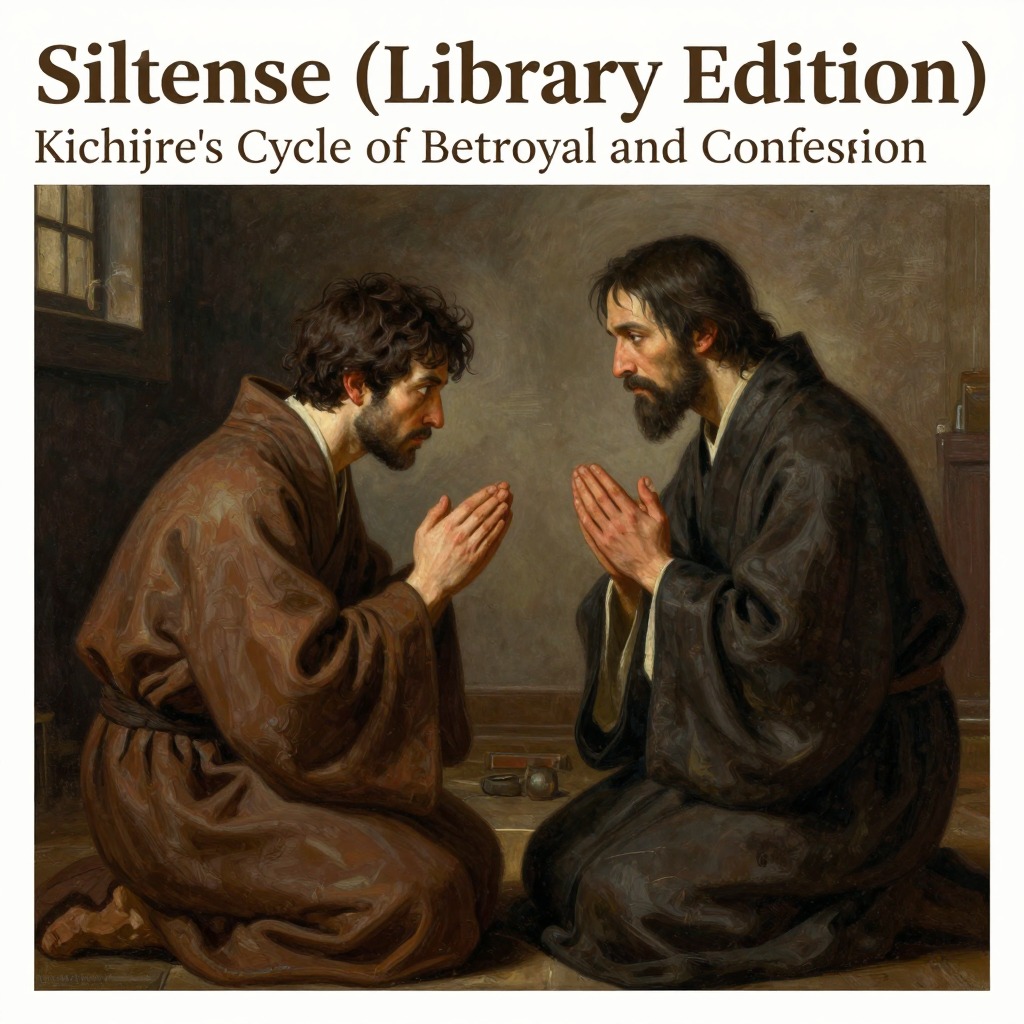
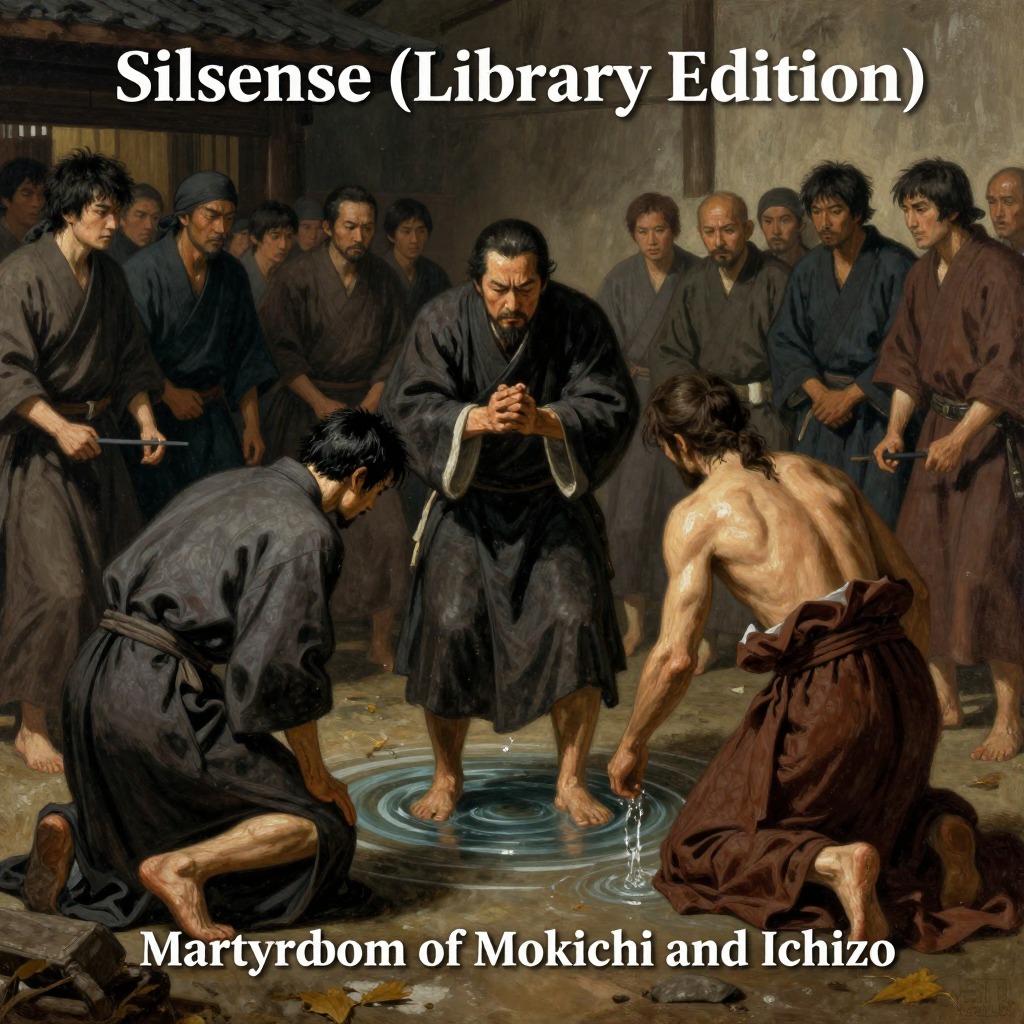
Kichijiro becomes the guide who leads Rodrigues to the Christians of Goto, and for a time he is the hero of the village, walking around with his head in the air. Rodrigues hears his confession, and Kichijiro grovels like a whipped dog, striking his forehead in token of repentance. But when the officials descend on Tomogi and demand hostages, the villagers select Kichijiro because he is a stranger and because many feel the catastrophe is his fault. He falls into terrible confusion, cries, breaks into abusive language, and finally from sheer weakness can no longer refuse. At the interrogation in Nagasaki, following Rodrigues' own advice to trample, Kichijiro is the first to place his foot on the fumie. But the officials are not satisfied; they demand that the prisoners spit on the crucifix and declare the Blessed Virgin a whore. Overcome by threats, Kichijiro gasps out the required blasphemy. He is set free and disappears. Later, when Rodrigues is wandering alone through the desolate mountains after the martyrdom of Mokichi and Ichizo, Kichijiro reappears like a wild dog, lighting fires, carrying dried fish, and following him. Rodrigues, parched and starving, eats the fish Kichijiro offers, and then Kichijiro betrays him to the guards for three hundred pieces of silver, thrown into his face with contempt. Yet even then, as the guards drag Rodrigues away, Kichijiro follows the procession on foot, falling and getting up, falling again, shouting something that sounds like hissing and weeping.
The Pleading Voice in the Rain
After Rodrigues is imprisoned, Kichijiro appears again, standing in the rain outside the prison in a cape, drenched, obstinately refusing to leave. He cries out that he did not betray Rodrigues for money but because he was threatened by the officials. "I have done something for which I can never make amends," he shouts. "I am a Christian. Put me in prison." The guards drive him away with sticks, but he returns. He is eventually thrown into the same prison, separated from the other Christians who refuse to be associated with him. He begs Rodrigues to hear his confession, and Rodrigues, suppressing his disgust, recites the words of absolution. Kichijiro's plea is a cry of existential anguish: "I am weak. I am not a strong person like Mokichi and Ichizo." He asks, "Why was I born into the world at all?"
Final Years and Death
Kichijiro follows Rodrigues to Edo, where Rodrigues, now known as Okada San'emon, lives in the Christian Residence. Years later, in the Fourth Year of Enpo, Kichijiro is arrested for suspicious behaviour. When his amulet-case is searched, an image of St. Paul and St. Peter on one side and Xavier and an angel on the other is found inside. He is fifty-four years old. He claims he picked it up when an attendant dropped it three years earlier. The officials suspect that Rodrigues may have given it to him, but Kichijiro insists there was no chance because Rodrigues was always attended by guards. The official record does not record his fate, but his presence in the Residence until that point confirms that he remained attached to the man he had betrayed, seeking from him the absolution he could not find anywhere else.
Thematic Significance
Kichijiro is the novel's most radical test of Christian mercy. He is not evil in the manner of a deliberate antagonist; he is simply too weak to be a martyr. Rodrigues initially despises him, then pities him, then finds himself unable to forgive him even after granting absolution. It is only after Rodrigues himself has trampled the fumie, after he has become the Apostate Paul, that he can finally hear Kichijiro's confession without resentment. When Kichijiro comes to his house in Sotouramachi and begs for confession, Rodrigues says, "I'm a fallen priest," but then adds, "Since in this country there is now no one else to hear your confession, I will do it." In that moment, Kichijiro and Rodrigues become mirror images: the weak man who betrayed and the strong man who fell, both equally dependent on a mercy that does not distinguish between them. Kichijiro's persistent, almost pathetic return to the priest he sold is the human counterpart to the novel's theological question: if God is silent, what holds a person to the faith? For Kichijiro, the answer seems to be that he cannot stop needing the confession, even when the priest who hears it has himself become an apostate.