Urabon
Silence (Library Edition)Urabon, the Japanese Bon festival, recurs throughout Shusaku Endo's Silence as a temporal and thematic counterpoint to the narrative of Christian persecution. More than a mere calendar date, the festival's customs of honoring the dead with lanterns and offerings become a haunting backdrop against which the suffering of hidden Christians and the psychological unraveling of the apostate priest Sebastian Rodrigues are measured. The festival's presence underscores the profound cultural distance between Japanese tradition and the imported Christian faith, and it deepens the novel's central question of divine silence in the face of relentless human agony.
The Festival's Rituals and Their Contrast with Christian Suffering
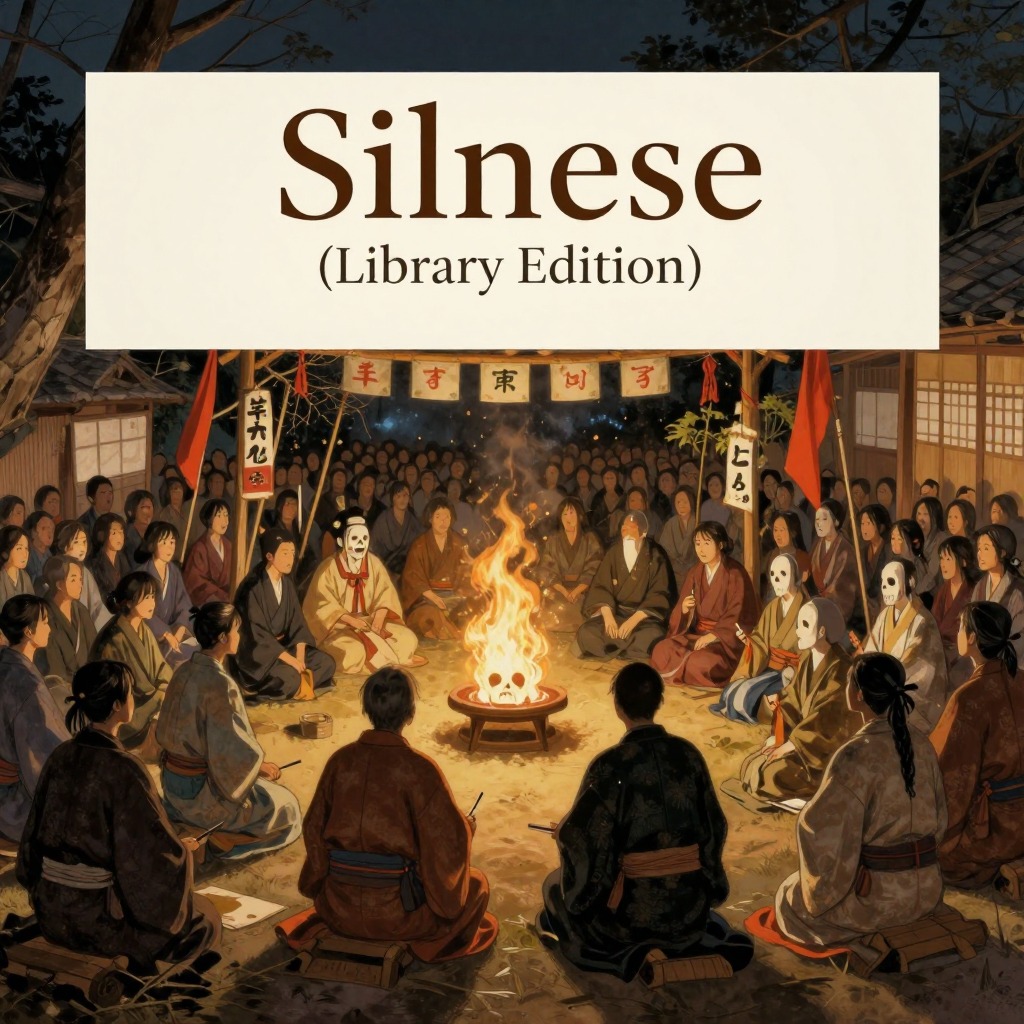
The Urabon festival is first introduced through the sounds of children chanting a plaintive song: "O lantern, bye-bye-bye, If you throw a stone at it, your hand withers away." This song, heard by Rodrigues from his prison cell, carries a note of melancholy that seems to stem from the heart of the listener as much as from the song itself. The festival involves hanging lanterns at the eaves of houses and lighting candles in them, a practice that the guards explain to Rodrigues, who notes its similarity to the Western feast of Hallowe'en. The people of Nagasaki prepare fish salads and cook sweet potatoes and beans, and officials offer fish and cakes to the magistrate, who in turn gives them sake, soup, and dumplings. This communal celebration of the dead stands in stark contrast to the solitary suffering of the Christians. On the night of Urabon, the guards drink sake until late, their raucous voices and the clinking of cups reaching Rodrigues's ears as he squats in his cell, his wasted form bathed in moonlight. The festival's cheerfulness amplifies his isolation and the weight of his impending apostasy.
Urabon as a Marker of Rodrigues's Spiritual Decline
The festival's occurrence marks a critical phase in Rodrigues's imprisonment and his internal struggle. On the night of August 13th, as the Urabon festivities unfold in Nagasaki, Rodrigues experiences a profound crisis of faith. The sounds of the celebration—the chanting children, the drunken guards—intensify his sense of abandonment. He thinks of Gethsemane and the man who said, "My soul is sorrowful even unto death," and for the first time, he confronts the possibility that even Christ may have felt the silence of God. The festival's focus on comforting the spirits of the dead with offerings of vegetables to beggars and outcasts becomes a bitter irony for Rodrigues, who is himself a kind of living dead, a priest who has lost his flock and his purpose. The Urabon lanterns, meant to guide spirits, illuminate only his own spiritual darkness. The festival's conclusion leaves him in a state of exhausted resignation, his will to resist eroded by the relentless pressure of the persecution and the apparent indifference of heaven.
The Festival as a Symbol of Cultural Incompatibility
Urabon also functions as a symbol of the "swamp of Japan" that Inoue, the Lord of Chikugo, and the apostate Ferreira argue is inhospitable to Christianity. The festival is a deeply rooted Japanese tradition, a ceremony to console spirits believed to return to their homes on the fifteenth day. Rodrigues, in his post-apostasy life in Nagasaki, observes the festival from his window, noting its resemblance to the Feast of All Souls in Lisbon, where candles are displayed in windows. Yet the resemblance is superficial. The Japanese festival is not a Christian commemoration of the faithful departed but a native practice that predates and persists alongside the foreign faith. The children who sing the Urabon song also taunt Rodrigues, calling him "Apostate Paul" and throwing stones. The festival, with its communal joy and its integration into the rhythms of Japanese life, highlights the foreignness of Christianity and the impossibility of its transplantation. The very ground on which the festival is celebrated is the same ground that, as Inoue asserts, has twisted and changed the Christian God into something unrecognizable, like a butterfly caught in a spider's web, leaving only the external form. Urabon, then, is not merely a seasonal event but a manifestation of the cultural swamp that, according to the novel's thesis, inevitably absorbs and transforms any alien ideology.