
Gawain’s Public Reputation
Sir Gawain and the Green KnightThis thread traces the contrast between the court’s idealized image of Gawain and his more complicated self-understanding.
increasing Bearing strength in each event
 decreasing
Bearing strength in each eventdecreasingThe Court’s Ideal
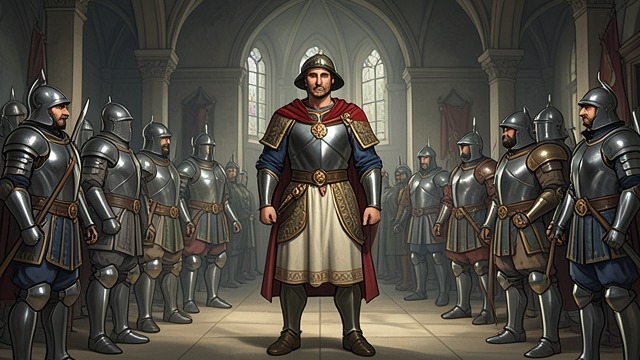
The Court’s Ideal
A Celebrated Knight
At Camelot, Gawain belongs to a company celebrated for strength, courtesy, and noble conduct. His reputation precedes his actions.
An Imposing Standard
The court’s praise creates an ideal against which even a small failure can feel immense.
The Shield’s Promise

The Shield’s Promise
Virtues Displayed
Gawain’s pentangle shield signifies interlocking qualities, including courtesy, generosity, and fidelity. It presents virtue as a coherent pattern.
Symbol and Person
The emblem raises a question the journey will answer: can a human being embody an ideal without remainder?
Courtesy Under Pressure

Courtesy Under Pressure
Social Performance
Gawain answers the lady’s flirtation with polished courtesy, trying to avoid both insult and surrender. His manners become a tactical resource.
A Narrowing Choice
Each gracious answer must negotiate desire, loyalty to his host, and the rules of chivalry.
The Girdle Confession
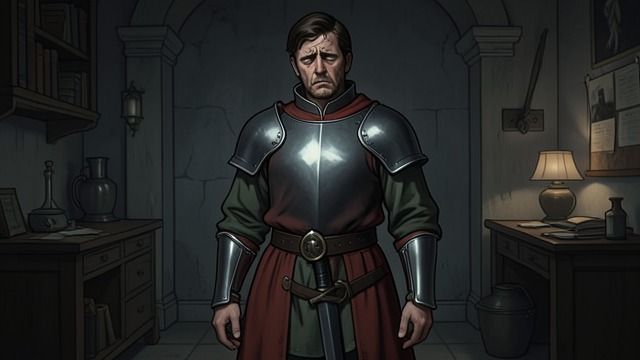
The Girdle Confession
A Broken Ideal
Gawain admits that fear for his life led him to hide the girdle. He recognizes the gap between his public image and his conduct.
Shame as Recognition
His self-accusation makes the emblem of perfection newly difficult to interpret.
The Court’s Green Bands
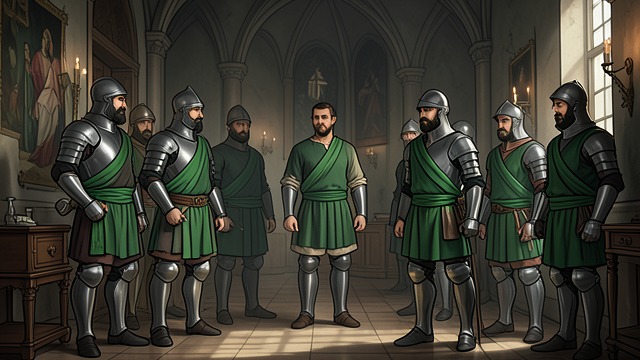
The Court’s Green Bands
A Collective Response
The court adopts green bands in sympathy with Gawain. What he sees as a personal mark of failure becomes a communal emblem.
Reputation Reframed
The gesture honors both his courage and his honesty about imperfection.
Before the Green Knight arrives
Before Gawain leaves Camelot
The first morning at Bertilak’s Castle
At the Green Chapel after the third swing
After Gawain returns to Camelot
