
The Green Girdle’s Promise
Sir Gawain and the Green KnightThis thread traces the girdle from an offer of protection to a concealed breach and finally a public emblem of human frailty.
increasing Bearing strength in each event
 decreasing
Bearing strength in each eventdecreasingThe Protective Claim
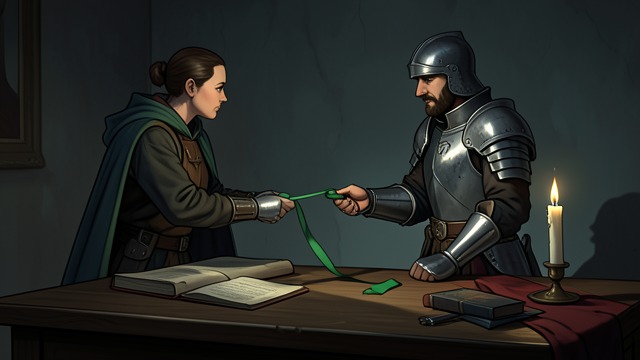
The Protective Claim
A Promise of Survival
Lady Bertilak says the green girdle will protect its wearer from death. Its value lies in the security Gawain desperately wants.
Temptation Recast
The offer turns a small object into a test of whether he will trust his own virtue or seek physical protection.
The Gift Accepted
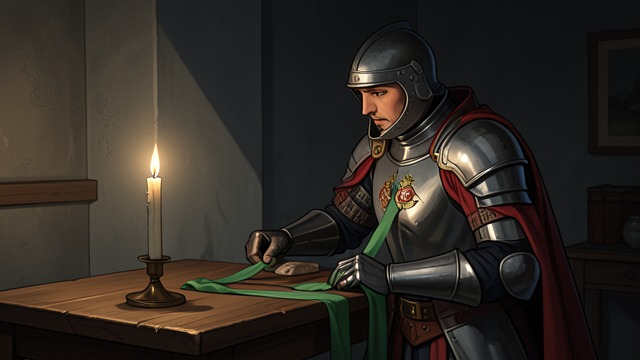
The Gift Accepted
Fearful Calculation
Gawain accepts the girdle because he hopes it may save his life at the Green Chapel. He does not give it to Bertilak as promised.
A Secret Begins
The gift becomes morally significant through the concealment attached to it.
The Girdle Worn
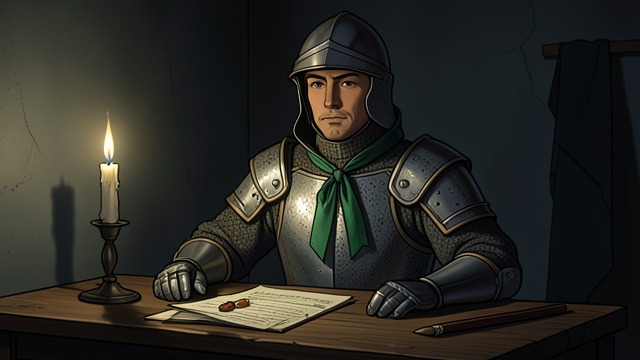
The Girdle Worn
A Hidden Safeguard
Gawain ties the girdle beneath his clothing before setting out. Its concealment shows that fear remains active even after he has chosen to face the challenge.
Virtue Under Strain
The visible armor and hidden token embody the difference between a knight’s public appearance and private vulnerability.
The Token Exposed
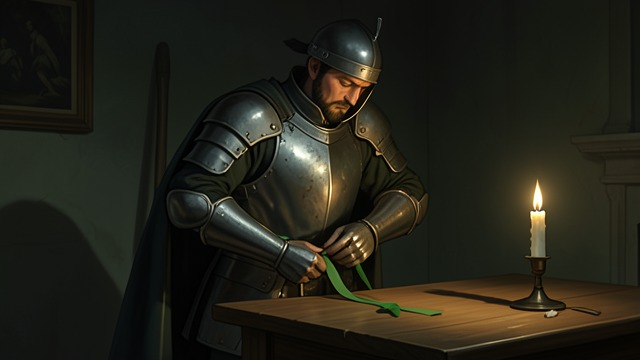
The Token Exposed
The Test Explained
Bertilak identifies the girdle as his wife’s gift and connects it to the third blow. The secret has become the one failure the test can name.
Gawain’s Remorse
Gawain condemns his own fear and accepts the girdle as a reminder of that weakness.
A Communal Emblem
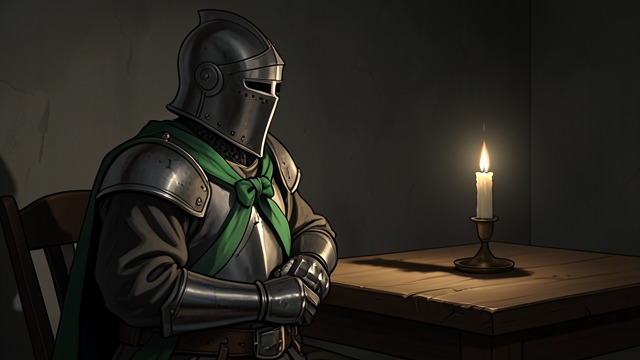
A Communal Emblem
Shame Reinterpreted
Gawain wears the girdle openly as a mark of fault. Camelot’s knights adopt similar bands in solidarity.
Memory Rather Than Armor
The token no longer promises physical safety; it preserves a lesson about the limits of human self-command.
The third morning at Bertilak’s Castle
The third morning, before Gawain’s departure
New Year’s morning, before the Green Chapel
After the third axe swing
After Gawain returns to Camelot
