Camelot
Sir Gawain and the Green KnightCamelot is the courtly frame of the poem’s adventure: the story begins there at Christmas among King Arthur, the Knights of the Round Table, and the assembled nobility, then returns there with Sir Gawain after his encounter with the Green Knight. Its contrast between festive court and the road beyond gives the journey a public point of departure and a place of return, where Gawain’s changed understanding of his conduct is visible.
The Christmas Court
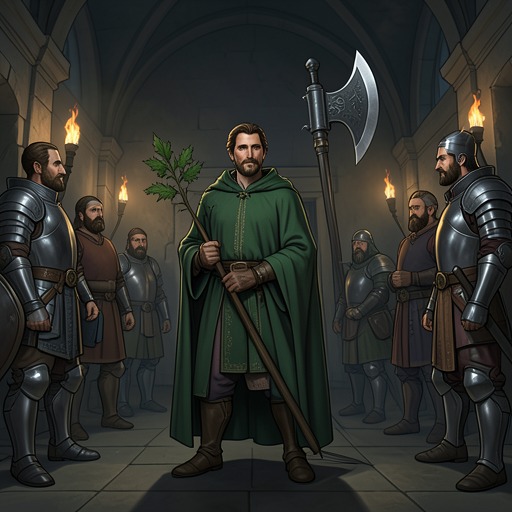
The poem places King Arthur at Camelot during Christmas, surrounded by many gracious lords and the distinguished members of the Knights of the Round Table. This gathering establishes Camelot as a centre of fellowship and courtly life before the adventure draws Sir Gawain away from it. The narrative introduces the tale as an extraordinary adventure belonging to the world of Arthur’s wonders, so the court is both the story’s setting and the community whose ideals will be tested beyond its walls.
Departure and the World Beyond
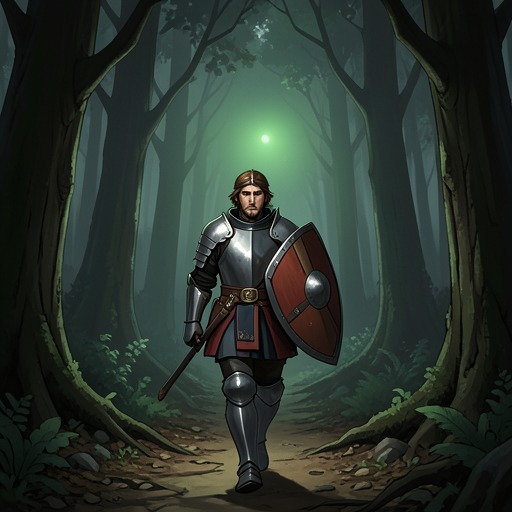
The surviving references connect Camelot’s courtly opening with Sir Gawain’s departure into a wider landscape. He rides through Logres on God’s behalf and, by morning, enters a deep and wild forest among high hills and woods. Camelot is not described as the site of these trials: the contrast is between the ordered fellowship of the court and the isolated country through which he must travel. Later, when his appointed meeting at the Green Chapel approaches, his host assures him that the place will no longer trouble him; the journey’s danger and uncertainty belong to the world outside Camelot.
Return and Significance
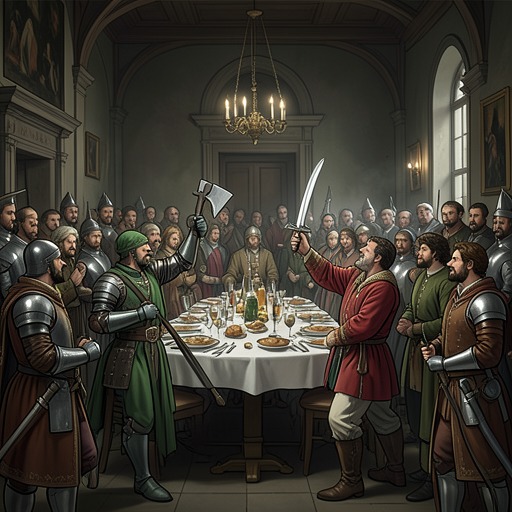
At the conclusion, Sir Gawain comes back to court wearing the Green Girdle beneath his left arm, knotted as a token of the fault he has been taught to recognize. The court wakes and rejoices at his arrival. King Arthur kisses him, as does Guinevere, while the assembled knights greet him and ask about his journey; Gawain tells them of his experience. Camelot thus receives him back not simply as the returning traveller, but as a knight bearing a visible reminder of his failure and instruction. The poem’s return to the Christmas court closes the frame opened there, bringing the consequences of an adventure beyond the court into the fellowship that first sent the story into motion.