Christmas
Sir Gawain and the Green KnightChristmas is the poem’s first major courtly season: Arthur and his company celebrate at Camelot as the story turns from the distant fall of Troy to an adventure in Britain. The feast introduces a world of fellowship, abundance, and expectation, while the passing of Christmas and the approach of New Year begin to measure the time leading toward Gawain’s encounter with the Green Knight.
The feast at Camelot
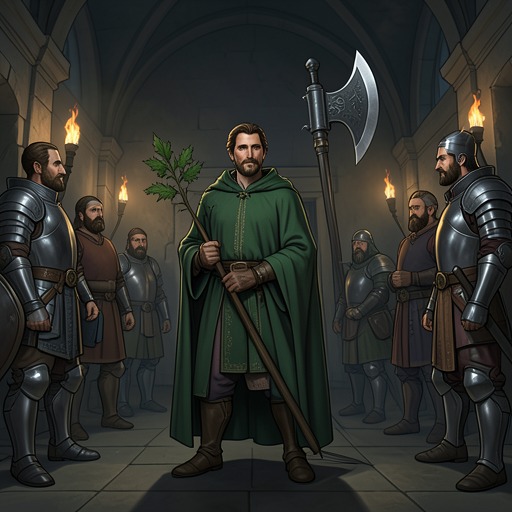
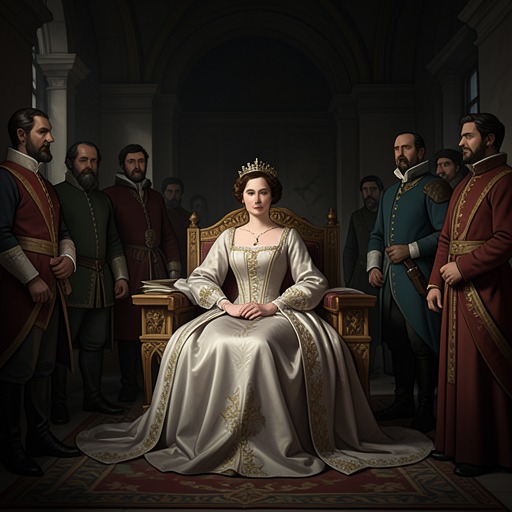
Arthur is at Camelot for Christmas, among the lords and companions of the Round Table. The celebration lasts fifteen days, filled with food and amusement. Its scale makes the court a vivid communal setting rather than a mere stop in the plot: the company gathers in ordered plenty, with trumpets sounding as the first course arrives and bright banners hanging nearby.
The festivities continue into the New Year. When New Year is newly come, a double serving is provided at the dais. This detail places the holiday within an extended cycle of celebration and gives the transition between years a visible presence in the hall. The poem’s opening thus connects seasonal renewal with a court alert to spectacle and adventure.
Christmas and the call to adventure
The Christmas gathering belongs to the poem’s account of Arthur’s early years, when he is eager to hear tales of adventure and boasts. The narrator presents the story as an extraordinary adventure from Arthur’s marvel-filled history. Christmas supplies the ceremonial setting for that appetite: the court’s feast brings its people together, and its festive openness makes room for a challenge that will draw one of its knights away from the hall.
This contrast shapes Christmas’s narrative significance. The feast offers the security and sociability of Arthur’s court; the adventure that grows out of the poem’s opening will test a knight beyond that protected world. Christmas is therefore both a scene of collective abundance and the seasonal threshold of a story organized around departure and trial.
The calendar and the journey
After the Christmas season passes, the narrative marks the succession of the year through changes in the religious calendar and the weather. Lent follows, with its simpler food; winter then gives way. Gawain remains with Arthur until All Hallows, when a feast is held for the company. Later, Saint John’s Day marks the last of the celebrations before the company turns its thoughts to the coming departure.
As New Year approaches again, the journey’s deadline becomes immediate. The poem recalls the calendar’s passage while winter weather grows wild, bringing the courtly year opened at Christmas toward its severe outdoor conclusion. The movement from feast to fast, from seasonal change to the next New Year, gives the adventure its temporal structure: Christmas begins the cycle, while the approaching New Year presses Gawain toward his appointment.