Smith and Wesson’s phone logs
Slow BurnSmith and Wesson’s phone logs are a decisive piece of investigative evidence: they let Dylan Buchanan test a claim against the sequence of calls and events, exposing Nate Hallinger’s lie about how he learned Kate MacKenna had refused the inheritance. Their importance lies not in solving every part of the case by themselves, but in making timing answer a question that an apparently neat collection of clues could not settle.
The Logs in a Suspiciously Orderly Case
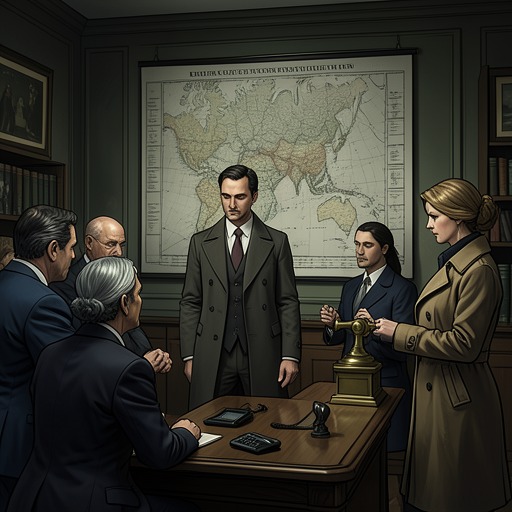
When Dylan examines the papers and handwritten notes in Roger MacKenna’s apartment, he sees a package that seems almost too accommodating. The evidence appears to connect Roger to Jackman, yet does not supply hard proof against him. More troubling, Roger’s notes include Reece Crowell’s name; Roger left information that investigators could find but no suicide note; and another gun appeared quickly. Dylan cannot reconcile such an organized scene with the disorder of Roger’s life. Its tidiness becomes a reason for doubt rather than reassurance, and Dylan suspects that the death may have been staged.
A fingerprint match on a calendar gives that suspicion a new direction: the prints belong to Ewan MacKenna. Agent Kline considers competing explanations. Someone trusted by Compton MacKenna might have copied the video and sold it to Roger, who then involved Jackman because he needed Jackman’s connections. Alternatively, Ewan might have obtained the video, involved Jackman himself, and arranged for Roger to take the blame. Neither theory resolves why Roger died when he did. Kline’s question about the timing gives Dylan a way to return to the evidence without assuming that its tidy arrangement is genuine.
Building a Timeline
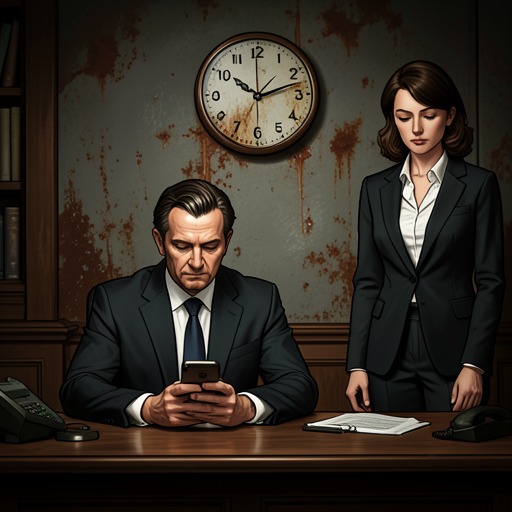
Dylan calls Anderson Samuel Smith and insists that the question cannot wait. He needs help creating a timeline, because the puzzle pieces do not fit until the order and duration of the calls are established. The phone logs at Smith and Wesson provide the check: rather than relying only on a suspect’s account or an investigator’s reconstruction, Dylan can compare that account with the recorded sequence.
The key discrepancy concerns what Nate knew about Kate’s decision. Nate had referred to hearing that she had turned down the inheritance. Dylan reasons that Vanessa must have told him: she had left before Kate changed her mind and accepted it. Nate says Anderson told him instead. The logs let Dylan test that explanation against Anderson’s recollection of his own movements and calls, turning a seemingly small detail about when news traveled into a challenge to Nate’s credibility.
The Timing Contradiction
Dylan’s watch and Anderson’s account establish the conflict. Dylan recalls speaking with Nate less than ten minutes after leaving the office. Anderson remembers spending at least fifteen minutes finishing his business with the police when they came to confiscate Roger’s gun, then being summoned back to his office to take Nate’s call. The sequence does not allow Anderson to have passed the information to Nate in the way Nate claims. Anderson’s phone logs substantiate that chronology, giving Dylan more than an impression that the explanation is wrong: they give him a record against which it can be checked.
The contradiction redirects the inference. If Anderson did not tell Nate, Vanessa’s earlier access to the information becomes significant, and Nate’s claim no longer accounts for how he knew Kate had initially refused the inheritance. Dylan confronts him with both the timing and the logs. Nate dismisses the argument as guesswork, but Dylan points to Vanessa as the person who can expose him; she is watching Nate, and Dylan expects her to turn against him when she understands what she faces. The logs do not, by themselves, establish every detail of the conspiracy. They do, however, strip away Nate’s stated source and make the connection to Vanessa consequential.
Evidentiary and Narrative Role
The phone logs function as a counterweight to the false clarity of Roger’s apartment. Earlier, the apparent order of the papers tempts investigators toward explanations that fit neatly; Dylan’s suspicion that the scene has been staged keeps that order in question. Later, the logs make one narrow, verifiable interval more powerful than a polished story. They do not resolve every uncertainty surrounding Roger’s death, but they expose a lie within the developing investigation and help Dylan identify where the information actually came from.
Their effect also depends on delay. The narrative first presents the logs as the confirmation of a realization Dylan has reached while reconstructing events; the specific discrepancy then becomes explicit in his confrontation with Nate. That movement from unease, to timeline, to recorded contradiction gives the records their force. What seemed like background paperwork becomes a means of distinguishing what a suspect says from what the sequence of events permits.