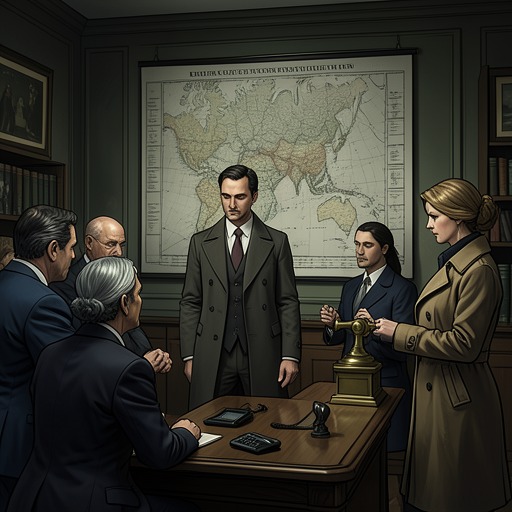
The Florist’s Bombing Signature
Slow BurnThe Florist’s Bombing Signature is the recurring practice of hiding explosives in flower baskets, a method that helps investigators connect separate attacks and recognize a bomber’s habits. At an art exhibition, a basket near Kate MacKenna’s table marks the pattern; at a warehouse, a second bomb makes the pattern more alarming. The signature identifies a mode of operation, not yet the person responsible, while the attacks’ connection to Kate turns a forensic clue into a question of who is targeting her.
Definition and Recognition
The signature is described as a bomber’s characteristic, repeated choice: it may lie in the materials used or, as in this case, in where an explosive is concealed. Dylan Buchanan explains that bombers can be creatures of habit, and that this one favors baskets, sometimes hiding explosives in more than one. Nate Hallinger supplies the name attached to the method: because the containers are flower baskets, investigators call the bomber the Florist. The label makes the pattern easy to refer to, but it does not mean the investigators have identified the bomber. Nate clarifies that the expert he has spoken with recognizes the signature, not the person.
The explanation distinguishes a recognizable method from a solved case. Nate has just returned from the airport, where he offered to collect Sutherland, an expert who leads the eastern national response team, part of the Bureau of Alcohol, Tobacco, Firearms and Explosives. Sutherland has shared useful information off the record, but the site still requires examination with trained dogs and other investigative work. His recognition of the Florist’s pattern is therefore an investigative lead rather than a completed identification.
The Exhibition Basket
The pattern becomes concrete at the exhibition tent. Kate has set out her gift baskets on a table at the back, beneath her company logo, and arranged them in a semicircle. When Dylan explains the investigators’ findings, the explosive is reported to have been inside a basket of flowers placed on the ground in front of a table toward the back of the tent—Kate’s table. The contrast between her carefully arranged display and the basket used to conceal the bomb gives the ordinary floral container a second, dangerous meaning.
Kate recalls seeing the flowers and thinking they were beautiful, but she did not see who delivered them. She had gone into the gallery briefly; when she returned, the flowers were there. That gap matters to the investigation: the basket’s location and concealment fit the known signature, while the delivery itself remains unobserved. The evidence connects the bombing to the Florist’s method without establishing who brought the basket or when it was placed.
From a Repeated Method to a Threat
The signature gains greater significance when investigators connect the exhibition bombing to the warehouse explosion. A fire-department member in Silver Springs notices similarities and contacts the Charleston Police Department to establish who is in charge of the Charleston investigation. That exchange brings Nate to the information that Kate was at the warehouse. As he explains the comparison, he reports that someone tampered with the gas line, but that this alone could not account for the damage. The investigation found another bomb.
The distinction between the tampered gas line and the additional explosive changes the interpretation of the warehouse blast: it was not adequately explained by the apparent gas problem. Set beside the flower-basket bombing, the second bomb supports a connection between the two attacks. Kate recognizes the implication before Nate finishes explaining it. Nate then states the crucial limit of what they know: she is the only connection between the incidents. The signature can link the attacks through the bomber’s practice, but the evidence presented does not yet reveal why Kate is connected to them or who wants her dead.
Significance and Limits
The Florist’s method is both a clue and a contrast. Flower baskets belong to the exhibition’s decorative setting, where Kate’s own baskets are arranged for display; the same kind of container can also conceal an explosive. The familiar object’s function changes with its placement and hidden contents, making the investigators’ attention to repeated hiding places essential. A basket is not proof by itself: it becomes meaningful in relation to the pattern recognized by the expert and the findings at the separate attack sites.
The bomber’s earlier pattern also makes the warehouse discovery especially consequential. Nate says the Florist has targeted buildings, cars, and houses and has seemed to take considerable care to avoid hurting anyone; Dylan marks the break in that pattern with the observation that this time is different. The attacks now include a threat in which Kate is the shared connection. The signature thus does more than classify a technique: it helps transform two apparently separate explosions into a continuing danger around her. Yet it leaves the central mystery open. Investigators have a recognizable concealment habit and a link between scenes, but not an identified bomber or an established motive.