
Furlong’s Refusal and Return
Small Things Like TheseBill Furlong’s initial refusal to help a convent girl is not erased by his later rescue; the contrast traces a moral conflict that changes through remembered guilt.
increasing Bearing strength in each event
 decreasing
Bearing strength in each eventdecreasingThe First Appeal
The First Appeal
A desperate request
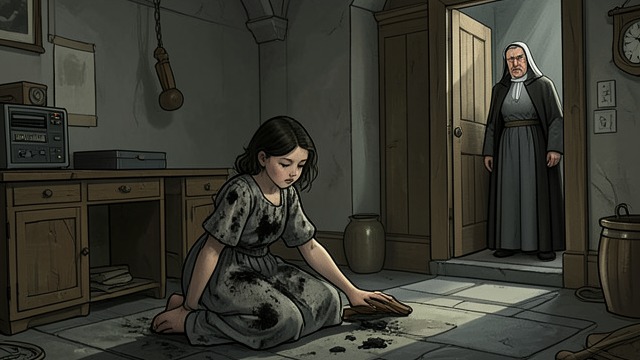
A girl polishing the chapel floor asks Bill Furlong to take her to the river or let her out at the gate. She says she has no one and wants to die.
Fear takes over
Bill Furlong says he cannot take her anywhere. The refusal is immediate, shaped by uncertainty and the pressure of the nun’s presence.
Leaving the Chapel
Leaving the Chapel
Returning to business
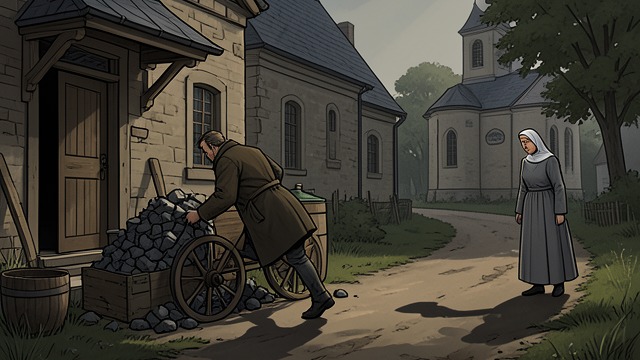
Bill Furlong follows the nun outside, unloads the coal and logs, accepts payment, and leaves. He does not ask what will happen to the girl who appealed to him.
A decision that persists
The practical task gives him a route out of an uncomfortable situation. Later, the memory of that departure becomes part of the moral burden he must face.
A Different Girl Found
A Different Girl Found
A new emergency
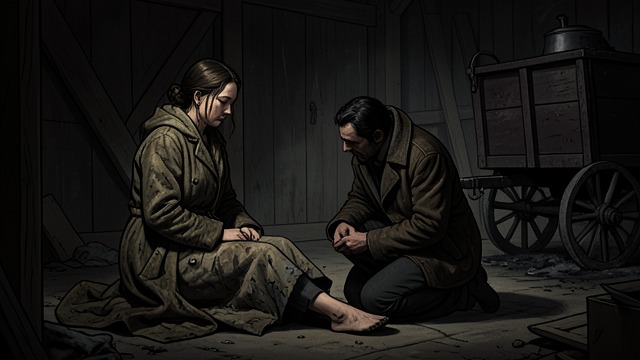
Bill Furlong discovers Sarah Redmond in the coal shed. She is not the girl who previously asked him for help, but her condition recalls the earlier plea.
Chance and responsibility
The repetition prevents him from seeing the discovery as an isolated mishap. What he refused to do before now returns as a choice he can no longer avoid.
The Second Failure
The Second Failure
Help interrupted
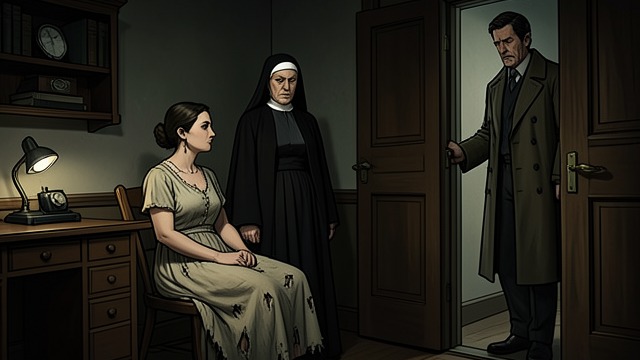
Bill Furlong brings Sarah to the convent and listens as the Mother Superior dismisses the incident. He leaves after accepting money and failing to pursue the infant’s whereabouts.
Guilt becomes specific
The failure is not only a general unwillingness to intervene. He can name exactly what Sarah asked and exactly what he did not do.
The Return as Correction
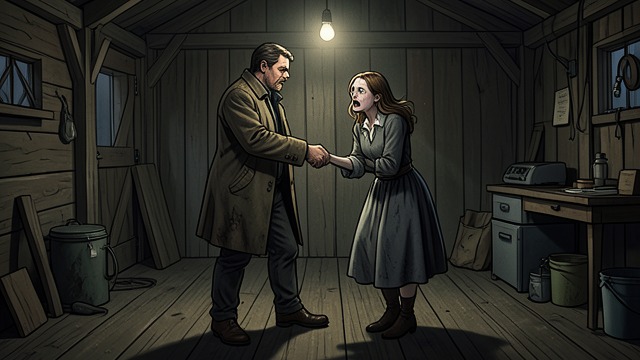
The Return as Correction
Acting on remembered failure
Bill Furlong returns to the shed and takes Sarah away. The choice responds to his earlier refusals without pretending to undo them.
A changed course
He accepts uncertainty and potential consequences rather than letting the convent’s authority make the decision for him. The change is visible in action, not in a claim that he has become faultless.
early December 1985
early December 1985 moments later
the Sunday before Christmas before dawn
the Sunday before Christmas later that morning
Christmas Eve night
