1985
Small Things Like These1985 is the social and historical frame for a story in which economic insecurity and public deference make private acts of conscience consequential. In Ireland, young people leave for London, Boston, and New York, while New Ross faces business closures and redundancies. Against that contraction, Bill Furlong resolves to keep working, provide for his daughters, and see them through their education at St Margaret’s School; the year’s pressures form the ordinary world from which his moral crisis emerges.
Economic Contraction and Public Unease
The national news gives the year a wider political frame. A new airport opens in Knock, with Haughey present to cut the ribbon. The Taoiseach signs an agreement with Thatcher concerning The North, prompting Unionist marches in Belfast against Dublin having a say in their affairs. Meanwhile, crowds at shrines in Cork and Kerry have thinned, though some people still gather in hope that a statue will move again. Emigration, political protest, and religious expectation appear side by side, giving 1985 a mixture of movement and stagnation.
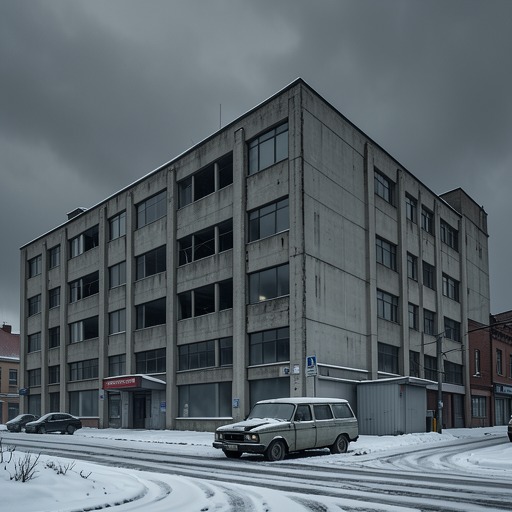
That uncertainty is especially visible in New Ross. The shipyard company closes, and Albatros, the large fertilizer factory across the river, makes several workers redundant. Bennett’s dismisses eleven employees, while Graves & Co., where Eileen Furlong had worked, shuts its doors after being part of local life for as long as anyone can remember. The auctioneer describes business as effectively frozen, and Miss Kenny boards up her florist shop, asking one of Bill Furlong’s workers to hold the plywood while she nails it in place. These are distinct signs of decline: a major employer disappears, a long-established shop closes, and a small business literally covers its window.
Work, Family, and the Convent
The hardship is not limited to business closures. Bill Furlong has seen longer dole queues, men unable to pay their electricity bills living in cold houses, and women waiting at the post-office wall each month to collect their children’s allowances. In the country, a man leaves suddenly for England, leaving cows unmilked; another family sells its Jeep because of mounting debt. The starkest image is a schoolboy drinking milk from a cat’s bowl behind the priest’s house. Together, these observations make poverty concrete and local rather than abstract.
Bill Furlong responds by trying to keep his head down and remain on good terms with people, while continuing to provide for his daughters. His determination is both practical and vulnerable: in a town where employment and businesses are disappearing, education at St Margaret’s School represents one of the few available hopes for their future. The pressure to protect his family helps explain why stepping outside accepted boundaries carries a personal cost.
The Good Shepherd Convent stands within this strained community as both a respected institution and the subject of troubling rumors. The Good Shepherd Sisters run a training school for girls and a laundry whose work is prized by restaurants, guesthouses, the hospital, and well-off households. Reports of immaculate washing coexist with accounts that the girls are not ordinary students but are kept at work washing linen from dawn until night. One rumor concerns a fifteen-year-old whose long hours at the wash-tubs have left her with varicose veins. Other versions shift responsibility or emphasize the nuns’ own labor; still others claim that unmarried girls are hidden there after childbirth and that babies are adopted abroad for money. The novel distinguishes these claims from established fact: townspeople admit that much of what is said may be gossip, even as the accumulation of stories reveals how little they know about the institution.
Moral Reckoning and the Year’s Wider Frame
In the account of his later distress, Bill Furlong recognizes that the deepest wrong was not only what happened to a girl at the convent, or the Mother Superior’s manner, but his own conduct while present. He had not asked about the baby—the one thing the girl had asked him to do—had accepted money, and had left her with nothing before her. He remembers the breast milk leaking beneath her cardigan and staining her blouse, then recalls going to Mass. The sequence binds a private act of omission to the religious and social respectability surrounding the institution; his self-reproach gives the year’s economic and communal pressures a direct moral consequence.
The book’s closing note widens the frame beyond the novel’s events. It states that Ireland’s last Magdalene laundry did not close until 1996, estimates that ten thousand women and girls is a modest count of those concealed, incarcerated, and forced to labor, and suggests that thirty thousand is probably more accurate. Records were destroyed, lost, or made inaccessible, while the work of those confined was rarely acknowledged. The note also records that many lost babies, some lost their lives, and some or most lost the lives they might otherwise have had. It reports that a commission found nine thousand children had died in eighteen of the institutions it investigated.
Later disclosures and official acknowledgment further extend the story’s historical horizon. In 2014, historian Catherine Corless made public her discovery that 796 babies died between 1925 and 1961 in the Tuam home in County Galway. The note identifies the Catholic Church and the Irish State as the institutions that ran and financed these homes, and records that the Irish government did not apologize for the Magdalene laundries until 2013. Set against those delayed revelations, 1985 is more than a period backdrop: it is a moment in a society where hardship is visible, rumors circulate, and decisive knowledge remains obscured.