Bill Furlong and Mrs Wilson’s Relationship
Small Things Like TheseBill Furlong and Mrs Wilson’s relationship is a bond of sustained, practical care that begins before his birth and shapes both his opportunities and his sense of moral responsibility. Mrs Wilson protects his mother when others reject her, then gives Bill a childhood with shelter, education, and encouragement; years later, he remembers that history while choosing whether to help a girl in danger.
Origins and Early Protection
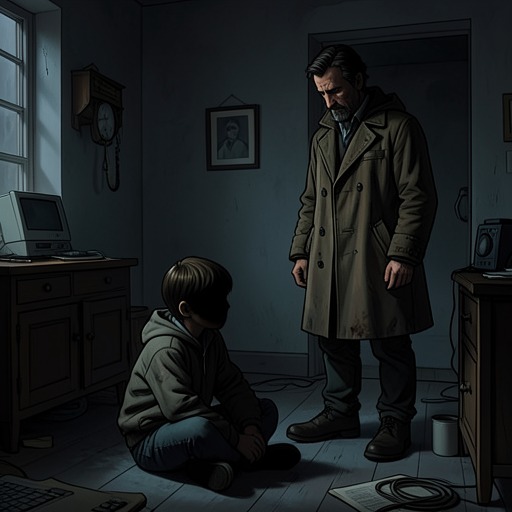
Bill’s mother was sixteen and working as a domestic for Mrs Wilson when she became pregnant. Once the news reached her family, they made clear they wanted nothing more to do with her. Mrs Wilson did not dismiss her or withdraw her livelihood: she told her to stay and keep her work. When Bill was born on 1 April 1946, she arranged for his mother to go to hospital and brought them both home. Her intervention placed mother and child within the household at The Wilsons’ Mansion at a moment when they had been refused support elsewhere.
Bill’s infancy and earliest childhood unfolded in Mrs Wilson’s kitchen and beside its dresser. He first slept in a Moses basket, then was harnessed into the large pram; the room’s serving plates, black range, and two-coloured tiled floor formed his first remembered surroundings. These details make her care material and domestic rather than ceremonial: she gave him a place in the household and a secure setting in which to grow.
Mrs Wilson was a Protestant widow whose husband had been killed in the War, and she had no children of her own. She lived on his pension and income from her small herd of Herefords and Cheviot ewes. The household’s religious difference from Bill’s mother did not become a source of major friction: Mrs Wilson went to church, while Ned drove mother and child on to chapel, and the prayer books and Bible rested together on the hallstand afterward. The arrangement offers a contrast to the harsher judgments surrounding Bill’s birth: in this home, difference did not prevent care.
Education, Belonging, and Unequal Protection
As Bill grew, Mrs Wilson gave him small jobs and helped him with reading. Her small library mattered as a source of access as well as entertainment: she encouraged him to use the dictionary and look up unfamiliar words while reading A Christmas Carol. When he won first prize for spelling the following year, she praised him and rubbed the top of his head. The recognition stayed with him; for a day or more, he felt taller and believed that he mattered as much as any other child.
That affirmation was especially significant against the humiliation he faced outside the household. Schoolboys jeered at Bill and called him ugly names; once he came home with spit covering the back of his coat. His connection to Mrs Wilson’s household gave him some leeway and protection. He later attended technical school for a couple of years, then joined the coal yard and worked his way up to managing men. His early treatment by Mrs Wilson did not erase social stigma, but it gave him practical help and a counterweight to the hostility he encountered.
The protection was not proof that Bill had known no hardship. His mother died suddenly when he was twelve, and he never learned who his father was. Years later, his birth certificate left the father’s name as “Unknown”; the clerk handed it across the counter with an ugly smile. Some people had speculated that a man from Mrs Wilson’s household had fathered him, interpreting her financial support as evidence, but Bill never found out who his father was. The distinction is important: Mrs Wilson’s generosity is established, while the rumor about his paternity remains unconfirmed.
Adult Life and the Limits of Safety
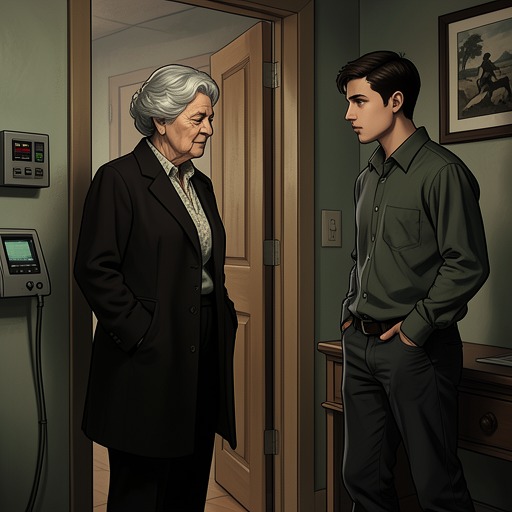
When Bill became engaged to Eileen, Mrs Wilson gave him a few thousand pounds to help him start up. The gift extended her support beyond childhood and contributed to the material beginning of his adult life. Bill had built a dependable position through his work at the coal yard, but the assistance also showed that Mrs Wilson continued to take an active interest in his prospects.
Later, when Bill tells Eileen what he has witnessed at the convent, she argues that the girls’ situation has nothing to do with them and points to the practical ties binding the business to the institution: the nuns pay what they owe, unlike customers who run up debts. She also says Bill was brought up far from hardship. Her judgment sits uneasily beside his own history. He had known rejection, bereavement, and public humiliation, yet Mrs Wilson’s intervention had also kept his mother and him from a more precarious life. The novel makes that protection consequential without suggesting that it gave him complete knowledge of other people’s suffering.
The Inheritance of Kindness
At the convent, the Mother Superior says it is increasingly difficult to find a place for everyone. She gives Bill an envelope for Christmas and expects him to leave, but he pauses beside the girl sitting in a daze with nothing before her. He offers to help; when she begins to cry, her response marks how unfamiliar kindness has become to her. Bill’s choice is not a direct repetition of Mrs Wilson’s actions, but his later thoughts connect the two moments: he remembers her daily kindness, her corrections and encouragement, and the things she knew and chose not to say or do.
Bill recognizes that without Mrs Wilson his own mother might have ended up in the convent, and he imagines that in an earlier time he could have been the person he was now trying to save. That comparison gives their relationship its lasting moral force. Mrs Wilson’s help did not abolish the social conditions that made unmarried mothers vulnerable; it altered one family’s course through a particular act of shelter and continued care. As Bill walks home with Sarah Redmond, he understands that his decision may bring trouble, but also that the more consequential danger would have been leaving the girl unaided. Mrs Wilson’s example makes such help legible to him as an obligation expressed through action, not merely sympathy.