Ireland’s Magdalene Laundries and Mother-and-Baby Home System
Small Things Like TheseIreland’s Magdalene Laundries and Mother-and-Baby Home System is the institutional history behind the novel’s convent and one of the realities its moral conflict brings into view. Its fictional scenes expose the gap between the respectable services a convent provides and the vulnerable girls and mothers hidden within its walls; the closing note names a wider history of forced labor, concealed confinement, infant deaths, adoption, lost records, and delayed public acknowledgment. The story is dedicated to women and children who suffered time in Ireland’s mother-and-baby homes and Magdalene laundries, linking its intimate acts of care to lives harmed beyond the fictional plot.
Institutions and Public Reputation
The convent in the story is run by the Good Shepherd nuns, who operate both a training school for girls and a laundry business. The laundry is widely used by restaurants, guesthouses, the nursing home, the hospital, priests, and well-off households. Its reputation rests on the quality of its work: customers’ washing is said to return looking as good as new, whether it consists of a large quantity of bedlinen or only a dozen handkerchiefs. The institution is therefore not separate from town life. Its service reaches into homes and businesses, giving the community an ordinary, practical reason to rely on it.
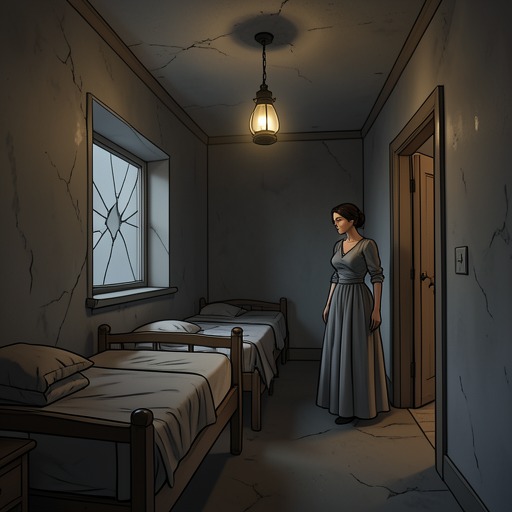
What is known publicly about the school is less certain. Town talk describes girls who are supposedly being reformed through penance and laundry work from dawn until night. One report concerns a fifteen-year-old treated by the local nurse for varicose veins after standing so long at the wash-tubs. Other stories contradict or complicate that account: some claim the nuns themselves do punishing work, including knitting Aran jumpers and threading rosary beads for export; that they are forbidden to speak except in prayer; and that their food is restricted until they have finished working. Some people compare the convent to a mother-and-baby home, claiming unmarried girls are sent there after giving birth and that their babies are adopted abroad, including by wealthy Americans, or sent to Australia. The narration presents these claims as local reports, not as facts independently established by the characters; it also notes that gossip is plentiful and that much of what is said cannot be believed. That uncertainty does not erase the known institution’s power. It shows how rumor can circulate around a place whose inner life remains difficult for the town to see.
Dependence, Silence, and Separation
The community’s relationship with the convent is shaped by material dependence as well as religious authority. When Bill Furlong tells Eileen Furlong what he has witnessed, she argues that the matter has nothing to do with them and that there is nothing they can do. She points to the convent’s need for a fire and to the fact that the nuns pay what they owe on time, unlike other customers who leave debts on the slate. Her reasoning makes the town’s economic connection explicit: confronting the institution may threaten a dependable customer as well as challenge its authority. Bill’s question about what Eileen knows, and her reminder that he was raised far from hardship, place the convent’s girls within a social vulnerability he has not personally shared.
The story brings the consequences of that concealed vulnerability into focus through a girl who asks Bill to inquire about her baby. She says the child is fourteen weeks old, has been taken from her, and might be allowed to feed from her again if he is still there. She does not know where he is and worries that he must be hungry, with nobody to feed him. Her appeal makes separation more than a rumor about what institutions do: it is a mother’s immediate uncertainty about her infant’s location and care. The narrative supplies no resolution about the child’s whereabouts, preserving the force of what the mother does not know.
A Fictional Convent and a Moral Choice
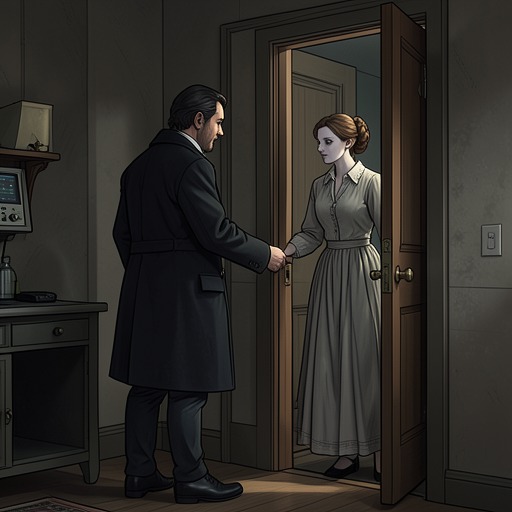
The convent episodes show how ordinary transactions can coexist with visible deprivation. After Bill disputes the Mother Superior’s treatment of the girls, she gives him an envelope for Christmas while saying she expects an invoice for what is owed. As he is escorted through the kitchen, a young nun stands over a frying pan preparing a duck egg and two rounds of black pudding; the girl from the coal shed sits dazed at the table with nothing before her. Bill knows that the convent expects him to continue on, but instead he pauses beside her and offers to help. She looks toward the window, draws breath, and begins to cry, a response the narration connects to the unfamiliarity of kindness. The scene sets payment and hospitality against the girl’s immediate need, and turns a routine visit into a choice about whether to act.
By the time Bill walks away with the girl at his side, the question has widened beyond the single rescue. He wonders whether life can be carried on for decades without anyone being brave enough to oppose what is happening, while still claiming to be Christian. His emerging happiness is inseparable from the knowledge that he will pay for his decision. He remembers Mrs Wilson’s daily kindnesses and recognizes that, without her, his own mother might have ended up in a similar institution. The thought connects the girl’s present danger to a past possibility in his family, while leaving the institutional forces that made such danger possible in place.
Historical Record and Delayed Acknowledgment
The closing note distinguishes the work of fiction from any one person’s life, then sets its imagined events beside historical facts. Ireland’s last Magdalene laundry did not close until 1996. The note says the number of girls and women concealed, incarcerated, and forced to labor in these institutions is unknown: ten thousand is described as a modest estimate, while thirty thousand is judged probably more accurate. Many institutional records were destroyed, lost, or made inaccessible, and the work of the girls and women was rarely recognized. The note also records that many lost their babies, some lost their lives, and some or most lost the lives they might otherwise have had.
The account extends to the mother-and-baby homes, where the number of infants who died or were adopted out is also unknown. It reports that the Mother and Baby Home Commission Report found that nine thousand children died in eighteen of the institutions it investigated. In 2014, historian Catherine Corless made public her discovery that 796 babies died between 1925 and 1961 in the Tuam home in County Galway. The note states that these institutions were run and financed by the Catholic Church in concert with the Irish State, placing religious authority and state support within the same history of responsibility. The Irish government did not apologize over the Magdalene laundries until 2013.
Together, the fictional scenes and the note make silence part of the subject rather than a mere absence of information. In the story, uncertainty surrounds what happens behind the convent’s orderly public face; in the historical account, inaccessible or missing records limit what can be known about individual lives. Against that silence, a mother’s plea, a girl’s tears, and Bill’s decision to help become acts of attention to people whom the institutions and the town have made easy to overlook.