Mother-and-baby homes’ infant-separation and adoption practice
Small Things Like TheseMother-and-baby homes’ infant-separation and adoption practice is the forced or institutional separation of mothers and infants that the novel connects to uncertainty, loss, and failures of care. Its most immediate expression is a young mother who says her fourteen-week-old baby has been taken from her and that she does not know where he is. The novel’s closing note widens this personal crisis into a historical record of children who died or were adopted out, while stressing how much remains unknown.
A Mother’s Unanswered Questions
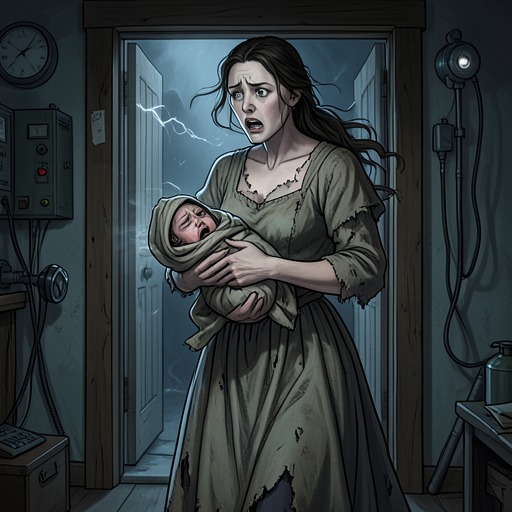
At the convent, the girl asks Bill Furlong to ask about her baby. Her first concern is not an abstract claim to justice but the child’s immediate need: she wonders whether he is hungry and who is feeding him. She says he is fourteen weeks old, that he has been taken from her, and that she does not know where he is. She hopes that, if he is there, the nuns might let her feed him again. Her account establishes separation as both a physical rupture and an imposed uncertainty: she cannot care for her child because she has been denied access, and she cannot even locate him.
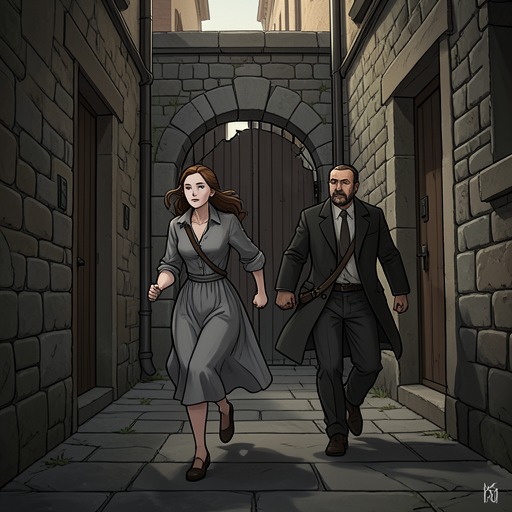
The question reaches Furlong while he is standing with her outside the convent and still weighing whether to take her away. He had been drawn toward the ordinary escape of going home; hearing about the baby forces him to reconsider what he is doing. Later, when the girl is sitting at the kitchen table with nothing before her, he pauses instead of going on and asks whether there is anything he can do. She looks toward the window, takes a breath, and cries. The sequence links the large question of institutional responsibility to a small, concrete act of attention: Furlong listens to what she needs rather than treating her as a problem to be passed back through the door.
Institutional and Social Conditions
The novel places this encounter in a community where the convent’s economic and religious authority makes resistance difficult. After what he has witnessed, Furlong considers whether to tell Eileen. She answers that the matter has nothing to do with them and that nothing can be done; she also points to the convent’s need for firewood and its reputation for paying its bills on time. Her response shows how ordinary economic relationships and appeals to helplessness can shelter institutional conduct from scrutiny. The scene does not make her account a direct explanation of the homes’ procedures; instead, it shows the social habits that can make intervention seem inconvenient or impossible.
The closing note distinguishes the wider history of the Magdalene laundries from that of the mother-and-baby homes, while setting both within a landscape of concealed, incarcerated, and exploited women and girls. It says that many lost their babies, and that it is not known how many thousands of infants died in the institutions or were adopted out from the homes. The missing knowledge is part of the history itself: records were destroyed, lost, or made inaccessible, limiting what can be established about individual mothers and children.
Scale and Public Record
The note reports that the Mother and Baby Home Commission Report found that nine thousand children died in the eighteen institutions it investigated. It also identifies a particular discovery made public in 2014: historian Catherine Corless found that 796 babies died between 1925 and 1961 in the Tuam home in County Galway. These figures give scale to the novel’s intimate scene without resolving the girl’s own unanswered question. Her baby’s whereabouts remain unknown in the story; the historical accounting likewise records deaths and adoptions while acknowledging that the total number of affected infants is not known.
The note states that the homes were run and financed by the Catholic Church in concert with the Irish State. This places the practice beyond the actions of any single caregiver or family: the novel’s account points to institutional arrangements and public responsibility, while also emphasizing the difficulty of recovering evidence after records have disappeared or been withheld. It explicitly identifies the work as fiction based on no individual person or persons, separating the invented character’s experience from the documented history that informs the book.
Ethical and Narrative Significance
The practice gives the novel’s moral conflict an intimate measure. Furlong’s question about whether people can live without helping one another arises as he walks beside the girl, after choosing not to leave her at the convent. His action cannot answer what happened to her baby, but it refuses the passivity that had seemed easier when the girl’s suffering could be treated as someone else’s concern. The distinction is important: the scene offers no assurance of reunion or repair, only a decision to accompany a vulnerable person and respond to the need she has made visible.
By moving from the girl’s words to the closing note’s evidence of deaths, adoptions, and inaccessible records, the book holds personal testimony and historical uncertainty together. The baby’s absence is not converted into a resolved plot mystery; it remains an immediate loss whose larger context can be named, but whose individual outcome is not supplied. That tension makes the practice both a matter of policy and a test of care: institutions can separate mother and child, while other people decide whether to accept that separation as beyond their concern.