Ned
Small Things Like TheseNed is the farmhand at Mrs Wilson’s house and one of the people who helps make it a place of shelter for Bill Furlong. His life there is marked by steady work and modest security, but his importance to Furlong reaches beyond employment: he shares the routines of Furlong’s childhood, cares for him in practical ways, and becomes a possible link to the father Furlong never knew. Ned’s presence gives the novel’s idea of kindness a domestic scale: it appears in meals, conversation, polished shoes, and a song remembered years later.
Identity and Place in the Household
Ned lives at the Wilsons’ house as a farmhand, among well-fenced and managed land, a small herd of Herefords, and Cheviot ewes. The household is orderly without being wealthy. Mrs Wilson’s pension and the farm’s income support the place; no money is owing, and there is generally little friction either within the household or with its neighbors. Ned has a small room of his own, but he describes it as being as good as a home he might own: he can keep his belongings in order and get food in the middle of the night if he wants it. The security is limited, yet his account makes clear that he recognizes its value.
His daily routine also places him between the household’s Protestant and Catholic lives. On Sundays, Mrs Wilson changes into her good clothes and Ned drives her in the Ford as far as the church; he then drives farther with Furlong’s mother and the child to the chapel. Both prayer books and the Bible are left on the hallstand afterward until the next Sunday or holy day. The arrangement is presented as ordinary rather than contentious: the household’s religious practice is described as lukewarm on both sides, and Ned’s driving helps sustain its practical accommodation.
A Presence in Furlong’s Childhood
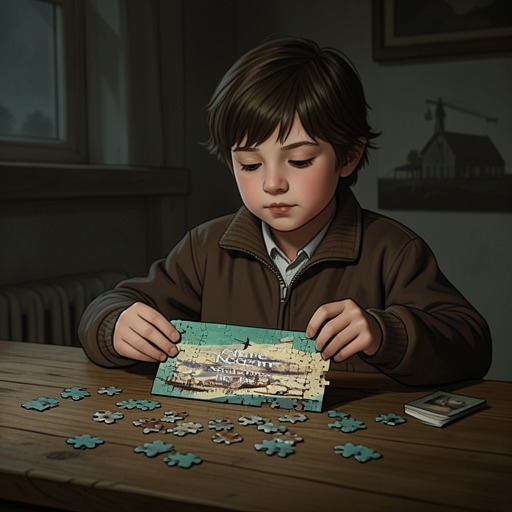
Ned is already part of the household during Furlong’s infancy, when the child spends much of his early life in a Moses basket in Mrs Wilson’s kitchen and later in a pram beside the dresser. Years afterward, Ned recalls how Mrs Wilson came down each day to look in on the baby. He insists that she never regretted keeping Furlong’s mother in work after her pregnancy became known, never spoke cheaply of her, and did not exploit her. In Ned’s recollection, the small wage was accompanied by a decent roof and enough food that no one went to bed hungry.
That recollection is also an account of Ned’s own attachment to the house. He stresses that his room was respected and that he could eat his fill, presenting these everyday conditions as evidence of care rather than as favors to be taken for granted. His account of the household therefore offers Furlong a memory of dependable shelter from someone who lived inside it, not merely a retrospective judgment from outside.
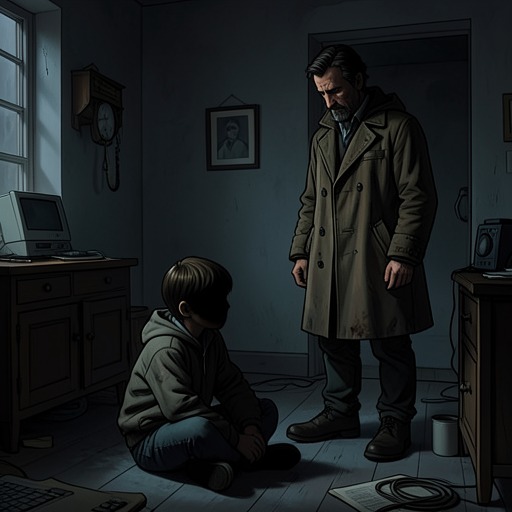
Ned’s connection with Furlong persists in acts of personal attention. After Furlong’s mother has died, Furlong remembers that he and Ned had continued to go to Mass and eat together, and to stay up talking beside the fire. Ned polished his shoes, tied the laces, bought him his first razor, and taught him how to shave. These gestures place Ned in a close, guiding role without erasing the distinction between them: he is the farmhand who shares Furlong’s life, not a formally identified parent.
Confession and Uncertain Origins
During a visit to the house years earlier, Ned tells Furlong about repeatedly stealing hay for another man’s hungry ass during a hard winter. The other man asked him to bring a sack to the foot of the back lane after dark, and Ned filled it each evening for a long while. He says that one night an ugly, nonhuman thing with no hands came out of the ditch and blocked his way; the experience stopped the theft. He regrets what he did and says he had never told anyone about it except in the confession box before confiding it to Furlong. The episode reveals both a breach of trust and the burden Ned has carried privately; the account of the strange figure remains Ned’s reported experience, not an independently established event.
Before Furlong leaves that visit, he asks Ned who his father was. Ned says that Furlong’s mother never told him. He remembers visitors at the house in the summer before Furlong’s birth: the Wilsons’ relations and friends from England, who hired a boat to fish for salmon on the River Barrow. He cannot identify Furlong’s father, leaving the question unresolved. Instead, Ned turns to the life Furlong did have, telling him that he had a decent start at the house and was getting on rightly. His answer offers reassurance without pretending to supply the missing fact.
Song, Separation, and Illness
At the end of that visit, Ned makes tea, takes up his concertina, and plays a few tunes. He then sets it down, closes his eyes, and sings The Croppy Boy. The song and the way he sings it affect Furlong so strongly that he cannot leave without asking Ned to sing it again. The moment joins music to the intimacy already built through shared meals and talk: Ned is not only a caretaker in memory but a person whose voice leaves a distinct impression on Furlong.
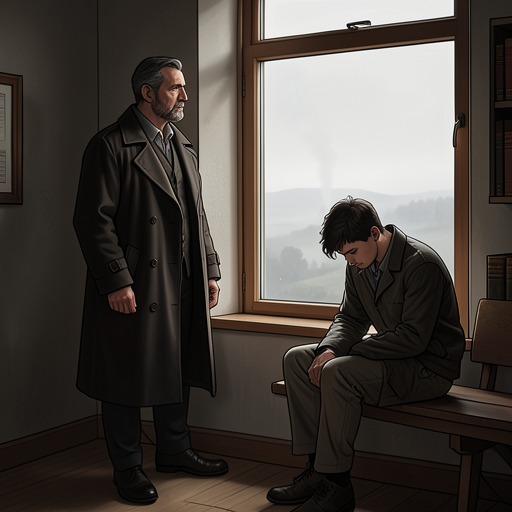
When Furlong later returns to the house at Christmas, Ned is no longer there. A woman tells him that Ned went into hospital more than a fortnight earlier after catching pneumonia and is now convalescing in a home. The absence changes the visit into a search for someone who has been part of Furlong’s life for years. In the barber’s queue afterward, Furlong studies his reflection for a resemblance to Ned. He can and cannot see one, and doubts that a woman at Wilson’s had simply imagined them to be kin. The resemblance remains uncertain, just like the identity of his father.
Narrative Significance
Ned’s story links practical care to the novel’s larger questions about help, belonging, and moral responsibility. He remembers Mrs Wilson’s protection of Furlong’s mother and describes the security he himself received in the household; in turn, he gives Furlong years of unshowy, concrete care. Later, as Furlong walks beside a girl he has chosen to help, he wonders whether a person can live a whole life without being brave enough to act against what is accepted and still call himself a Christian. Ned is not present in that scene, but the question resonates with the ordinary acts through which his relationship with Furlong has been formed.
The book does not resolve whether Ned is Furlong’s biological father. Instead, it places that possibility beside a more certain history: shared food, Mass, evenings by the fire, lessons in shaving, and the remembered song. Ned’s significance rests in that lived closeness. He helps Furlong understand that a life can be shaped not only by what is known about one’s origins, but also by the people who repeatedly make room, offer care, and remain part of one’s memory.