New Ross
Small Things Like TheseNew Ross is a town on the River Barrow, introduced through its exposed winter weather and the daily pressures borne by its residents. Its river, businesses, streets, and nearby convent form a connected landscape: one marked both by ordinary work and by hardship that the town sees but does not necessarily confront.
Setting and Seasonal Weather
In October, the trees are yellow; after the clocks go back, November winds strip them bare. Rain swells the River Barrow, darkening it like stout, while smoke from the chimneys trails over the quays before dispersing. The weather is not merely scenery: cold works its way beneath doors, frost returns at night, and the people of New Ross repeatedly reckon with whether another raw day will let them dry their washing or carry on outdoors.
The account moves across the town’s familiar public places—the post office and dole queue, the mart, coffee shop, supermarket, bingo hall, pubs, and chipper—and shows residents exchanging complaints about rain and cold. Children pull up their hoods on the way to school; mothers hurry to the clothesline or hesitate to hang washing out. This repeated, shared attention to the weather gives the town a collective rhythm, shaped by small adjustments to conditions that no one can control.
Work and Economic Strain
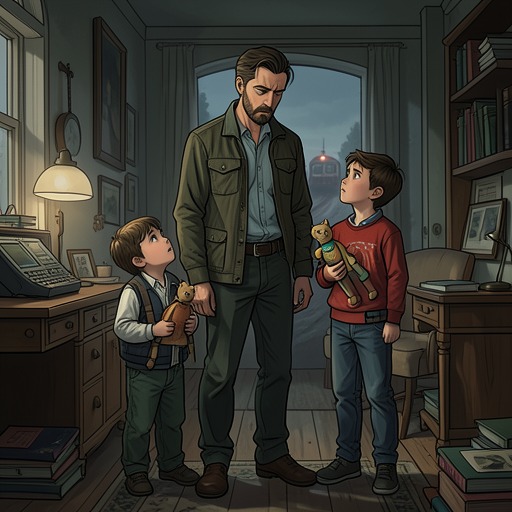
The coal and timber yard is one of New Ross’s working centers. Bill Furlong rubs his hands in the yard and worries that the lorry will soon need new tyres: it is constantly on the road, carrying one customer’s delivery after another. Requests arrive by phone or in person, and customers want their orders immediately or soon. The brisk pace of this business stands against the insecurity elsewhere in town and the countryside.
By 1985, the shipyard company has closed, and Albatros, the large fertiliser factory across the river, has made several redundancies. Bennett’s has dismissed eleven employees, while Graves & Co., where Eileen Furlong had worked, has shut its doors. The auctioneer describes business as dead, and Miss Kenny, the florist near the coal yard, boards up her shop window, asking one of Furlong’s men to hold the plywood while she nails it in place. These closures make economic decline visible in particular workplaces and shopfronts, not just in general talk of hard times.
The surrounding hardship is also apparent in the dole queues, households unable to pay electricity bills, and people sleeping in overcoats in cold houses. Further out, a farmer leaves his cows without anyone to milk them after the man responsible for their care departs for England. A man from St Mullins sells his Jeep to meet a bill, afraid of what the bank will do. Against these examples, Furlong’s determination to keep his business going and provide for his daughters, whose education at St Margaret’s School matters to him, becomes part of the town’s precarious economic landscape.
The River and the Convent
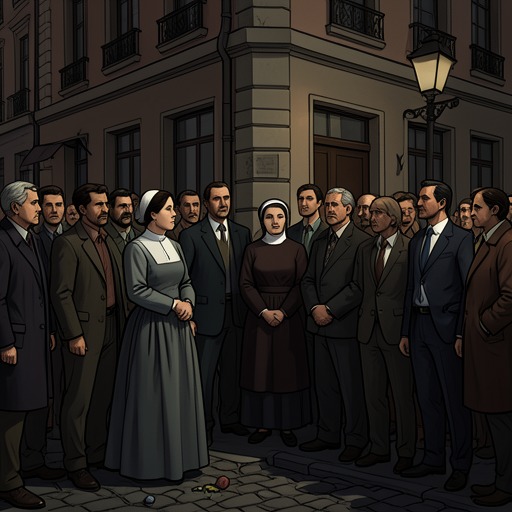
Across the River Barrow, on a hill facing New Ross, stands the Good Shepherd Sisters’ convent. Its wide black gates and tall windows make it conspicuous from town; clipped hedges, ordered lawns, and frost-dusted evergreens give its grounds a carefully maintained appearance. The contrast between this polished prospect and the surrounding closures and hardship is striking. Smoke from small outdoor fires sometimes drifts from the convent over the river and across town, physically linking the institution to the streets below.
The convent’s laundry serves restaurants, guesthouses, the nursing home, the hospital, priests, and wealthy households in the area. Its reputation for returning linen as good as new gives it a place in the town’s ordinary commercial life. At the same time, conflicting local accounts describe the girls’ training school as a place of relentless washing and penance, including a report of a fifteen-year-old treated for varicose veins after prolonged standing at the wash-tubs. New Ross is therefore more than a backdrop: its familiar institutions, customers, and public conversations reveal how an imposing establishment across the river can be both visible and woven into everyday life, while much about what happens inside remains uncertain.