The Motif of Doors and Thresholds
Small Things Like TheseThe Motif of Doors and Thresholds gives physical form to the conflict between confinement and moral action in Small Things Like These. Doors are not merely entrances: locks, walls, bells, and steps determine who may pass, who must wait, and whether Bill Furlong will act on what he has seen. The convent’s barriers first register as evidence of institutional control; later, each threshold becomes a point at which Furlong can either withdraw or accept the consequences of helping Sarah Redmond.
Barriers and the Evidence of Confinement
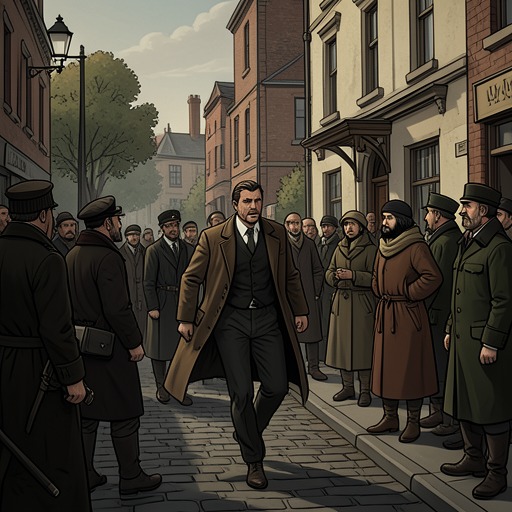
At the convent, Furlong notices how carefully access is controlled. A door from the orchard toward the front is padlocked on the inside, the high wall separating the grounds from St Margaret’s School is topped with broken glass, and the nun locks the front door after coming out to pay him. These details acquire meaning in conjunction with what he has witnessed: girls down on their hands and knees polishing the floor. Although his urge to speak about them rises and then falls away, the locked doors and defended wall remain with him as he drives off. Their physical solidity contrasts with his retreat into silence, and his distress is strong enough that he misses his turn and has to make himself slow down.
The coal-house door makes that controlled space more immediate. Its bolt is stiff with frost; when Furlong opens it and sees Sarah Redmond inside, the signs on the floor tell him she has been there longer than a single night. He reflects that much of his life has been spent outside doorways, waiting for them to open. The thought links an ordinary, resistant bolt to a recurring condition of waiting, while the coal house itself is both a literal enclosure and the place from which a concealed human predicament becomes visible. Furlong first tries to put his coat around Sarah, but she cowers. The threshold has brought him to her; it does not instantly undo what confinement has done.
The Front Step and the Choice to Stay
Furlong helps Sarah as far as the convent’s front door and presses the bell, bracing himself for the response. A young nun opens the door, cries out, and shuts it again. The abrupt movement turns the entrance into a refusal: Sarah and Furlong are left outside in the cold, with the institution’s doorway momentarily opened only to close against them. Sarah remains silent when he tries to speak to her, then asks whether he will ask them about her baby. Her question makes the stakes at the threshold more than an argument about access; it points to a separation and a person who is not there.
Even after the bell is answered by the Mother Superior, the step remains a point of resistance for Furlong. Invited inside for tea, he steps back, as if stepping away could return him to the time before this encounter. He says he must go home and change for Mass, but the retreat is brief: the Mother Superior insists, and he enters. Later, after giving his name and saying that Sarah can come to him or send for him, he leaves and stands on the front step until he hears someone inside turn the key. The small sound closes the exchange without resolving Sarah’s circumstances. His offer of help has crossed into speech, but he is still outside the locked door, waiting on the other side of the institution’s control.
Returning Through the Entrance
When Furlong returns to the convent, the entrance is no longer only a place where he waits for permission. He walks past the open gates and the front door without meeting anyone, circles the building, and reaches the coal-house door. The attractive driveway and holly berries stand against the high walls, broken glass, and blackened, metal-grilled third-storey windows he has observed around the back. He hesitates before opening the coal house, imagining that it may be locked, that Sarah may no longer be there, or that he may have to carry her. The action is not effortless certainty: the need to open the door first leaves him, then returns.
This time he slides the bolt, calls Sarah by name, and gives his own. Sarah takes his coat and leans on him as he leads her out. The shift is concrete: the same door that had contained her becomes the passage through which she leaves with his help. Furlong’s spoken promise that she will come home with him identifies the choice he has made, but it does not make the danger disappear. He fears trouble waiting behind the next door and knows that the most consequential alternative—the deed left undone—would have stayed with him. The threshold marks both escape from immediate confinement and entry into a new set of consequences.
The Homeward Threshold and the Motif’s Meaning
On the way home, Furlong and Sarah Redmond cross the River Barrow and climb the street toward his front door. The movement from the convent’s locked spaces toward his household reverses the earlier pattern of waiting outside, but the story stops short of showing what happens once they enter. Furlong is frightened, and his fear outweighs his other feelings; nevertheless, he hopes and believes they will manage. The front door therefore remains an unresolved threshold, carrying the practical uncertainty of what awaits them rather than offering a neat assurance of safety.
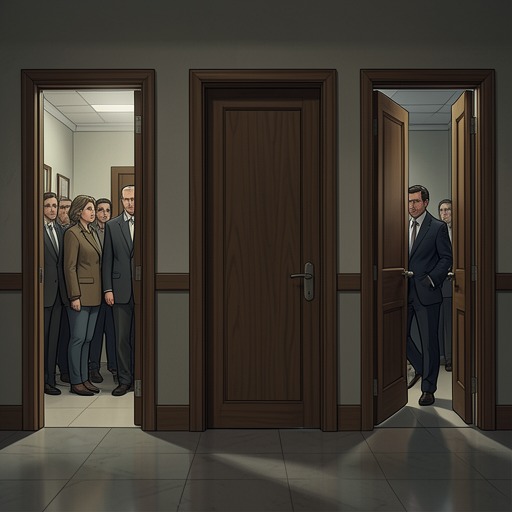
Across these scenes, doors give architecture a moral dimension without making every opening a simple promise of freedom. The convent’s locked doors, its guarded boundary, the bell answered by a door shut in their faces, and the bolt Furlong finally slides all shape the conditions under which he can act. His repeated presence on steps and outside entrances also turns waiting into a pattern: he has often stood at a door for it to open, but now he chooses to open one himself. By ending with Sarah beside him and their destination still ahead, the motif holds action and uncertainty together. Furlong has crossed the decisive moral threshold; the consequences beyond his own front door remain to come.