The Wilsons’ Mansion
Small Things Like TheseThe Wilsons’ Mansion is the country household where Bill Furlong’s life began under the protection of Mrs Wilson, the employer who kept his teenage mother in work after her pregnancy became known. It offered him a home and a measure of security in a childhood marked by social rejection, but it could not resolve the mystery of his father. Years later, the mansion remains bound to Bill Furlong’s memories of care, gratitude, and unanswered questions, and its changed appearance marks the distance between his childhood and his adult return.
Setting and Household
The mansion stood a few miles outside New Ross, where Mrs Wilson lived as a Protestant widow. Her husband had been killed in the War; her income came from his pension and from a small herd of well-kept Herefords and Cheviot ewes. The household included Ned, the farmhand, and Bill Furlong’s mother, who worked as a domestic. Its routine rested on practical order: the land was well fenced and managed, there were no debts, and little friction with the neighbours.
Religious difference did not dominate life in the house. Mrs Wilson and Bill Furlong’s mother were both lukewarm in their beliefs. On Sundays, Mrs Wilson changed her dress and shoes, pinned on her good hat, and rode with Ned in the Ford as far as the church; Ned then drove on with mother and child to the chapel. When they returned, the prayer books and Bible were left on the hallstand until the next Sunday or holy day. The household’s arrangement made room for both women’s practices without turning them into a source of conflict.
Childhood and Protection
When Bill Furlong’s mother’s pregnancy became known, her own family made clear that they wanted nothing more to do with her. Mrs Wilson instead allowed her to stay and keep her position. On the morning Bill Furlong was born, April 1, 1946, Mrs Wilson arranged for his mother to go to hospital and brought them home afterward. His infancy unfolded inside the house: first in a Moses basket in the kitchen, then in a large pram beside the dresser, close to the long blue jugs. His earliest recollections were of serving plates, the black range, and the two-coloured tiled floor, which he later remembered as resembling a draughtboard.
Mrs Wilson, who had no children of her own, took him under her wing as he grew. She gave him small jobs and helped him with reading, drawing on the household’s small library. The mansion thus provided more than a roof: it gave him daily attention and access to books. At school, other children jeered at him and once spat on the back of his coat, but his connection to the household gave him some protection and leeway. That shelter did not erase the stigma attached to his origins, yet it helped him build a life beyond the circumstances of his birth.
Gratitude and Unanswered Origins
The household’s support continued into Bill Furlong’s adulthood. When he and Eileen became engaged, Mrs Wilson gave him a few thousand pounds to help him start up. Some people speculated that the gift reflected a blood tie, since Bill Furlong never knew who his father was. The mansion was therefore associated both with tangible assistance and with rumours that could not be confirmed.
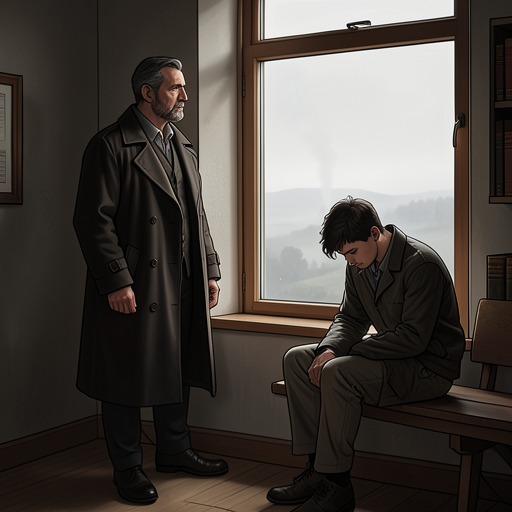
Bill Furlong’s mother died suddenly when he was twelve. Years later, when he obtained a copy of his birth certificate, the space for his father’s name contained only the word Unknown. After marrying, he considered asking Mrs Wilson whether she knew the answer, but each time he visited he could not summon the courage; he feared the question might seem ill-mannered after all she had done. Before he could ask, Mrs Wilson suffered a stroke. When Bill Furlong visited her in hospital, she had lost the use of her left side and could no longer speak, though she recognised him and raised her good hand. The memory of her, looking out through an open window as cherry blossom blew past, fixes their bond in a scene of affection that cannot supply the explanation he sought.
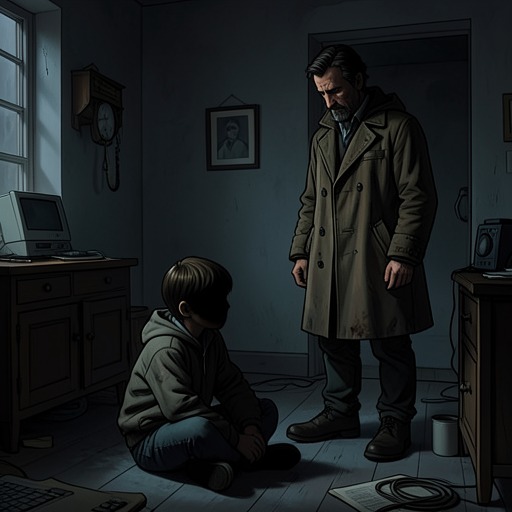
A later Sunday visit to the mansion gave Bill Furlong another account of the household’s history. Mrs Wilson was away, and Ned welcomed him into the kitchen. Ned remembered how Mrs Wilson had come down every day to look at the infant in his basket, and described the decent roof, regular food, and orderly room he had received there. His testimony reinforces the house’s material generosity, while also showing that its care extended to the people who worked within it.
In that same conversation, Ned confessed that he had repeatedly stolen sacks of hay for another farmhand’s hungry ass during a hard winter. He said that, one night on the back lane, an ugly, inhuman thing with no hands blocked his way, ending the thefts; he had never told anyone except in confession. The mansion’s history in Bill Furlong’s memory is not only domestic and orderly: through Ned’s recollection, its back lane also becomes the setting for a frightening episode that had remained secret for years.
Ned then answered Bill Furlong’s question about his father as far as he could. His mother, he said, had never named the man, but many visitors had stayed at the house in the summer before Bill Furlong was born: well-dressed Wilson relations and friends from England who hired a boat to fish for salmon on the River Barrow. Ned could not identify which, if any, was the father. The house gathers evidence and possibilities, but no revelation.
Return and Change
When Bill Furlong later drove up the avenue, the old oaks and lime trees appeared stark and tall in the headlights. He saw rooks and their nests, the freshly painted house, electric lights burning in the front rooms, and a Christmas tree displayed in the drawing-room window—a change from the earlier household he remembered. The familiar approach had become a scene of altered appearances, with the illuminated rooms signalling a present he did not yet know.
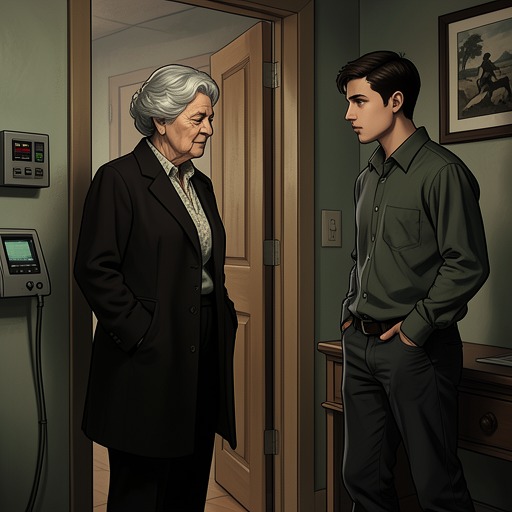
He drove around to the back and parked in the yard. Though part of him was reluctant to approach or make conversation, he crossed the cobblestones and knocked at the back door, then knocked again after waiting and listening. A dog barked and the yard light came on. The woman who answered told him that Ned had left for hospital more than a fortnight earlier after catching pneumonia and was now convalescing in a home. She did not know where. Bill Furlong was offered the possibility of speaking to the Wilsons, but the immediate purpose of his visit—to see Ned—could not be fulfilled. The mansion remains a place he can return to, yet return does not restore its earlier household: Mrs Wilson’s care belongs to memory, and Ned is absent from the kitchen where he once told Bill Furlong what he knew.