The river as an image of freedom
Small Things Like TheseThe River Barrow is both a real boundary in New Ross and a changing image of freedom: its current carries the promise of an open course, but the river is also the destination of a young woman’s request to drown. Across Bill Furlong’s encounters with it, the water’s meaning turns on the difference between being carried toward death and choosing to help another person move toward safety.
Setting and shifting meanings
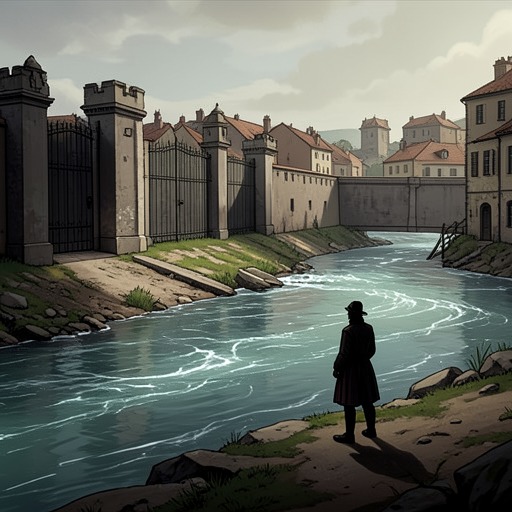
The River Barrow enters the story as part of the town’s physical landscape, separating banks that Furlong crosses on foot. At the convent, before dawn, he looks down at the dark water reflecting the town’s lights. From that distance, the town and its reflection seem to possess an equal share of the light; he cannot decide which sight he prefers. The scene makes the river more than scenery: it offers a doubled view of familiar surroundings, while the distance itself makes things appear finer than they do close at hand. Furlong stands between the town and the convent, looking across a reflective surface that is beautiful but does not resolve what he should do.
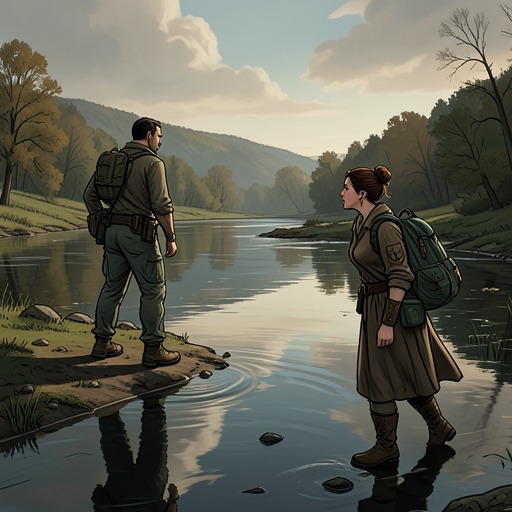
The river is also introduced through a conversation with a girl whom Furlong encounters in distress. She asks whether the water he can see is the River Barrow, and he identifies it, mentioning its salmon and strong current. Her question gives the landscape immediate practical significance: the river is not merely something to look at but a destination she recognizes. The current that can sustain life and carry water onward belongs, in this moment, to a request with a darker purpose.
A destination associated with death
When the Dublin-accented girl asks to be taken as far as the river, Furlong steps back. Her seriousness makes the request difficult to dismiss as a passing remark, and later he understands that she wanted to drown. She also offers the gate as an alternative, leaving the immediate destination unsettled; neither request, however, changes the danger he has heard in her intention. Furlong refuses to take her to the water. The episode establishes a limit to any simple equation between river and liberation: for someone in acute distress, reaching it could mean an end to life rather than release into a future.
Local tradition deepens that danger. As Furlong crosses the bridge, he recalls the story that a curse was laid on the River Barrow after an order of monks who had levied tolls on it grew covetous and were driven from the town. In the tale, the departing abbot condemned the town to lose exactly three lives each year. Furlong cannot recall every part of the story, but his mother had believed it might hold some truth. She told him of a cattle-dealer whose lorry went off the road on New Year’s Eve, making him the year’s third drowning. The river thus carries a communal memory of loss, including a story Furlong received in childhood from his mother, who once held him with her freckled arm while churning butter or singing as she milked beside Ned. The force of the folklore lies less in proof than in the way it accompanies Furlong’s thoughts when he must decide what risks to accept.
Crossing and the burden of choice
After refusing the Dublin girl, Furlong carries the encounter uneasily with him. He remembers losing his way on the back roads and meeting an old man cutting thistles in the fog, who told him that the road would take him wherever he wanted to go. The road’s promise of direction contrasts with the river’s pull toward a destination the girl has chosen in despair. Neither image removes the burden of choice: Furlong has already declined to help her reach the water, and the remembered saying offers possibility without telling him what to do with it.
Later, when Furlong takes Sarah Redmond away from the convent, the river crossing becomes an act of movement with a different immediate end. He leads her down the hill and across the bridge, looking at the dark water as it flows past. He envies the River Barrow for knowing its course and following it freely toward the open sea. The contrast is pointed: the river appears to possess the freedom that Sarah has been denied, while Furlong, without his coat and conscious of his own self-preservation, is still weighing the consequences of bringing her home. His thought that the priests may already know what is happening does not make the crossing safe or uncomplicated; he proceeds despite the fear that has accompanied him.
The river and freedom’s limits
The motif gathers its meaning through these distinct encounters rather than settling into a single symbol. The River Barrow can be seen from a distance as a luminous reflection, identified as a powerful current, remembered through a legend of drowning, or watched as it runs toward the sea. For the Dublin girl, it is bound to a request for death; for Furlong, that memory later intensifies the unease with which he acts. For Sarah Redmond, the crossing is part of being led away from the convent and toward Furlong’s home, not a journey to the sea. The narrative therefore distinguishes the river’s natural freedom of movement from the human freedom to choose a way forward.
The crossing also changes the force of Furlong’s earlier refusal. On the bridge he recalls the girl he would not take to the river, then continues with Sarah, whose bare feet make the difference between abstract concern and public action visible to people they meet. The river does not promise that rescue will be simple, nor does its current decide Furlong’s course for him. Its recurring presence instead gives shape to a choice: whether he will remain on the safe side of sympathy or carry his decision across a boundary, accepting uncertainty as the price of helping someone move toward a life beyond confinement.