A. P. Møller
Smilla's Sense of SnowA. P. Møller appears as Denmark’s largest shipping company and as one of the corporate partners behind a planned expansion of oil extraction in Greenland. Its role connects scientific research, industrial ambition, and the infrastructure of Arctic development; the destruction of the Joint Venture Warrior prototype makes that ambition’s dependence on the ice unmistakable.
Corporate role and development plans
Smilla explains that the Joint Venture Warrior was conceived as a cooperative project involving the United States, the Soviet Union, and Denmark’s largest shipping company, A. P. Møller. The platform was intended to support oil extraction in Greenland, after a decade of work had been spent addressing the problem posed by ice. The planned structure was to be four times the size of ordinary drilling platforms, stand sixty feet above the water, and provide work for 1,400 people. Its scale made the project a declaration of confidence in technological development as much as an industrial installation.
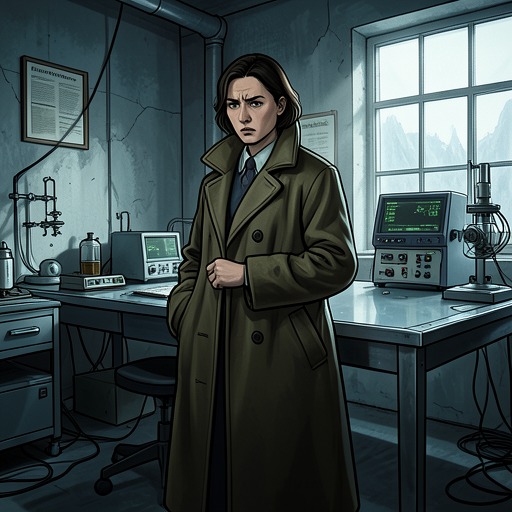
That confidence rested in part on research into sea ice. At a cold-water laboratory on Pylot Island, Smilla and four other glaciologists of Inuit origin tested the elasticity of ice, including whether vibrations from drilling could affect its structure. Their experiments supported recommendations that A. P. Møller, Shell, and Gospetrol begin exploiting Greenland’s oil reserves from platforms built on the ice. The researchers later recognized the implications of the recommendation, but by then the Soviet company had designed the Joint Venture Warrior and won the contract. The episode places A. P. Møller within a chain in which scientific findings could become practical authorization for resource extraction.
The Joint Venture Warrior and the ice
The prototype was constructed in Baffin Bay. When an iceberg approached, two icebreakers were attached to it in an effort to change its course. The iceberg continued forward and rolled over the platform, leaving no trace of the structure in the water except patches of oil and pieces of debris. The disaster turned the platform from an emblem of engineering confidence into evidence of how little that confidence could command in the Arctic.
After the prototype’s destruction, Arctic equipment was designed to be dismantled within twelve hours, the maximum warning the Greenland Ice Center could provide. Drilling shifted to floating platforms that could be cut loose, and permanent construction gave way to temporary installations. The change was not a victory over the environmental constraint but an accommodation to it: the industrial system could operate only by remaining ready to withdraw.
Research, power, and narrative significance
The novel’s account does not reduce the project to a single company’s action. A. P. Møller is named as one participant in a larger cooperative undertaking, alongside other commercial and state-linked interests. Yet the research episode shows how participation in such a system can be distributed: scientists produce findings, companies and contractors put them into practice, and the consequences emerge on a scale no laboratory experiment can contain. Smilla’s account of the five researchers’ dismissal, five months before the prototype was destroyed, adds a human consequence to the project’s technical and commercial failure.
The company’s significance is therefore chiefly structural. Its presence links shipping and industrial capital to the planned exploitation of Greenland’s oil, while the fate of the Joint Venture Warrior undermines any simple narrative of progress through technology. The ice remains neither passive terrain nor a problem fully solved by engineering; it determines the terms on which development can proceed.