Benja
Smilla's Sense of SnowBenja, Moritz Jaspersen’s young partner, first appears to Smilla as a privileged and seemingly self-possessed woman, but her apparent coquettishness gives way to fierce attachment, physical danger, and a decisive role in the confrontation between Moritz and his daughter. Smilla comes to recognize that Benja loves Moritz with an intensity that is both tenacious and possessive; when Smilla returns, Benja stands beside him and ultimately threatens to summon the people waiting outside to take Smilla away.
Identity and Background
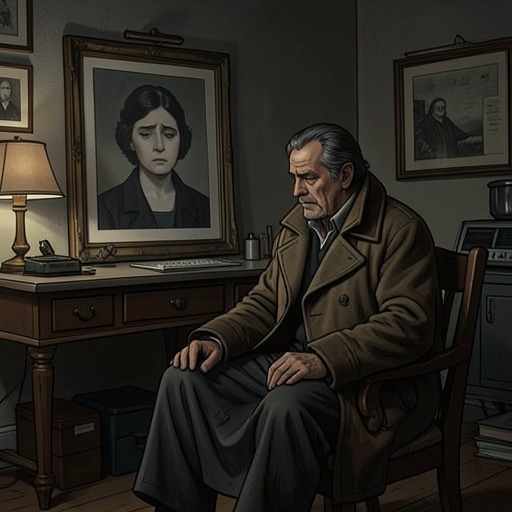
Benja is present in Moritz’s consultation room while he studies three X-rays with the forensic expert Dr. Lagermann. She sits in a wicker chair sucking her thumb, a small, intimate gesture that contrasts with the clinical equipment and the imposing domestic decor around her. The scene places her within Moritz’s private world, though the evidence does not explain her role in his medical work.
Smilla describes Benja as someone who seems to have been given everything. Her parents are trim and subdued, play the piano, and speak foreign languages. Every summer, when the Royal Theater’s school closes and the family goes south to its house on the Costa Smeralda, they take along the best French ballet tutor to train Benja on the terrace. The effort is presented as something she herself wanted, complicating any simple portrait of her as merely indulged: privilege has shaped her life, but she has also pursued an ambition of her own.
Smilla’s Changing View
For a long time, Smilla misreads Benja. She sees her walking through a room in little panties, placing red silk scarves over lamps because the light hurts her eyes, and repeatedly making and canceling appointments with Moritz because she says she needs to see someone her own age. Smilla interprets these acts as a game: she imagines that Benja is testing her youth, beauty, and attractiveness against Moritz, who is almost fifty years older. Her interpretation registers the visible imbalance in their ages, but misses the seriousness of Benja’s feelings.
That judgment shifts when Smilla witnesses Benja ask Moritz to move the furniture so she can dance. Moritz refuses. Benja initially appears certain that he will give in; when he does not, her confidence gives way to rage and then to a stunned, infantile despair. Her tears do not flow, and her face seems emptied by the refusal. Smilla recognizes the scene as evidence of love rather than flirtation: Benja is prepared to fight for Moritz and demand the world in return.
The realization also sharpens Smilla’s sense of rivalry. She thinks Benja may hate her, because Moritz’s deepest emotional attachment remains bound to the landscape of feeling associated with Smilla’s mother. Smilla imagines that Benja has lost before she can reach that inward, inaccessible past. Yet she immediately questions her own conclusion. Perhaps Benja has won after all: Smilla acknowledges her raw energy and refuses to reduce her to coy gestures or to a young woman passively waiting for her influence to prevail. Benja’s attachment is not simply an appearance; it has force and persistence.
Moritz, Love, and Family History
Benja’s relationship with Moritz is marked by a pronounced age difference and by the emotional history he carries from his earlier family life. Smilla understands that Benja loves him, but also believes that Moritz’s feelings for her mother occupy a place Benja cannot reach. That contrast makes their relationship more than a contest over immediate attention: Benja’s claim to Moritz confronts a past that has shaped his capacity for intimacy.
When Smilla returns to the house, Benja stands next to Moritz and says, “It was me.” She then clarifies, “I was the one who called.” Her admission establishes that she made the call relevant to the confrontation, although the surrounding excerpt does not specify its full circumstances. Smilla’s terse recognition that Moritz is Benja’s—“He is hers”—registers a change in the balance between them. Benja is no longer merely the younger partner whom Smilla has been observing; she is aligned with Moritz in the room where Smilla faces him.
Moritz speaks of wanting peace and quiet and of wanting his family around him, while admitting that he never achieved that life and that matters got out of control. He connects the box delivered that afternoon with Smilla leaving again, comparing her departure with earlier times she ran away. He tells her he is too old to bring her home and wonders whether he was wrong to try in the past. Benja’s presence beside him frames this speech: she belongs to the household Moritz has made, while Smilla’s return reopens the unresolved family history he cannot settle.
Conflict and Consequences
Benja tells Smilla that people are waiting outside to take her away and that she does not belong in the house. Smilla admires the intensity with which Benja defends Moritz, comparing it to a female polar bear defending her cub. The image conveys the force of Benja’s loyalty, but also makes clear how threatening it appears to Smilla. Moritz, by contrast, seems not to hear Benja. He continues speaking in a low, inward voice, absorbed in what he has failed to achieve and in his fear of letting Smilla go.
After Smilla says she is leaving, Benja follows her to the parlor and warns her that she will send the people after her once Smilla drives away. Smilla responds with sudden, deliberate violence: she grabs Benja through her leotard, puts a hand around her throat, and cuts off her windpipe. Both women end up kneeling opposite each other on the floor. Benja is taller and heavier, but Smilla judges that her own level of energy and treachery is different; she notes that the Royal Theater does not teach its students to express anger physically. Smilla tells Benja to leave her alone and pinches harder as sweat appears on Benja’s upper lip.
The confrontation turns Benja’s earlier emotional intensity into immediate bodily danger, while showing that Smilla’s departure is not secured by Moritz’s appeal or Benja’s warning. The excerpt ends with Smilla restraining Benja; it does not establish the eventual outcome of the struggle. Benja’s importance lies in the way she unsettles Smilla’s first, dismissive reading: a woman initially mistaken for a beautiful, privileged flirt becomes both a devoted partner and an active barrier to Smilla’s freedom to leave.