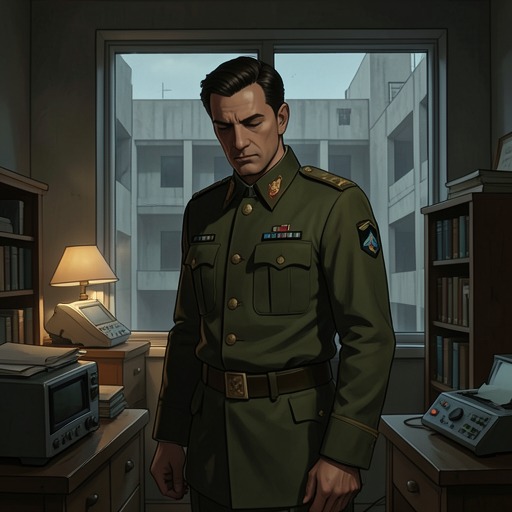
Edelweiss
Smilla's Sense of SnowEdelweiss is a Nazi underground organization that Allied censors sought in postwar Germany. Its significance in the novel emerges through Benedicte Clahn’s recollection of wartime mail censorship: the organization’s name is not merely a label but a clue that turns routine letters into evidence of a clandestine network and draws Johannes Loyen into an intelligence investigation.
Identification and Historical Setting
After the retreating German forces burned much of their archives, the Allies urgently needed information. In Hamburg, where six hundred Danish workers were employed in censorship, letters were opened, read, stamped, and resealed. The censors were instructed to report gossip about former Nazis holding positions in Germany’s reconstruction, but their principal target was Edelweiss.
The search depended on small signs in ordinary correspondence. A letter containing the word Edelweiss, a pressed flower, or underlining that might spell the name was to be marked with an individual censor’s stamp and passed to the sorting desk. The method made the organization legible through traces embedded in private mail, though the letters’ intimate form could conceal the political purpose of their coded language.
The Censorship Operation
Benedicte Clahn recalls that the work initially seemed unimportant: she and the other censors often decoded only two letters a day, usually love letters. In August 1946, the character of the correspondence changed. Many letters came from the same writers, and a new German censor, Holtzer, joined the group. He had worked for von Gehlen and possessed specialized knowledge of the case, while Clahn gradually realized that her colleagues were asking about particular phrases because they were assembling a larger picture.
The censors eventually received letters exchanged by the same four people. They never saw the envelopes and knew the correspondents’ names but not their addresses. The first set comprised eight letters, followed by roughly two new letters each week. Their code was improvised and comparatively sloppy, yet difficult to break because it relied not on ordinary language but on agreed metaphors, ostensibly concerning the transport and sale of goods.
Niflheim and the Investigation
One recurring word was Niflheim. Clahn looked it up and found that it meant the world of mists, the outermost part of Hell and the realm of the dead. By the end of August, the investigators had narrowed their attention to the four correspondents. At that stage Johannes Loyen joined the group, in Germany as a forensic medicine expert participating in the closure of concentration camps.
The episode gives Edelweiss a double presence: it is the organization the censors are trying to locate, and the name that helps organize their reading of otherwise mundane letters. The inquiry advances through fragments—repeated names, suspicious phrases, metaphorical messages, and the significance assigned to a single word—rather than through a complete archive or an openly stated account.
Archival Traces and Narrative Significance
The wartime search for Edelweiss echoes the novel’s later investigation into institutional records. A former chief accountant’s letter about a widow’s pension survives with a handwritten apology in its margin; corporate papers are transferred formally to the National Archives while remaining physically in the company’s custody; and the archive itself contains rooms of ledgers, maps, and drilling records. In a separate inquiry, the report from the 1966 expedition is found to be missing. Across these episodes, documents are neither neutral containers nor complete histories: their classification, custody, concealment, and absence shape what can be known.
Edelweiss therefore belongs to the novel’s wider pattern of recovering a past from partial evidence. The censors’ attention to marks on letters parallels the later scrutiny of ledgers and missing reports, while Clahn’s recollection preserves a personal account of a case whose full structure remained opaque to her at the time. The organization’s narrative force lies in this tension between a name that can be recognized and a history that must still be reconstructed.