National Archives of Denmark
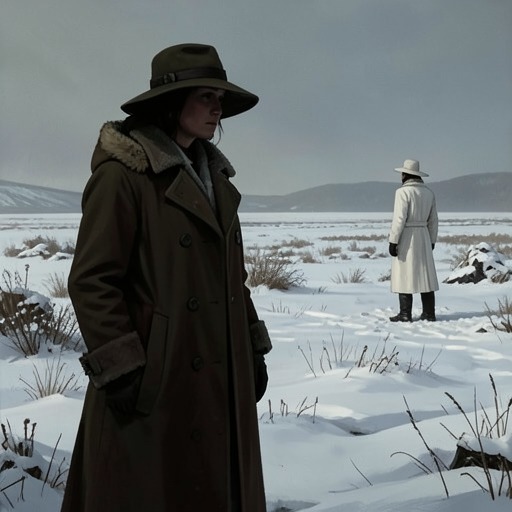
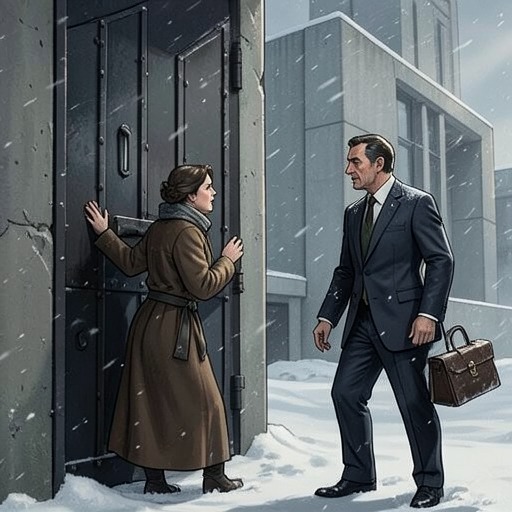
Smilla's Sense of SnowThe National Archives of Denmark is the official repository designated for records concerning public-authority decisions, and a crucial institutional presence in the novel’s investigation of the Cryolite Corporation. Its authority is complicated by a split between formal custody and physical possession: records can be accepted into the archive while remaining inside the company’s care, and secrecy rules can place them beyond public scrutiny for decades. The archive therefore represents not simply the preservation of evidence, but the power to classify, withhold, and shape what can be known.
Transfer, Custody, and Restricted Access
When the narrator calls the Cryolite Corporation, its director explains that the government had representation on the board and that, as the company was closing and its foundation being reorganized, its papers had been transferred to the National Archives of Denmark. The director distinguishes between two classes of material: general resolutions, confidential for fifty years, and personal files, protected for eighty. He cannot say which specific papers belong to either category.
The transfer is not physical in the ordinary sense. The corporation still holds the papers, while the archive has formally accepted them; anyone seeking access is directed to the archive despite the records remaining under company safekeeping. This division makes institutional responsibility difficult to pin down. The archive is the declared destination and governing framework for access, yet the corporation retains practical possession of documents that may matter to the inquiry.
Corporate Records and Unequal Visibility
The archive’s importance is foreshadowed by the corporation’s own recordkeeping. Former chief accountant Elsa Lübing describes a company partly supported by the state: the government held 33.33 percent of its shares and had a seat on the board. Copies of the accounts were made as photostats, and portions were inspected by the Audit Department, which became the National Bureau of Auditing in 1976. But cooperation with private firms created complicated accounting situations, and the company’s hierarchy also shaped access to information.
Lübing’s bound account ledgers were kept in the archives, yet she says that sections of the books were inaccessible even to her. She also recalls a smaller confidential ledger, which she considers necessary in a large corporation. The contrast between replicated accounts, official auditing, and a separate ledger suggests that the existence of records does not guarantee comprehensive transparency. What survives, what is classified, and who can inspect it are all part of the institutional story.
Documents as Personal and Historical Evidence
The archive’s significance extends beyond corporate paperwork. In a letter to Juliane Christiansen, the Cryolite Corporation’s board grants her a widow’s pension after the death of Norsaq Christiansen. The letter is signed by E. Lübing as chief accountant; after it was typed, someone turned the page and added an apology in the margin. The official document records a financial decision, while its handwritten addition preserves a personal trace that the formal text does not contain. The novel’s attention to such marginalia shows how documentary evidence can carry more than its administrative purpose.
The archive also becomes a place where absence matters. While examining X-rays with Lagermann, Moritz discovers that the report from the 1966 expedition is missing. The missing report is not proof of what happened, but it interrupts the expected chain of documentation and sharpens the questions raised by the surviving evidence. Across the novel, files, ledgers, testimony, and omissions must be read together rather than treated as a complete or neutral record.
The Archive in a Wider Structure of Power
The archive’s role sits within a broader system linking Danish administration, corporate interests, military authority, and Greenlandic life. The narrator notes that Greenlandic children moving from village schools to Qaanaaq encountered teachers who did not speak Greenlandic; educational advancement and a route to Denmark were framed through Danish. Greenland was officially described as Denmark’s northernmost county, and Inuit were assigned the designation Northern Danes. In this context, archival classification belongs to a larger administrative order that names populations, regulates access, and defines which accounts become official.
That order also operates through supposedly modern development. The narrative connects the Greenland Star platform and other recent transformations to a project of coercion, arguing that direct force is no longer required when economic incentives can encourage people to organize life around greed. The National Archives is not itself identified as the agent of that coercion; rather, its restricted files and divided custody form part of the novel’s account of how institutions manage knowledge within unequal political and economic relationships. Its significance lies in this tension: the archive preserves the material from which hidden histories might be reconstructed, while its rules and the gaps in its holdings limit what can be established.