Qaanaaq
Smilla's Sense of SnowQaanaaq is the northern Greenlandic home that shapes Smilla Jaspersen’s earliest knowledge of landscape and her enduring sense of identity. In memory it is at once a specific settlement, a network of family and shared practices, and a way of reading snow and distance; in Denmark, it becomes a point of contrast with institutional confinement and a culture increasingly difficult for Smilla to inhabit through language alone.
Home, family, and practical knowledge
Smilla was born in Qaanaaq to Ane Qaavigaaq, a hunter, and the Danish physician Moritz Jaspersen. Her mother’s life there resists any simple division between customary gender roles: Ane raised children and kept house, but also shot, paddled a kayak, and brought home meat. When Smilla’s maternal grandfather began losing his sight, public assistance offered little security, and dependence on relatives was no easy alternative. Ane therefore had to hunt. After her father missed a seal, she stayed behind on the ice; when the seal surfaced again, she shot it. Qaanaaq is presented through such decisions and skills, not as an abstract emblem of a supposedly untouched culture.
The community’s knowledge also comes through hunting and its consequences. During a bird hunt, Smilla waits with others and catches three birds on her second attempt. Seeing that they are females returning to their young, she imagines the linked lives behind the catch and releases them. The episode records a practical method and a sudden change in her response to it: knowledge of how to take food does not prevent her from recognizing the lives connected to it. Elsewhere, the killing of a pregnant narwhal exposes her to the pup carried inside it, a sight that leaves her unable to eat the hunters’ meal. These memories keep subsistence, attention, and emotional disturbance within the same account of life in Qaanaaq.
The home is also organized by its rooms and rhythms. Smilla remembers that her family lived in the kitchen, a domestic center that made it a shared space rather than simply a place to prepare food. Her later discomfort at standing in the doorway of a spacious Danish kitchen marks the distance between that remembered arrangement and her present life. Childhood, as she recalls it, was largely lived outdoors; staying in one place for a long time seemed unthinkable to her mother. This mobile familiarity with open space helps explain why a locked room can carry a different weight for Smilla than it does in the Danish legal imagination.
Landscape as a way of knowing
Qaanaaq’s surrounding terrain gives Smilla an early confidence in navigation. During a winter journey from Qinnissut toward the mouth of Inglefield Bay, sudden fog blinds the group and gathers the dogs together. Smilla, however, feels certain of the route. Her mother listens to her, and the others follow; placed on the leading sled, Smilla remembers the path as a silver line stretched between herself and the house in Qaanaaq. Before a bend appears in the dark, she knows it is there. The episode makes her sense of direction a form of situated knowledge: it arises from familiarity with a landscape and is trusted by people who know her, rather than supplied by an instrument or an outside authority.
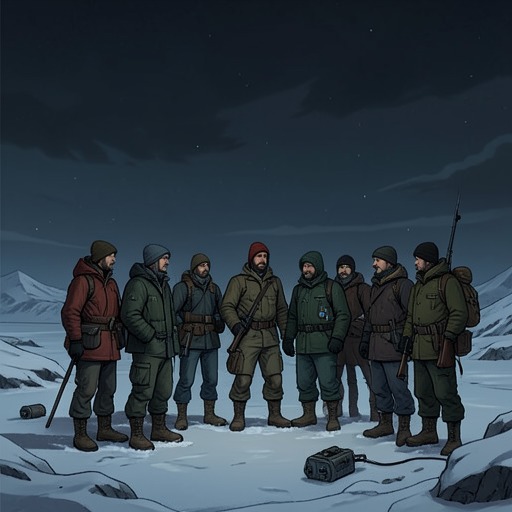
That confidence later returns in a transformed setting. Near the end of the novel, Smilla runs through darkness beside a crevasse without a flashlight, moving easily over the snow in kamiks while Tørk’s lamp flickers and his boots do not grip in the same way. She recalls going out on the ice at night in Qaanaaq to fetch blocks of meltwater. The remembered practice clarifies why she can move through terrain that disorients someone else. The contrast is not simply between courage and fear: her bodily ease rests on knowledge accumulated at home, and the landscape she once learned to cross remains available to her under pressure.
Language, schooling, and cultural distance
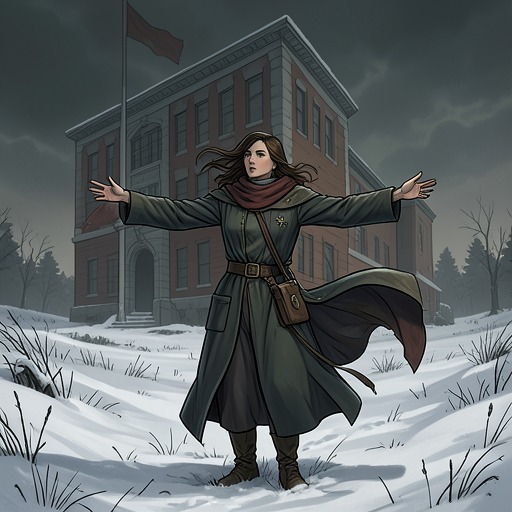
Qaanaaq is also where Smilla’s Greenlandic language and early sense of belonging were formed. She recalls moving from the village school to Qaanaaq, where teachers did not speak Greenlandic and had no plans to learn it. They presented education in Danish as a route to advancement and escape from Arctic hardship. The political language of equal rights accompanied a larger shift that officially designated Greenland Denmark’s northernmost county and described Inuit residents as Northern Danes. Smilla’s account connects the classroom promise of opportunity to the weakening of the language through which she first thought and remembered.
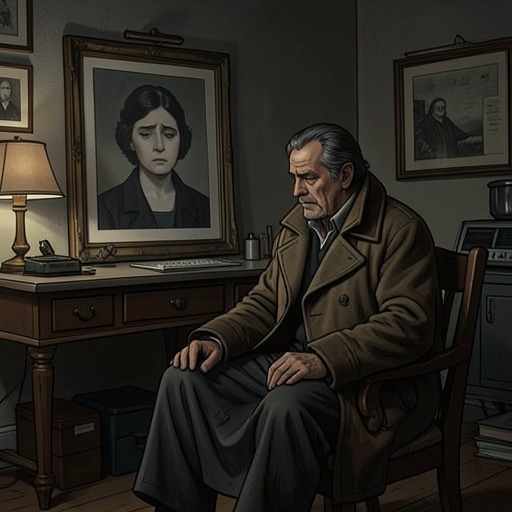
That weakening is gradual rather than a single break. After arriving in Denmark, Smilla initially believes she will never forget her mother tongue. Later, when she meets another Greenlander, she has to search for an ordinary word. A visit to the Greenlanders’ House makes her aware that her Greenlandic has become vulnerable to loss. On returning to Greenland, she tries to relearn it, but describes herself as neither having succeeded nor failed, suspended around the language as if she were sixteen or seventeen. Her difficulty is not evidence that Qaanaaq has ceased to matter; it shows how a place can remain central to memory while the language of that memory becomes uncertain.
This distance is audible in Smilla’s response to a recording of a Greenlandic speaker. She recognizes that he is speaking East Greenlandic, which she cannot understand, and distinguishes the existence of regional languages from the single, unified Greenlandic identity that outsiders might presume. Her own history includes years of schooling in Greenland and Copenhagen, and the sound of her speech bears traces of that movement. When an interlocutor accurately describes the linguistic layers in her voice, Smilla confirms the account with astonishment. Qaanaaq is therefore not interchangeable with all Greenland: it anchors a particular northern childhood within a wider, internally varied linguistic world.
Memory, belonging, and the gaze of outsiders
The novel repeatedly places Qaanaaq against descriptions made from elsewhere. Smilla argues that understanding another culture requires living within it, asking to be tolerated as a guest, and learning its language; explanation can itself create distance. When she begins to describe Qaanaaq, she feels that she is again losing something that was never wholly hers to possess. The tension is deliberate: the place is intimate to her, but turning it into a description risks replacing lived knowledge with an account addressed to outsiders.
The same tension appears in her account of Thule and the ethnographic image of North Greenland. She rejects the expectation that Inuit life remain a display of innocence for European observers, preserved as an exhibition of old customs. Her mother’s actions undermine that picture: Ane could paddle a kayak made according to an older local method while using a sealed plastic container as a hunting float, and she knew how to make visiting outsiders respond materially to her hospitality. The combination is neither cultural purity nor simple assimilation. It is practical choice within a relationship shaped by unequal observation and expectation.
Qaanaaq consequently serves as more than a remembered setting in Smilla’s story. It is the place through which she tests claims made by schools, officials, and outsiders about Greenlandic identity, while also confronting her own incomplete command of its language and past. On a morning in Copenhagen when she wakes with a renewed sense of herself as a pampered Greenlander, that identity arrives not as a settled conclusion but as something she can still recover. Her dream of children in Siorapaluk, where one voice continues after the others fall asleep, gives memory a similar shape: childhood persists as a voice carried beyond the place that formed it, even as it becomes difficult to hear clearly.