Tørk–Claussen criminal network
Smilla's Sense of SnowThe Tørk–Claussen criminal network is the hidden organization behind the Kronos’s compromised crew and covert cargo operations. Smilla recognizes it not as a separate gang operating in plain sight, but as a system that appropriates institutions already in place: the ship’s working organization, commercial shipping arrangements, and Greenland’s port and offshore infrastructure. Its reach becomes visible through connections among people who appear to belong to different worlds, and through the movement of a refrigerated intermediate product between opium and heroin.
Structure and Methods
The network’s operating principle is concealment through ordinary arrangements. Birgo Lander explains that a ship charter has a formal contract specifying destination and cargo, but that discreet operators can use a confidential side contract to keep sensitive terms out of the official document. Such side agreements, he says, are common in Danish shipping, including for unlawful cargoes. The arrangement gives a charterer room to conceal a voyage’s actual purpose while leaving a trace that investigators may follow. When Smilla tells him that the intended destination is Greenland’s west coast, Lander points out that the ship must meet ice-class requirements and Danish inspection rules, including a double hull for Greenland voyages. Secrecy therefore has to work within the practical and regulatory demands of shipping.
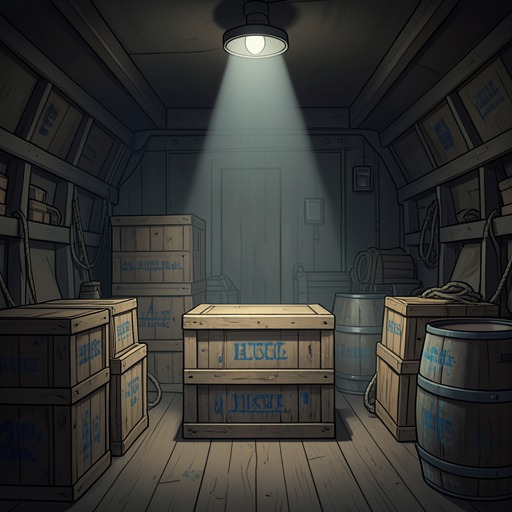
The network also exploits the fact that ships and ports depend on interconnected systems. After the name Kronos is proposed, Lander checks Lloyd’s Register and identifies two possible general-cargo vessels among the ships bearing that name, one in Piraeus and one in Panama. At sea, the Kronos’s crew carries out a container-drop test under orders heard from the forward mast: a light reveals the container floating fifteen feet behind the stern, held away from the hull by a blue hawser and inflatable strips. The operation’s equipment, crew, and command structure make the vessel a working mechanism for moving cargo while limiting what can be seen from outside.
The Kronos and Its Compromised Crew
Smilla comes to understand the ship’s mess as a microcosm of the organization Tørk and Claussen had built earlier. In her account, the network has made use of an existing organization rather than creating a wholly separate one. She identifies Fernanda and Maria from Thailand, and Maurice, Hansen, and Urs from Europe, as members of the same wider structure. The crew’s different origins do not make them independent of one another; their placement aboard the ship reveals the network’s capacity to assemble people into a shared operation.
The ship’s captain, Lukas, tells Smilla that Verlaine was responsible for how the Kronos had been manned. He says he had no choice and could not pay, and his fear no longer seems exaggerated to her. The exchange makes the network’s control concrete: participation is not presented simply as willing allegiance, but as a condition imposed on people who have been compromised or left without a viable alternative. The ship’s hierarchy remains, but command is constrained by arrangements made elsewhere.
Cargo and Greenland Connections
The network’s cargo includes Mayam, a stage between raw opium and heroin with a high oil content that requires refrigeration. Smilla connects its development to Tørk and identifies it as Verlaine’s share of their agreement. She believes the Kronos is expected to call at a Greenland port on the return journey, possibly Holsteinsborg or Nuuk, and raises the possibility of connections on the Greenland Star floating oil platform. Her account places the drug operation within a changing market: liquor and cigarettes once smuggled north belong to an earlier period, while cocaine and a Europeanized Greenlandic upper class indicate a larger contemporary market.
Smilla infers that Jakkelsen discovered the Mayam and gave himself away while intoxicated, overestimating his ability to pressure the people involved. She believes Tørk handled the telegram connected with Jakkelsen’s fate because he had to, not because the two men trusted one another. Tørk and Verlaine, in her reading, come from different worlds and cooperate only because each can use the other. The network is therefore held together by mutual advantage rather than common identity, a fragile arrangement that also helps explain its internal hostility.
Centralization and Significance
Lukas contrasts the authority of earlier shipmasters with the controlled environment of a modern offshore installation. He remembers a desolate place between Godthåb and Frederikshab where a captain and crew could go ashore, then describes a developed complex with tax-free shops, helicopter service, a hotel, a diving station, a post office, and administrative offices for Chevron, Gulf, Shell, and Exxon. Yet workers are not permitted to go ashore freely; requests are checked and delivered, and a captain who insists on leaving the ship is escorted by security officers. Lukas says the restrictions are justified by fire and sabotage risks, especially when the piers hold 250 million gallons of oil. In his view, this is centralization: shipmasters have virtually disappeared, and seamen no longer exist as an independent class.
That controlled infrastructure offers a broader setting for the network’s methods. Ships, contracts, cargo systems, and offshore facilities enable goods and people to move, but also concentrate access and authority in the hands of those who can direct them. The criminal organization gains leverage by using systems that already function, while the same systems make workers dependent and movement traceable. Smilla’s recognition of the Kronos as a manifestation of Tørk and Claussen’s earlier network turns the ship from an isolated scene of suspicion into evidence of an organization extending across people, cargo, and institutions.